
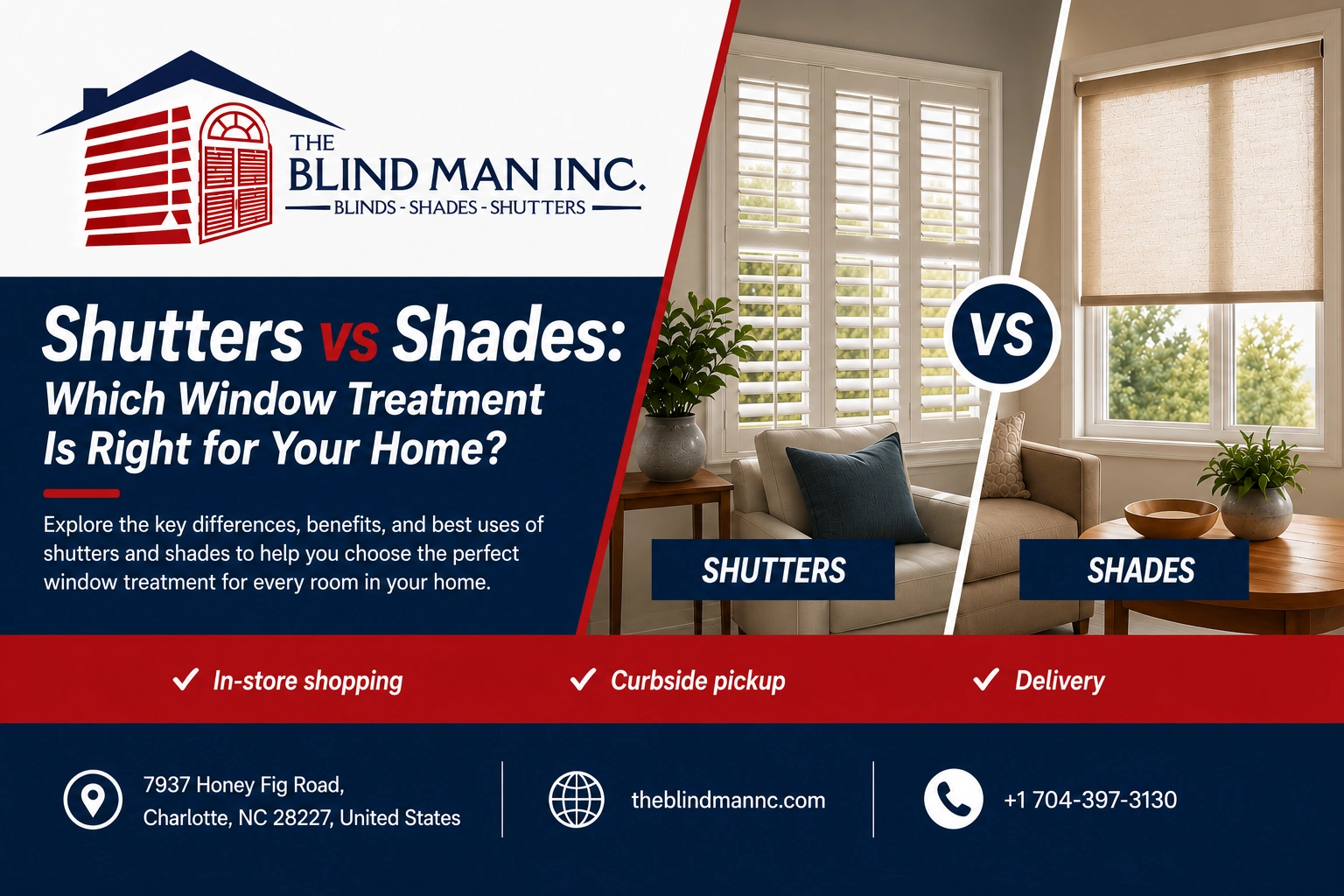
Choosing between shutters and shades can feel difficult because both options improve privacy, light control, and style. The right choice depends on how you want your home to look and function, whether you prefer a structured architectural feature or a softer fabric-based design, and how each room is used throughout the day.
In simple terms, shutters provide a more permanent and built-in appearance with adjustable louvers and strong durability. Shades offer softer textures, more fabric choices, and a wider range of light-filtering and blackout options.
Both can be excellent window treatments. The key is understanding where each option performs best and how it fits your home’s style, comfort needs, and daily routines.
Understanding the Main Difference Between Shutters and Shades
The biggest difference comes down to construction and functionality.
Shutters are hard window coverings made with framed panels and adjustable louvers. They are installed directly into or around the window frame and often feel like part of the home’s architecture. Plantation shutters are especially popular because they offer a timeless appearance, strong privacy control, and adjustable sunlight management.
Shades are fabric-based window coverings that raise and lower over the glass. They come in many styles, including:
- Roller shades
- Roman shades
- Cellular shades
- Woven wood shades
- Solar shades
- Sheer shades
Shades are typically softer in appearance and provide more flexibility in color, fabric, opacity, and overall design.
In general:
- Shutters are structured, durable, and architectural
- Shades are softer, more flexible, and highly customizable
Both options can work beautifully, but they serve different practical and design goals.
Quick Comparison: Shutters vs Shades
Different window treatments work better depending on your priorities.
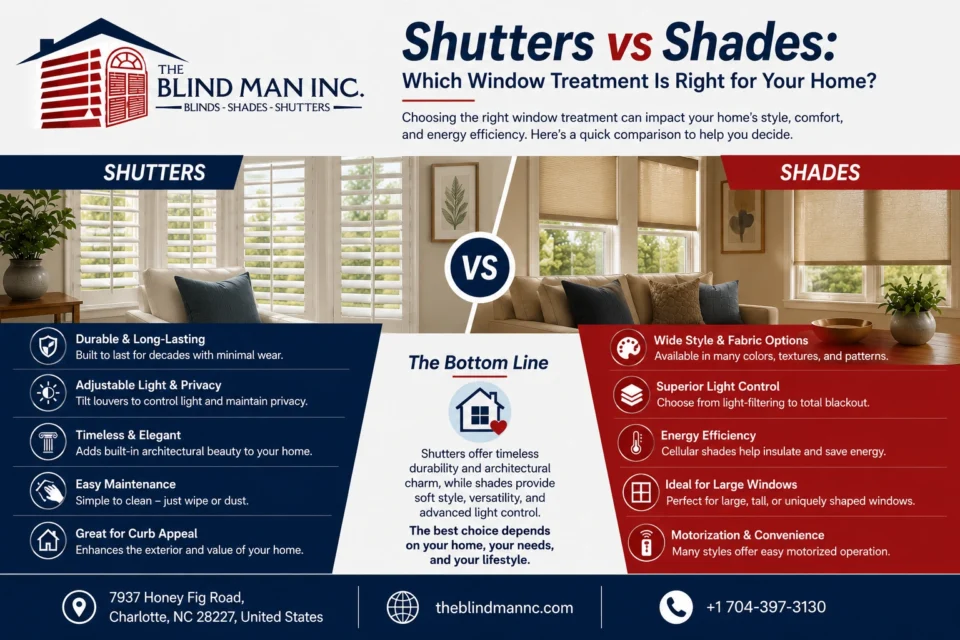
- Best for durability: Shutters
- Best for blackout control: Shades
- Best for design variety: Shades
- Best for easy maintenance: Shutters
- Best for insulation: Cellular shades
- Best for curb appeal: Shutters
- Best for motorization: Shades
- Best for large windows: Shades
Understanding what matters most in each room can help narrow down the right solution.
When Shutters Are the Better Choice
Shutters are a great fit for homeowners who want a timeless, clean look that feels built into the home. They work especially well in rooms where durability, adjustable light control, and curb appeal matter.
Shutters may be the better choice if you want:
- A classic, high-end appearance
- Long-lasting durability
- Adjustable privacy control
- Easy maintenance
- Architectural character
- A more permanent window treatment
One of the biggest advantages of shutters is their ability to control sunlight without completely covering the window. Louvers can be tilted to allow daylight in while limiting direct visibility from outside.
This makes shutters especially useful for:
- Street-facing windows
- Living rooms
- Bathrooms
- Dining rooms
- Bedrooms
- Front-facing spaces
Shutters are also an excellent fit for homes with:
- Traditional interiors
- Transitional designs
- Coastal styles
- Farmhouse homes
- Southern-inspired architecture
Their clean lines and timeless appearance help windows feel more finished both inside and outside the home.
Why Many Homeowners Choose Shutters
Another major advantage is durability. Unlike fabric-based treatments, shutters do not wrinkle, sag, or require regular laundering.
They are generally:
- Easy to dust and clean
- Resistant to daily wear
- Long-lasting
- Well suited for homes with pets or children
Because shutters are custom-fitted to the window frame, they also create a polished and tailored appearance that many homeowners appreciate.
However, shutters may not be the ideal choice in every room. They usually require a higher upfront investment and may not create the same soft decorative look that fabric treatments provide.
They also do not disappear completely into the top of the window when opened the way some shades do.
When Shades Are the Better Choice
Shades are often the better fit when homeowners want softer textures, more design flexibility, or specialized light control.
Because shades come in many fabrics, materials, and opacity levels, they can be customized for nearly any room in the home.
Shades may be the better option if you want:
- A softer and more decorative appearance
- More color and fabric options
- Light-filtering or blackout control
- Better insulation performance
- A clean and minimal look
- Motorized operation
- A solution for large or tall windows
One reason shades are so versatile is that each style serves a different purpose.
For example:
- Roller shades create a clean and modern appearance
- Roman shades add softness and elegance
- Cellular shades improve insulation
- Solar shades reduce glare while preserving views
- Blackout shades improve sleep and room darkening
This flexibility allows homeowners to customize each room based on privacy, brightness, comfort, and functionality.
Why Shades Work Well in Different Rooms
Shades are especially useful when different rooms need different levels of light control.
For example:
- Living rooms often benefit from light-filtering shades that soften sunlight while keeping the room bright
- Bedrooms may need blackout cellular shades for improved sleep
- Home offices may perform best with solar shades that reduce glare without darkening the room
Shades are also a strong option for:
- Large windows
- Patio doors
- Hard-to-reach windows
- Modern homes
- Open-concept spaces
Many shade styles can also be motorized, making them easier to adjust throughout the day.
Potential Drawbacks of Shades
The main drawback is that some fabric materials may require more maintenance depending on the style and room conditions.
Certain fabrics may:
- Collect dust
- Fade over time
- Show wear more easily than shutters
However, high-quality materials and professional installation can significantly improve long-term performance and durability.
Comparing Light Control and Privacy
When choosing between shutters and shades, light control and privacy are often two of the biggest deciding factors.
Light Control
Shutters provide excellent adjustable light control because louvers can be tilted throughout the day. However, small gaps between louvers may still allow some light through.
Shades offer more specialized opacity options, including:
- Light-filtering fabrics
- Room-darkening shades
- Blackout shades
- Solar-filtering materials
If maximum room darkening is important, blackout shades are usually the better solution.
Privacy
Both options provide strong privacy, but they do it differently.
Shutters allow homeowners to angle louvers for privacy while still allowing sunlight into the room.
Shades provide privacy based on fabric opacity. Light-filtering fabrics help maintain daytime privacy, while blackout materials provide stronger nighttime coverage.
Comparing Style and Design Flexibility
Shutters create a polished, architectural appearance that feels timeless and structured.
Shades offer more variety and flexibility in design. Depending on the fabric and style, shades can feel:
- Modern
- Casual
- Elegant
- Minimal
- Cozy
- Textured
This makes shades especially useful for homeowners who want more customization throughout the home.
Comparing Maintenance and Energy Efficiency
Shutters are generally easier to maintain because they can be dusted or wiped clean quickly.
Shades vary by material. Some fabrics require minimal maintenance, while others may need more careful cleaning.
For energy efficiency, both options can help improve insulation, but cellular shades are especially effective because their honeycomb structure helps trap air and reduce heat transfer.
Shutters can also improve insulation by creating a barrier between the window and the room, but shades often provide more performance-specific options for temperature control.
Which Option Is Right for Your Home?
The best choice depends on how you want each room to look and function.
Choose shutters if you want:
- A timeless built-in appearance
- Strong curb appeal
- Durable materials
- Easy maintenance
- Adjustable louvers for sunlight control
Choose shades if you want:
- Softer textures
- More fabric variety
- Blackout or room-darkening control
- Motorization options
- Greater flexibility for different rooms
In many homes, the best solution is using both.
For example:
- Shutters may work best in front-facing living areas where curb appeal matters
- Shades may perform better in bedrooms, offices, media rooms, or large windows that need customized light control
A mixed approach allows each room to function better while still maintaining a cohesive design throughout the home.
Conclusion
When comparing shutters and shades, there is no single right answer for every home. Shutters provide durability, timeless style, and adjustable privacy, while shades offer softness, flexibility, and specialized light-control options.
The best choice depends on your room layout, design preferences, privacy needs, and how much control you want over sunlight and comfort.
For many homeowners, the ideal solution is combining both treatments throughout the home based on the specific needs of each space.
Thoughtfully selected window treatments can make your home feel more comfortable, private, stylish, and functional every day.
Frequently Asked Questions
Are shutters better than shades?
Shutters are often better for homeowners who want a durable, built-in, and timeless window treatment with adjustable louvers. Shades are usually better for homeowners who want softer fabrics, blackout options, or greater design flexibility.
Do shutters or shades provide better privacy?
Both provide excellent privacy. Shutters offer adjustable privacy through tilting louvers, while shades provide full-window coverage based on fabric opacity.
Which is better for bedrooms, shutters or shades?
Shades are often the better choice for bedrooms if maximum darkness or room-darkening control is important. Blackout shades usually provide stronger light blocking than shutters.
Are shutters more expensive than shades?
In many cases, yes. Shutters typically have a higher upfront cost because they are custom-built and installed as a more permanent architectural feature.
Can I use shutters and shades in the same home?
Yes. Many homeowners combine shutters and shades throughout the home based on the needs of each room.
Do shutters block out as much light as blackout shades?
No. Shutters provide excellent light control, but small gaps between louvers may still allow some light through. Blackout shades are generally better for maximum room darkening.
Share this article
Latest articles
October 8, 2026
October 8, 2026
October 8, 2026