

Window treatments do more than cover a window. They help shape the mood of a room, soften natural light, support privacy, and tie the design together. The right choice can make a space feel calm and finished, while the wrong color, texture, or material can feel out of place even if the product itself is beautiful.
For many homeowners, the challenge is knowing how to match window treatments with décor that already exists. Should the blinds match the trim? Should drapes coordinate with the sofa? Should shades blend into the wall color or stand out as an accent? There is no single correct answer because every room has its own style, lighting, furniture, and personality.
The best approach is to look at the whole space, including wall colors, flooring, furniture, finishes, fabrics, and how the room is used each day. By thinking through both function and appearance, homeowners can choose window treatments that feel intentional instead of added as an afterthought.
Start With Existing Colors in the Room
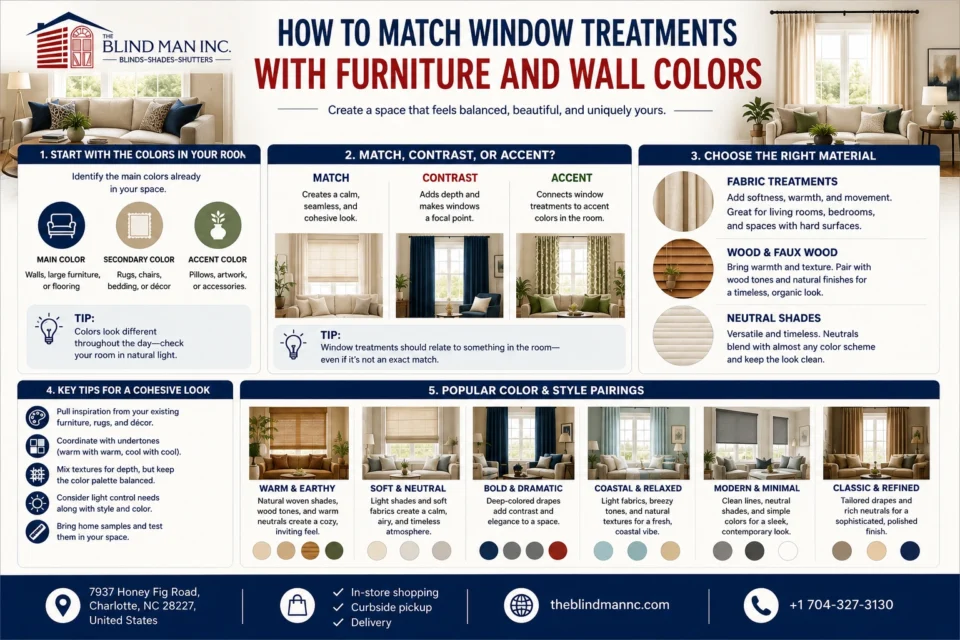
Before choosing window treatments, start by studying the colors already present in the room. Most spaces have a few dominant colors and several smaller accent tones. These colors may come from wall paint, flooring, furniture, area rugs, throw pillows, artwork, cabinetry, or metal finishes.
A helpful way to begin is by identifying three categories:
- Main color: This is usually the wall color, large furniture, or flooring tone.
- Secondary color: This may come from rugs, chairs, bedding, or larger décor pieces.
- Accent color: These are smaller pops of color found in pillows, art, lamps, or accessories.
Window treatments can connect to any of these categories. For example, soft beige shades may blend with warm wall paint, while navy drapes may coordinate with accent pillows or artwork. Wood blinds may echo flooring or furniture finishes. White shutters may connect with trim, doors, or built-in cabinetry.
Natural light also affects how colors appear. A fabric that looks warm in a showroom may appear brighter in a sunny room or cooler in a north-facing space. This is why homeowners should think about how the room looks at different times of day.
If the room already has many patterns or bold colors, a quieter window treatment may help balance the design. If the room feels plain or unfinished, textured drapes or a contrasting shade color may add warmth and visual interest.
Homeowners exploring custom window treatment options often find that color coordination becomes easier when they can compare materials, finishes, and fabric samples against their existing décor.
Should Window Treatments Match or Contrast?
One common question homeowners ask is whether window treatments should match the room or create contrast. Both approaches can work, depending on the desired look.
Matching creates a calm, seamless appearance. Window treatments that are close to the wall color can make a room feel larger and less busy. This approach works especially well in bedrooms, home offices, and living rooms where homeowners want a softer, more relaxed feel.
For example, cream shades on warm white walls can create a clean and comfortable look. Light gray drapes against pale gray walls can feel refined and subtle. Natural woven shades in a room with wood furniture can create an organic, cohesive style.
Contrast, on the other hand, adds definition. A darker fabric against light walls can frame the window and make it a stronger design feature. This can work well in dining rooms, formal living rooms, or spaces that need more depth.
Contrast does not always have to be dramatic. A soft charcoal shade against white walls, warm wood blinds in a neutral room, or patterned drapes in a simple bedroom can all add interest without overwhelming the space.
The choice often depends on the room’s personality:
- Choose matching tones for a soft, quiet, and blended look.
- Choose contrast when the room needs depth, structure, or a focal point.
- Choose accent colors when you want the window treatments to connect with pillows, artwork, or décor.
A good rule is to avoid choosing a window treatment color in isolation. It should relate to something else in the room, even if it does not match exactly.
Choosing Between Fabric, Wood, and Neutral Materials
Material plays a major role in how window treatments work with furniture and wall colors. Color matters, but texture and finish can be just as important.
Fabric Window Treatments
Fabric adds softness, movement, and warmth. Drapes, Roman shades, and fabric shades can make a room feel more finished and comfortable. They are especially helpful in bedrooms, living rooms, dining rooms, and spaces with harder surfaces like wood floors, tile, or metal accents.
Soft fabrics can balance rooms with leather furniture, sleek tables, or minimal décor. Heavier fabrics may create a more formal feel, while lighter fabrics can feel airy and relaxed.
Drapes are especially useful when homeowners want to introduce color, pattern, or texture in a design-friendly way. They can frame the window, soften the room, and connect with other fabric elements such as rugs, upholstery, or bedding.
Wood and Faux Wood Materials
Wood and faux wood blinds can pair beautifully with flooring, furniture, exposed beams, cabinetry, or trim. They often work well in traditional, coastal, farmhouse, rustic, and transitional interiors.
The finish does not have to match furniture exactly. In fact, mixing wood tones can make a room feel more natural. The key is to keep undertones in mind. Warm woods usually pair better with other warm finishes, while cooler or gray-washed woods work well with cooler palettes.
Neutral Shades
Neutral materials are popular because they work with many décor styles. White, ivory, beige, taupe, gray, and soft natural tones can blend into a room without competing with furniture or wall colors.
Neutral does not have to mean boring. Texture can add interest. Woven shades, linen-like fabrics, subtle patterns, and layered materials can bring depth while keeping the palette simple.
Neutral window treatments are also helpful when homeowners like to change décor seasonally. A simple shade or drape color can remain in place while pillows, rugs, bedding, and accessories change over time.
Coordinating Blinds, Shades, Drapes, and Shutters
Different window treatments create different design effects. Choosing the right option depends on both the room’s appearance and how much light control, privacy, and flexibility the homeowner needs.
Blinds
Blinds offer adjustable light control and a structured look. They can work well in rooms where function is a priority, such as offices, bedrooms, and family rooms. Wood or faux wood blinds can coordinate with furniture finishes, while white blinds often match trim and create a clean appearance.
Shades
Shades usually offer a softer look than blinds. Roller shades, Roman shades, cellular shades, woven shades, and solar shades all create different visual effects. A simple roller shade may suit a modern room, while a woven shade may work better in a casual or nature-inspired space.
Drapes
Drapes can add height, softness, and style. They can blend with wall colors for a subtle look or contrast with furniture for a more decorative effect. Drapes can also be layered over shades or blinds to add depth and flexibility.
Shutters
Shutters provide a classic, built-in look. They often coordinate well with trim, doors, and architectural details. White shutters can feel timeless and bright, while wood-tone shutters can bring warmth to the room.
Layered Treatments
Layering is often the best option when homeowners want both function and style. A shade can handle light control and privacy, while drapes add softness and color. This approach works especially well in living rooms, bedrooms, dining rooms, and large windows that need a more finished appearance.
When coordinating multiple window treatments in one home, they do not all have to be identical. However, they should feel connected. Repeating similar tones, textures, or finishes can help create flow from room to room.
When to Get Professional Design Help
Some rooms are easy to coordinate, especially when the color palette is simple. Others are more challenging. Large windows, open floor plans, bold wall colors, patterned furniture, and mixed wood finishes can make window treatment decisions feel overwhelming.
Professional design guidance may be helpful when:
- You are unsure which colors work with your furniture.
- The room has several competing patterns or finishes.
- You want to layer shades and drapes.
- You need privacy and light control without changing the room’s style.
- You are updating several rooms at once.
- Your windows are unusually shaped, oversized, or highly visible.
- You want a polished look that still feels practical.
A professional can help compare fabric samples, finish options, opacity levels, and mounting styles in the actual room. This matters because window treatments can look different depending on lighting, wall color, flooring, and nearby furniture.
Design help can also prevent common mistakes, such as choosing a fabric that is too close but not quite right, selecting a material that clashes with flooring, or picking a color that looks good alone but does not connect with the rest of the room.
The goal is not just to choose attractive window treatments. The goal is to choose treatments that feel like they belong in the room and support how the space is used every day.
Bring Your Room Design Together With The Blind Man
Matching window treatments with furniture and wall colors does not have to be complicated. Start with the colors and textures already in the room, decide whether you want the treatments to blend or contrast, and choose materials that support both comfort and style.
At The Blind Man, we help homeowners choose window treatments that fit their décor, light-control needs, privacy goals, and personal style. Whether you are coordinating with existing furniture, refreshing a room, or planning a custom look, our team can help you find a solution that feels natural, polished, and right for your home.
Share this article
Latest articles

October 24, 2026
October 24, 2026

October 24, 2026