

Living rooms are often designed to feel bright, open, and welcoming. Natural light can make the space feel larger, warmer, and more comfortable throughout the day. But when sunlight becomes too intense, it can create glare on TVs, phones, laptops, glass tables, framed artwork, and other reflective surfaces.
For many homeowners, the challenge is finding window treatments that reduce glare without making the living room feel dark or closed off. Heavy coverings may block the brightness, but they can also take away the airy feeling that makes the room enjoyable. The right solution usually comes down to choosing window treatments that soften sunlight, manage brightness, and still allow comfortable natural light into the space.
Understanding how glare works and how different window treatment options perform can help homeowners create a living room that feels functional, comfortable, and visually balanced.
Why Living Rooms Have Glare Problems
Glare happens when sunlight enters a room at an angle or intensity that creates visual discomfort. In living rooms, glare is especially common because these spaces often include large windows, open layouts, televisions, mirrors, glass furniture, and polished surfaces.
Window direction plays a major role. East-facing windows may bring strong morning light, while west-facing windows often create intense afternoon glare. South-facing windows can allow steady daylight for much of the day, depending on the home’s layout and climate.
Common causes of living room glare include:
- Direct sunlight hitting TV or computer screens
- Bright reflections from glass tables or shiny floors
- Large uncovered windows
- Light-colored walls that bounce brightness around the room
- Open floor plans with multiple window exposures
- Low sun angles in the morning or late afternoon
Glare can also affect comfort beyond screen visibility. Too much direct sunlight can make certain seating areas uncomfortable and may contribute to fading on furniture, rugs, flooring, and décor. That is why many homeowners explore options that support both glare control and protection from fading without fully blocking daylight.
Best Window Treatments for Reducing Glare
There is no single window treatment that works best for every living room. The right choice depends on how much sunlight the room receives, where screens are placed, how much privacy is needed, and how the homeowner wants the space to look.
Several window treatment options can help reduce glare while keeping the room comfortable.
Solar Shades
Solar shades are one of the most popular choices for glare control because they are designed to filter sunlight rather than block it completely. They can reduce brightness and soften harsh sunlight while still allowing some outward visibility, depending on the fabric openness.
Solar shades may work well in living rooms with:
- Large windows
- Strong afternoon sun
- TV glare issues
- Bright open layouts
- Views homeowners want to preserve
The openness level of the fabric affects how much light passes through. A tighter weave generally blocks more light and provides more glare control, while a more open weave allows more visibility and natural brightness.
Light-Filtering Shades
Light-filtering shades soften incoming sunlight and create a gentler glow throughout the room. They are a practical option for homeowners who want to reduce harsh brightness without making the space feel dim.
These shades can work well in living rooms where the goal is comfort rather than complete darkness. They also come in many fabric styles, colors, and textures, making them easy to match with different design preferences.
Cellular Shades
Cellular shades can help diffuse light while also adding an insulating layer near the window. Light-filtering cellular shades may reduce glare while keeping the room bright enough for everyday use.
They are especially useful when homeowners want a combination of comfort, privacy, and softer natural light.
Adjustable Blinds
Blinds allow homeowners to tilt slats and redirect sunlight throughout the day. This makes them useful for managing glare that changes as the sun moves.
Wood, faux wood, and vertical blinds can all provide flexible light control. However, because light may still pass between slats, they may not soften brightness as evenly as fabric-based shades.
Layered Treatments
Layering shades with drapes or curtains can give homeowners more control. A shade can reduce daytime glare, while drapery panels can add softness, privacy, and extra coverage when needed.
This approach works well in living rooms that serve multiple purposes, such as relaxing, entertaining, watching TV, or working from home.
Many homeowners begin by comparing different shade options because shades can offer a clean look while managing sunlight in a practical way.
How to Keep Natural Light While Reducing Brightness
One of the biggest concerns homeowners have is that glare-reducing window treatments will make the living room feel too dark. Fortunately, glare control does not always require fully blocking the window.
The goal is often to filter, redirect, or soften sunlight instead of eliminating it.
Homeowners can preserve natural light by considering:
- Light-filtering fabrics instead of blackout fabrics
- Solar shades with the right openness level
- Neutral or lighter fabric colors
- Top-down and bottom-up shade designs
- Adjustable blinds for directional control
- Layered treatments that can be opened or closed as needed
Fabric color also matters. Lighter fabrics can help maintain brightness and create a softer look, while darker fabrics may improve view-through and reduce glare more noticeably in some situations. The best choice depends on the room’s exposure, décor, and comfort needs.
Window size and placement should also guide the decision. A living room with one small window may need a lighter treatment to avoid feeling closed in. A room with large west-facing windows may need stronger glare reduction during certain hours of the day.
The key is finding a balance between brightness and comfort. A well-chosen window treatment should allow the living room to feel open while reducing the harshness that makes screens hard to see or seating areas uncomfortable.
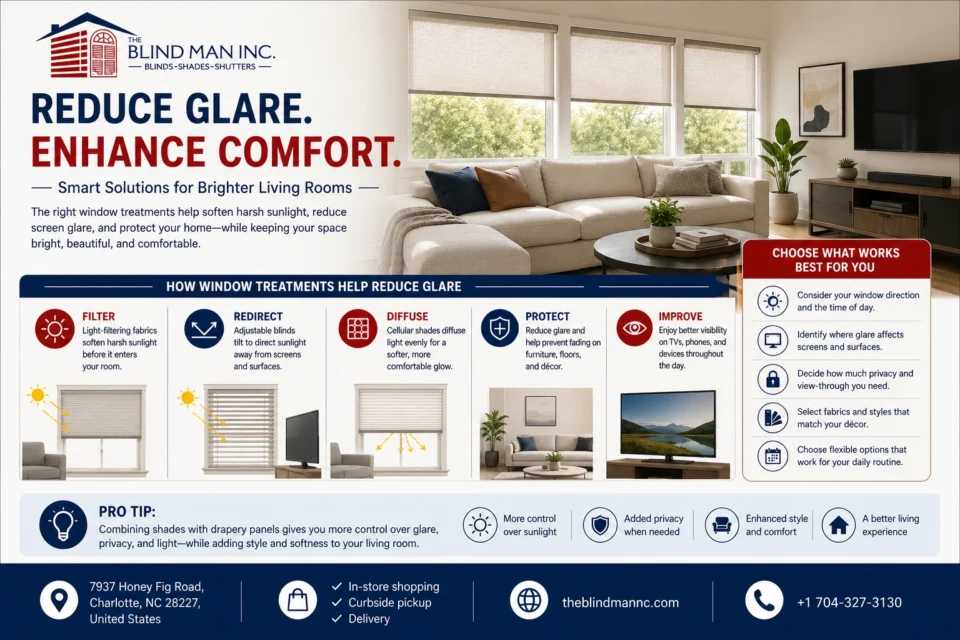
Glare Control for TVs, Screens, and Everyday Comfort
Many homeowners first notice glare problems when trying to watch TV during the day. Sunlight reflecting off the screen can make images harder to see, especially in rooms with large windows opposite or beside the television.
Glare can also affect:
- Laptops and tablets
- Home office areas within the living room
- Gaming screens
- Glass picture frames
- Mirrors and decorative accents
- Polished floors or tabletops
For TV and screen comfort, the position of the window treatment matters. Shades that cover the full window can help soften the brightness entering the room, while adjustable blinds can redirect sunlight away from screens.
In some cases, the best solution may involve more than the window treatment itself. Homeowners may also consider rearranging furniture, repositioning the TV, or adding layered treatments for more control at different times of day.
Living rooms are used throughout the day, so flexibility is important. A room may need soft daylight in the morning, stronger glare control in the afternoon, and privacy in the evening. Treatments that allow easy adjustment can make the space more comfortable without sacrificing style.
Glare control also supports long-term interior protection. While not every treatment blocks the same amount of UV exposure, reducing direct sunlight can help limit fading on furniture, flooring, artwork, and fabrics over time.
When Custom Shades Can Help
Custom shades can be helpful when standard window coverings do not provide the right fit, coverage, or level of light control. Living room windows often vary in size and shape, and even small gaps around a shade can allow bright light to enter at uncomfortable angles.
Custom sizing may help improve:
- Window coverage
- Light control
- Overall appearance
- Fit around trim or molding
- Operation for large or tall windows
- Consistency across multiple windows
Custom shades can also make it easier to match the treatment to the specific needs of the room. For example, a homeowner may want solar shades for large west-facing windows, light-filtering shades for side windows, and layered drapes for added softness.
This level of planning can be especially useful in living rooms with open layouts, multiple windows, or strong sunlight at specific times of day.
Custom options may also help homeowners choose the right fabric, opacity, mount style, and control type. An inside mount may create a clean look, while an outside mount may provide more coverage and reduce edge light. The better the treatment fits the window and the room’s lighting needs, the more comfortable the living space can feel.
Make Your Living Room More Comfortable With The Blind Man
Reducing glare in a living room does not have to mean giving up natural light. With the right window treatments, homeowners can soften harsh brightness, improve screen visibility, protect interior finishes, and keep the space feeling open and inviting.
At The Blind Man, we help homeowners choose window treatments that support comfort, light control, privacy, and style. Whether your living room gets strong afternoon sun, screen glare, or too much direct brightness, our team can help you find a practical solution that fits your home.
Share this article
Latest articles

October 13, 2026

October 13, 2026

October 13, 2026