

Window treatments should feel coordinated, but they do not always need to match exactly. Matching treatments can create a clean, cohesive look, while mixing styles can help each room function better.
For most homeowners, the best approach is balance. A home should feel connected from room to room, but bedrooms, bathrooms, living spaces, and sun-exposed areas often need different levels of privacy, light control, durability, and style.
At The Blind Man Inc., we help homeowners think through these choices so their window treatments look intentional and work well in everyday life.
When Matching Window Treatments Makes Sense
Matching window treatments can be a smart choice when homeowners want a simple, unified look throughout the home. This approach is especially useful in spaces where several windows are visible at once or where the design style is clean and consistent.
One of the biggest benefits of matching treatments is visual flow. When window coverings share the same color, material, and style, the home can feel more organized and connected. This is helpful in open floor plans, long hallways, great rooms, and homes with many windows facing the same shared area.
Matching treatments can also simplify design decisions. Instead of choosing a different product, fabric, color, and operating style for every room, homeowners can use one main design direction and adjust details only where needed. This can make the selection process feel less overwhelming.
Another benefit is resale appeal. A home with coordinated window treatments may feel more polished to potential buyers. Matching or well-coordinated treatments can make rooms feel finished, maintained, and thoughtfully designed.
Matching can also enhance architectural consistency. If a home has repeated window shapes, symmetrical layouts, or a strong architectural style, similar window treatments can highlight those features. For example, matching shades across a row of living room windows can make the wall feel balanced and intentional.
This approach is especially popular in open floor plans. When the kitchen, dining area, and living room are all visible at the same time, mismatched treatments can disrupt the flow. Coordinated window coverings help the entire space feel calm and connected.
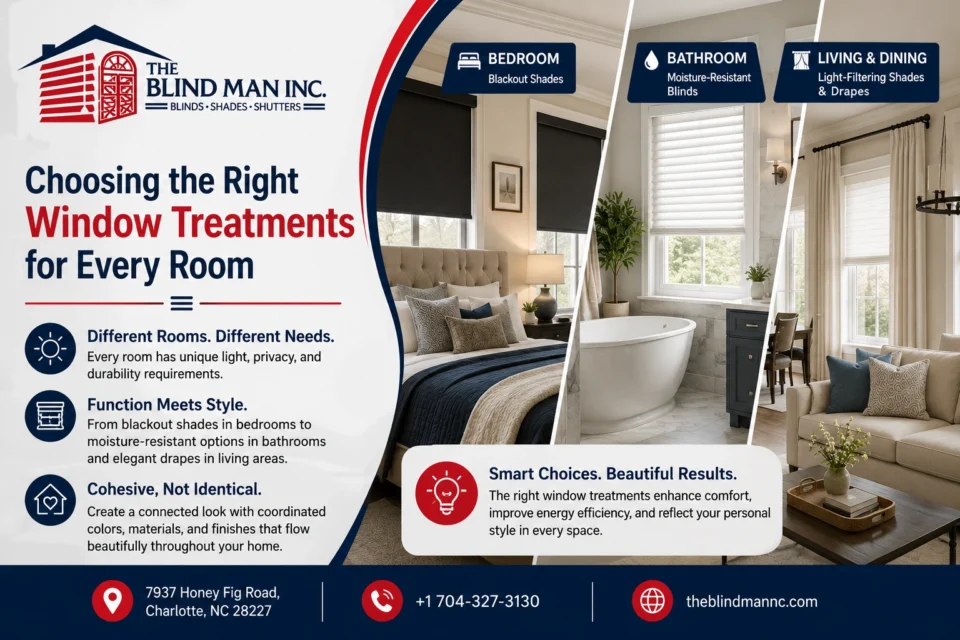
However, matching does not necessarily mean every room must use the exact same product. A homeowner may use the same color family throughout the house but choose blackout shades in bedrooms, moisture-resistant treatments in bathrooms, and light-filtering shades in living areas. The result can still feel cohesive because the colors, materials, or design details are connected.
Matching works best when the home has a consistent design style, similar window sizes, and similar light-control needs. It can also be helpful for homeowners who prefer a clean, simple look.
When Mixing Window Treatments Works Better
Mixing window treatments often works better when different rooms have different needs. A home is not used the same way from room to room, so the window coverings do not always need to be identical.
Bedrooms are a good example. Many bedrooms need stronger light control for sleep, privacy, and comfort. Blackout shades or room-darkening treatments may be more practical there than the light-filtering shades used in the living room.
Bathrooms have different requirements. They need privacy, moisture resistance, and easy cleaning. A treatment that works beautifully in a formal dining room may not be a good fit for a humid bathroom. Faux wood blinds, vinyl blinds, composite shutters, or moisture-friendly shades may perform better in those spaces.
Sun-exposed rooms may need solar shades or other UV-filtering options. A west-facing room with strong afternoon sun may need glare reduction and heat control, while a shaded guest room may not need that same level of protection.
Formal spaces may call for decorative draperies. Dining rooms, sitting rooms, or primary bedrooms may benefit from softer fabric, added height, or a more finished design. In those rooms, drapes can create warmth and style that may not be necessary in a kitchen or office.
Mixing treatments is also useful when window sizes vary. A sliding glass door, a small bathroom window, a tall living room window, and a bedroom window may each require a different solution. Trying to force one product across every opening can lead to poor function or awkward design.
The key is to balance functionality with design consistency. Variety can still feel intentional when the choices share something in common. For example, homeowners may mix blinds, shades, and drapes while keeping the same neutral color palette. They may choose different products but use matching hardware finishes. They may also keep exterior-facing colors consistent so the home looks unified from the outside.
Mixing window treatments should not feel random. Each choice should solve a room-specific problem while still supporting the overall look of the home.
How to Keep Window Treatments Cohesive
A home can feel cohesive even when the window treatments are not identical. The goal is to create subtle design connections from room to room. These connections help different treatments feel like part of the same overall plan.
Homeowners comparing different styles should focus on how each room is used, which windows are visible together, and which design details can stay consistent across the home.
Consistent Color Palettes
Color is one of the easiest ways to create unity. Window treatments in the same color family can look coordinated even if the products are different. Soft whites, warm neutrals, grays, tans, and natural tones often work well throughout a home.
For example, a homeowner might choose white cellular shades in bedrooms, white faux wood blinds in bathrooms, and white roller shades in the living room. The products differ, but the shared color keeps the design connected.
Similar Fabric Textures
Texture can also help create harmony. If one room has a soft woven shade, nearby rooms may look better with fabrics that have a similar softness or texture. If the home has a sleek modern style, smoother fabrics and clean lines may work better across the space.
The treatments do not need to match exactly, but they should feel compatible.
Coordinated Hardware Finishes
Hardware matters more than many homeowners realize. Drapery rods, brackets, tracks, valances, and visible components should coordinate with other finishes in the home.
Black, bronze, brushed nickel, white, or wood-toned finishes can all work well depending on the design. Keeping these finishes consistent can make mixed window treatments feel more intentional.
Matching Liner Colors Visible From the Exterior
The exterior view is important, especially for street-facing windows. Even if the interior treatments vary by room, matching liner colors or exterior-facing backings can help the home look uniform from outside.
This is a practical way to customize the inside while maintaining curb appeal.
Consistent Operating Styles
Operating style can also create a sense of consistency. Cordless, motorized, or similarly controlled treatments can make the home easier to use and visually cleaner.
For example, using cordless shades throughout bedrooms and main living areas can create a neat appearance, even if the fabric or light-control level changes from room to room.
Subtle design connections create harmony. A home can have variety without feeling mismatched when the details are coordinated carefully.
Why Street-Facing Windows Should Look Coordinated
Street-facing windows deserve special attention because they affect curb appeal. These are the windows neighbors, guests, and passersby see first. If each front-facing window has a completely different backing, color, or profile, the exterior of the home may look uneven.
Uniform street-facing windows can improve the appearance of the home from outside. This does not mean every interior room must look the same. It simply means the exterior-facing side should appear coordinated.
Consistent Backing Materials
Some window treatments have backings or liners that face the exterior. Choosing consistent backing materials can help create a clean outside appearance, even when the inside of each room uses a different fabric or style.
Matching Exterior-Facing Colors
White or neutral exterior-facing colors are commonly used because they blend well with many home styles. Matching these colors across street-facing windows can make the home look more polished.
Similar Treatment Profiles
The profile of a window treatment also affects curb appeal. A row of front-facing windows may look better when the treatments sit at similar heights or have similar proportions. This can be especially important for homes with symmetrical architecture.
Homeowners can still customize interiors while keeping the outside consistent. For example, a bedroom may have room-darkening shades, an office may have light-filtering shades, and a bathroom may have moisture-resistant blinds. From the outside, they can still appear coordinated if the backings, colors, or general profiles match.
Street-facing consistency is one of the easiest ways to balance room-specific needs with the overall appearance of the home.
How a Window Treatment Consultation Helps
Professional design guidance can be helpful when a home has many windows, mixed room requirements, or an open layout where everything needs to feel connected. Choosing window treatments room by room can become complicated, especially when homeowners want both consistency and function.
A consultation can help homeowners compare room-specific needs, whole-home design goals, window sizes, privacy requirements, and long-term maintenance preferences before making final selections.
Multiple Window Types
Homes often include several window types, such as standard windows, arched windows, bay windows, sliding doors, sidelights, and large picture windows. Each may need a different treatment style or mounting approach.
A consultation can help homeowners understand which options work best for each window while still maintaining a coordinated design.
Large Homes
In larger homes, it can be difficult to keep selections organized. A homeowner may need window treatments for bedrooms, bathrooms, living areas, offices, dining rooms, and specialty spaces. Design guidance can help create a consistent plan instead of a collection of unrelated choices.
Open-Concept Layouts
Open-concept homes need special attention because many windows are visible at the same time. A consultation can help determine where matching matters most and where different treatments may be appropriate.
Mixed Design Styles
Some homes include a mix of traditional, modern, transitional, or casual design elements. In these cases, window treatments can help connect the styles. The right colors, materials, and finishes can bring balance to the home.
Unique Privacy or Light-Control Needs
Some rooms need extra privacy. Others need glare control, blackout coverage, UV protection, or moisture resistance. A tailored approach can help address each need without making the home feel inconsistent.
A consultation can help homeowners make informed decisions about style, function, fit, and long-term use. The goal is not to make every window look identical. The goal is to create a home that feels cohesive, comfortable, and practical.
FAQs About Matching Window Treatments
Should all window treatments in a house be the same?
No, all window treatments in a house do not need to be the same. They should feel coordinated, but different rooms may need different solutions based on privacy, light control, moisture, style, and daily use.
Is it okay to mix blinds and shades throughout a home?
Yes, it is okay to mix blinds and shades throughout a home. The key is to keep the overall look cohesive through color, material, hardware finish, or exterior-facing consistency.
Do matching window treatments increase home value?
Matching or coordinated window treatments can improve the finished look of a home, which may support resale appeal. They can make the home feel more polished, organized, and thoughtfully designed, especially when street-facing windows and shared spaces look cohesive.
Should street-facing windows match?
Street-facing windows should usually look coordinated from the exterior. Matching exterior-facing colors, liner materials, or treatment profiles can improve curb appeal while still allowing each room to have the function it needs.
How can I mix window treatments without making the home look inconsistent?
Use a consistent color palette, similar textures, coordinated hardware, matching exterior-facing backings, and related operating styles. These details allow variety while keeping the overall design connected.
What is the best approach for open-concept homes?
In open-concept homes, window treatments should be visually coordinated because multiple areas are seen at once. They do not need to be identical, but they should share colors, materials, style direction, or hardware finishes.
Create a Home That Feels Connected and Practical
Window treatments do not have to match perfectly throughout the entire house, but they should feel intentional. Matching can create visual flow and simplicity, while mixing can help each room function better.
At The Blind Man Inc., we help homeowners choose window treatments that support privacy, light control, comfort, and design consistency. Whether you prefer a uniform look or a thoughtful mix of styles, the right approach can make your home feel more cohesive, comfortable, and complete.
Share this article
Latest articles

October 13, 2026
October 13, 2026

October 13, 2026