
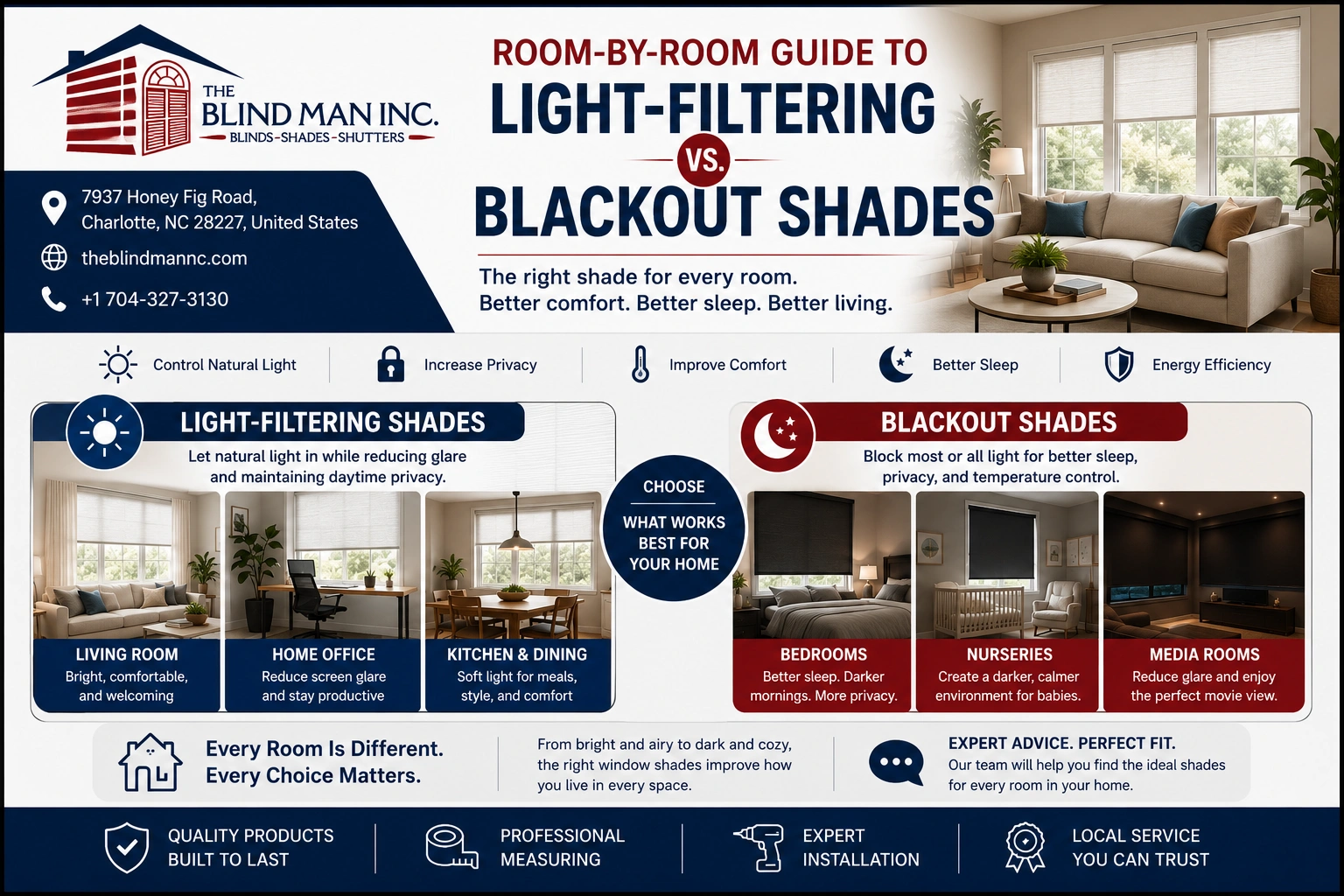
Choosing the right window shades is about more than style alone. Some rooms benefit from soft natural light and daytime privacy, while others need maximum darkness for sleep, glare reduction, or comfort. Understanding the difference between light-filtering and blackout shades can help homeowners choose the right solution for every room in the house.
The best choice depends on how the room is used, how much sunlight it receives, your privacy needs, and the atmosphere you want to create. In many homes, the ideal setup is not choosing a single shade opacity for the entire house, but selecting different solutions based on the purpose of each space.
Whether you are designing a relaxing bedroom, a bright living room, or a productive home office, the right window shades can improve comfort, privacy, energy efficiency, and daily functionality.
Understanding the Difference Between Light-Filtering and Blackout Shades
Before choosing room-by-room recommendations, it helps to understand what each type of shade is designed to do.
What Are Light-Filtering Shades?
Light-filtering shades allow natural daylight into the room while diffusing harsh sunlight. Instead of completely blocking light, they soften brightness to create a more comfortable and inviting atmosphere.
These shades are designed to:
- Maintain a bright and airy feel
- Reduce harsh glare
- Improve daytime privacy
- Create softer lighting throughout the room
- Preserve a more open appearance
Light-filtering shades are especially popular in living spaces where homeowners still want sunlight during the day without feeling overly exposed.
What Are Blackout Shades?
Blackout shades are designed to block most or nearly all incoming light. They use thicker fabrics or specially lined materials to create a darker environment.
Blackout window shades help:
- Improve sleep quality
- Reduce glare on screens and TVs
- Increase nighttime privacy
- Create better room darkening
- Reduce heat and UV exposure
These shades are commonly used in bedrooms, nurseries, media rooms, and other spaces where stronger light control is important.
The Main Difference Between the Two
The biggest difference comes down to how much natural light you want inside the room.
Light-filtering shades are designed to maintain brightness while softening sunlight.
Blackout shades are designed to maximize darkness and privacy.
The best option depends entirely on how the room is used and how much light control you want throughout the day.
Signs You May Have the Wrong Shade Opacity
Many homeowners do not realize their current window shades are creating comfort issues until they begin noticing daily frustrations.
Common signs your shades may not be the right fit include:
- Rooms feeling too dark during the day
- Harsh glare on televisions or computer screens
- Waking up too early from sunlight
- Limited nighttime privacy
- Rooms overheating during the afternoon
- Constantly adjusting blinds or curtains throughout the day
The right shade opacity should make a room feel more comfortable, functional, and easier to use from morning to night.
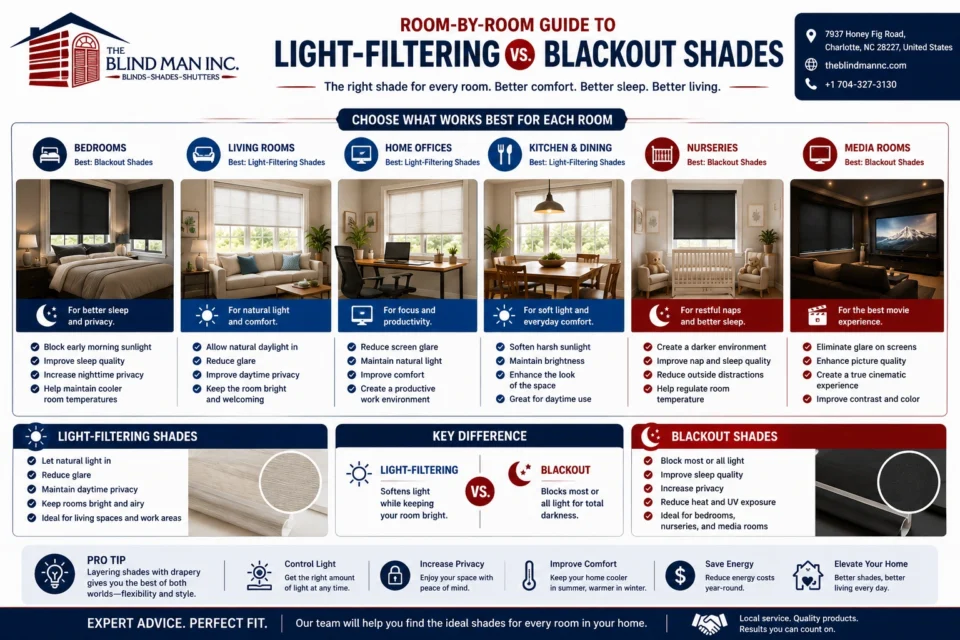
Best Shade Options for Bedrooms
Bedrooms are one of the most common spaces where homeowners choose blackout shades, but every bedroom has slightly different needs.
Why Blackout Shades Work Well in Bedrooms
Many homeowners prefer blackout shades in bedrooms because they:
- Block early morning sunlight
- Improve sleep conditions
- Reduce outside light pollution
- Increase nighttime privacy
- Help maintain cooler room temperatures
This is especially useful for:
- Shift workers
- Light-sensitive sleepers
- Children’s bedrooms
- Nurseries
- Homes near streetlights
Blackout roller shades and blackout cellular shades are particularly popular because they provide both darkness and insulation.
When Light-Filtering Shades Work in Bedrooms
Some homeowners still prefer a softer and brighter atmosphere during the day, especially in guest rooms or secondary bedrooms.
In these spaces, light-filtering shades may provide enough privacy while helping the room feel more open and airy.
A common solution is layering window treatments by combining:
- Light-filtering shades for daytime use
- Drapery panels for additional nighttime privacy
This approach creates more flexibility while giving the room a more layered and polished appearance.
Best Bedroom Recommendation
For most primary bedrooms, blackout shades provide the best combination of privacy, comfort, and sleep support. However, layered treatments often create the best balance between daylight and room darkening.
Best Shade Options for Living Rooms
Living rooms are typically designed to feel welcoming, comfortable, and bright. In many cases, homeowners want to preserve natural light while still reducing glare and improving privacy.
Why Light-Filtering Shades Work Best
Light-filtering shades are often ideal for living rooms because they:
- Allow natural daylight into the space
- Reduce harsh glare
- Improve daytime privacy
- Keep the room feeling open and comfortable
- Create a warm and inviting atmosphere
These shades work especially well in:
- Open-concept homes
- Front-facing living rooms
- Rooms with oversized windows
- Spaces used throughout the day
Popular styles include:
- Roller shades
- Roman shades
- Sheer shades
- Light-filtering cellular shades
When Blackout Shades Make Sense in Living Rooms
Some living rooms may still benefit from blackout shades, especially when:
- The room doubles as a media room
- Afternoon glare becomes excessive
- Large windows create overheating
- Privacy is a major concern
Motorized blackout shades are especially useful in rooms with large windows where sunlight changes throughout the day.
Best Living Room Recommendation
Light-filtering shades are usually the preferred option for living rooms because they preserve brightness and comfort while improving glare control and privacy.
Best Shade Options for Home Offices
Home offices require a balance between productivity, comfort, and screen visibility. Too much direct sunlight can create glare on monitors, while rooms that are too dark may feel less energizing throughout the day.
Why Light-Filtering Shades Often Work Best
Light-filtering shades help create a more comfortable workspace by:
- Reducing eye strain
- Softening harsh sunlight
- Maintaining natural daylight
- Improving visual comfort during video calls
Natural light can also help improve focus and mood, making filtered daylight a popular choice for home office environments.
When Blackout Shades Are Better
Some home offices may benefit from blackout shades when:
- The room receives intense direct sunlight
- Screen glare becomes distracting
- The space is used for presentations or editing
- Additional privacy is needed
In many cases, dual-shade systems provide the most flexibility by combining:
- A light-filtering layer for daytime use
- A blackout layer for stronger light control
Best Home Office Recommendation
For most home offices, light-filtering shades provide the best balance between brightness and glare reduction. However, dual-shade systems are ideal for homeowners who want more flexible lighting control throughout the day.
How to Choose the Right Shade Opacity
Choosing between filtered light and room-darkening shades involves more than simply deciding whether you want a brighter or darker room.
Consider Privacy Needs
Rooms facing busy streets or neighboring homes may require stronger privacy solutions, especially at night.
Blackout shades typically provide:
- Greater nighttime privacy
- Less interior visibility
- Stronger room darkening
Light-filtering shades typically provide:
- Good daytime privacy
- Softer visibility control
- More natural daylight
Think About the Purpose of the Room
Ask yourself:
- Is the room primarily used for sleeping?
- Do you want the space to feel bright and open?
- Is glare affecting screens or TVs?
- Does the room become too warm during the day?
The answers usually help determine the ideal shade opacity.
Evaluate Sun Exposure
Rooms with western or southern exposure often receive intense afternoon sunlight. In these spaces, blackout or solar-blocking materials may improve comfort and energy efficiency.
Consider Layered Window Treatments
Many homeowners combine:
- Light-filtering shades
- Blackout drapery
- Dual roller shades
Layered window treatments provide better flexibility throughout the day while improving both style and functionality.
Think About Design Preferences
Light-filtering fabrics often create a softer and more decorative atmosphere, while blackout shades tend to feel more functional and dramatic.
Fortunately, modern fabrics allow homeowners to combine attractive design with high performance.
Conclusion
The right window shades can completely change how a room feels throughout the day. Choosing the proper opacity for each space helps improve comfort, privacy, light control, and overall functionality while still complementing your home’s design.
Light-filtering shades are ideal for maintaining brightness, reducing glare, and creating inviting living spaces. Blackout shades provide stronger privacy, better sleep conditions, and maximum light control in rooms where darkness matters most.
In many homes, the best solution is using different shade opacities based on the needs of each room. Bedrooms often benefit from blackout coverage, while living rooms and home offices typically perform better with filtered natural light.
Thoughtfully selected window treatments can make every room in the home feel more comfortable, functional, and enjoyable to use.
Frequently Asked Questions
What is the difference between light-filtering and blackout shades?
Light-filtering shades soften and diffuse incoming sunlight while still allowing natural light into the room. Blackout shades block most or nearly all incoming light for maximum darkness and privacy.
Are blackout shades better for bedrooms?
Yes. Blackout shades are often recommended for bedrooms because they improve sleep quality, reduce outside light, and provide stronger nighttime privacy.
Do light-filtering shades provide privacy at night?
Light-filtering shades provide good daytime privacy, but at night interior lighting may make silhouettes visible from outside. Layering with drapery can improve nighttime privacy.
Which shades are best for living rooms?
Light-filtering shades are commonly the best choice for living rooms because they preserve natural daylight while reducing glare and maintaining privacy.
Can I combine light-filtering and blackout shades?
Yes. Many homeowners use dual shades or layered window treatments to switch between filtered daylight and full blackout coverage depending on the time of day.
Are blackout shades completely dark?
Most blackout shades block nearly all incoming light, but small gaps around the edges may still allow minimal light into the room unless layered treatments or side channels are added.
Share this article
Latest articles

October 13, 2026
October 13, 2026

October 13, 2026