
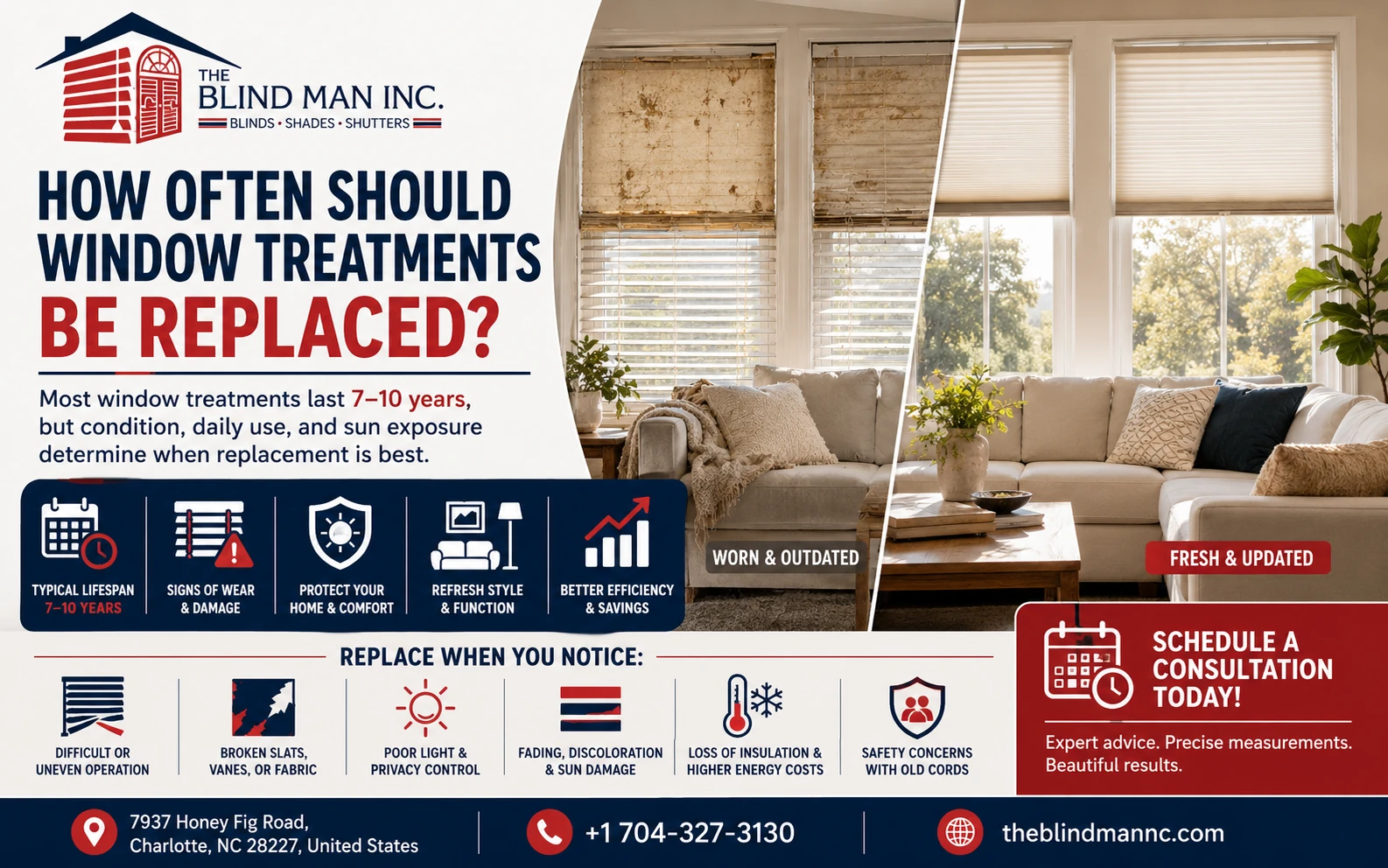
Window treatments should usually be replaced every seven to ten years, depending on their material, condition, and daily exposure to sunlight. Some blinds, shades, shutters, and curtains last longer, but visible damage, poor operation, fading, or outdated performance often means replacement is the better choice.
Age alone should not decide the timing. A quality shutter may remain functional for decades, while a heavily used roller shade may fail sooner. Regular inspections help homeowners catch declining performance before it affects comfort, privacy, efficiency, or appearance. Condition and performance should guide timing.
Signs Your Window Treatments Are Worn Out
Daily use makes gradual wear easy to overlook. A blind may require extra force, while a shade may hang unevenly or leave gaps. These problems often indicate weakening internal parts.
Difficult or Uneven Operation
Blinds and shades should move smoothly. Sticking, crooked movement, or repeated cord problems suggest worn mechanisms. Motorized treatments may move slowly, stop incorrectly, or lose connection.
A treatment that does not close correctly can reduce privacy, increase glare, and admit unwanted heat.
Broken Slats, Vanes, or Fabric
Cracked slats, bent vanes, torn fabric, and loose seams make a window look neglected. Minor damage may be repairable, but widespread damage usually signals the end of the product’s useful life.
Poor Light and Privacy Control
Older treatments can lose their shape. Blinds may not close tightly, shades may sag or develop gaps, and curtains may become too thin.
Consider replacement when privacy or light control declines, even if the hardware still works.
When Repairs Are Not Worth It
Repairs make sense when damage is limited and parts are available. They become less practical as costs approach the price of replacement.
Repeated Mechanical Problems
One broken cord or bracket can often be fixed. When parts keep failing after repairs, the treatment is probably worn beyond a practical point.
Several service visits may cost more than a stronger, updated replacement.
Discontinued Parts
Manufacturers change hardware and product lines. Parts for older treatments may be unavailable, and similar parts may not fit or operate correctly.
Custom fabrication can be expensive, making replacement more reliable and economical.
Safety Concerns
Older corded blinds may create risks for children or pets. Tangled, damaged, or accessible cords should not be ignored.
Modern cordless and motorized options improve function and household safety.
How Fading and Damage Affect the Room
Sunlight changes fabrics, wood, plastics, and finishes. South-facing and west-facing windows often show damage first.
Uneven Color Changes
Fading rarely happens evenly. One side of a curtain may look lighter. The front edge of a Roman shade may lose color while protected folds remain darker. Wood blinds may develop noticeable differences between exposed and covered areas.
Uneven fading can make an otherwise updated room feel old.
Reduced Protection From Sunlight
Damaged shades may admit ultraviolet light that fades flooring, rugs, artwork, upholstery, and cabinetry.
Replacement protects interior investments. Solar shades, lined draperies, cellular shades, and shutters provide effective light management.
Loss of Insulation
Gaps, warping, and sagging fabric reduce insulation, making rooms warmer in summer and colder in winter.
Energy-efficient replacements stabilize temperatures and reduce heating and cooling demand.
When Style Updates Make Sense
Treatments need not break before replacement. Style, room function, and daily habits may change first.
The Room Has Been Remodeled
New flooring, paint, furniture, or cabinetry can make old window treatments look disconnected from the updated room. Their color, texture, or proportion may no longer support the new design.
Replacing them helps create a finished appearance instead of making the window look like an afterthought.
Your Needs Have Changed
A nursery may become a home office. A guest room may become a primary bedroom. A formal living room may become a media space.
Each use has different needs for privacy, glare reduction, light control, and insulation. Updated treatments can support how the room is currently used.
You Want Easier Operation
Cordless lifts, top-down bottom-up shades, remote controls, and smart home integration can make daily use easier. These features are especially useful for tall windows, wide openings, and hard-to-reach areas.
Planning a Replacement Consultation
A professional consultation helps homeowners compare products based on performance, measurements, and room conditions. Preparation makes the process more useful.
Identify the Main Problems
Before the appointment, note what is not working. Common concerns include heat, glare, fading, privacy, difficult operation, outdated style, and poor fit.
Be specific about when the problem occurs. Afternoon glare may require a different solution than morning brightness.
Consider Each Room Separately
One treatment does not suit every space. Bedrooms may need room-darkening shades. Kitchens may need moisture-resistant materials. Living rooms may benefit from adjustable light filtering. Offices may require glare control without blocking natural light.
Set a Practical Budget
Replacement costs depend on window size, material, operating system, lining, motorization, and installation requirements. A clear budget helps the consultant recommend options that meet priorities without adding unnecessary features.
Homeowners can also replace treatments in phases. Starting with the most damaged or heavily used rooms can make a larger project easier to manage.
Ask About Measurements and Installation
Precise measurements affect appearance, light gaps, privacy, and operation. Professional installation also helps prevent crooked mounting, loose brackets, and avoidable product damage.
Ask what the quote includes, how long production may take, and whether old treatments will be removed.
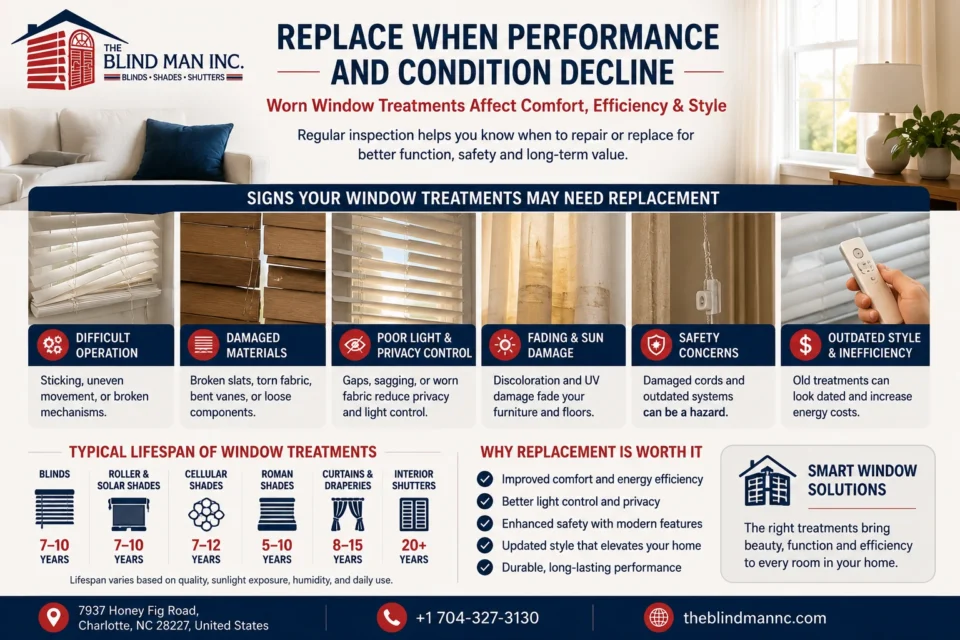
How Long Do Different Window Treatments Last?
Lifespan varies based on quality, sunlight, humidity, maintenance, and frequency of use. The following ranges are general estimates, not fixed rules.
Blinds
Aluminum and faux wood blinds often last seven to ten years. Higher-quality products may last longer with careful use. Bent slats, broken tilt mechanisms, and lifting problems are common reasons for replacement.
Natural wood blinds can last ten years or more, but strong sunlight and humidity may cause fading or warping.
Roller and Solar Shades
Roller shades commonly last seven to ten years. Solar shades may last longer when the fabric and operating system are well made.
Replacement may be needed when the fabric curls, frays, stains, or stops rolling evenly.
Cellular Shades
Cellular shades often last seven to twelve years. Their fabric cells can lose shape, collect dust, or separate over time. Cords and internal lift systems may also wear with frequent use.
Roman Shades
Roman shades generally last five to ten years. Fabric quality, lining, sunlight exposure, and lifting hardware strongly affect their lifespan.
Fading, uneven folds, worn cords, and damaged seams are common signs that replacement is appropriate.
Curtains and Draperies
Quality draperies can last eight to fifteen years. Lined fabrics usually resist sun damage better than unlined materials.
Replacement may be needed because of fading, staining, weakened fabric, outdated sizing, or a change in room design.
Interior Shutters
Well-made interior shutters can last twenty years or longer. Composite and hardwood shutters are durable when properly installed and maintained.
Individual louvers or magnets may sometimes be repaired. Full replacement is usually considered when frames warp, panels sag, or widespread finish damage appears.
Refresh Your Home With New Window Treatments
Replacing worn window treatments can improve comfort, privacy, light control, and the appearance of every room. The right choice should fit the window accurately and support how the space is used throughout the day.
The Blind Man helps homeowners compare blinds, shades, shutters, draperies, and motorized options based on practical needs and design preferences. A professional consultation can clarify which treatments should be repaired, replaced, or upgraded. Thoughtful recommendations and precise installation help create windows that look finished, operate smoothly, and perform reliably for years.
Key Takeaways
Most window treatments should be evaluated after seven to ten years, but condition matters more than age alone. Replace them when they become difficult to operate, damaged, faded, unsafe, poorly fitted, or unable to provide enough privacy and light control. Repairs are worthwhile when problems are minor and parts remain available. Replacement is usually smarter when failures repeat or performance has declined. A professional consultation helps match each room with durable materials, accurate measurements, suitable operating features, and a realistic budget for long-term comfort and appearance for years after installation.
Share this article
Latest articles

October 13, 2026
October 13, 2026
October 13, 2026