
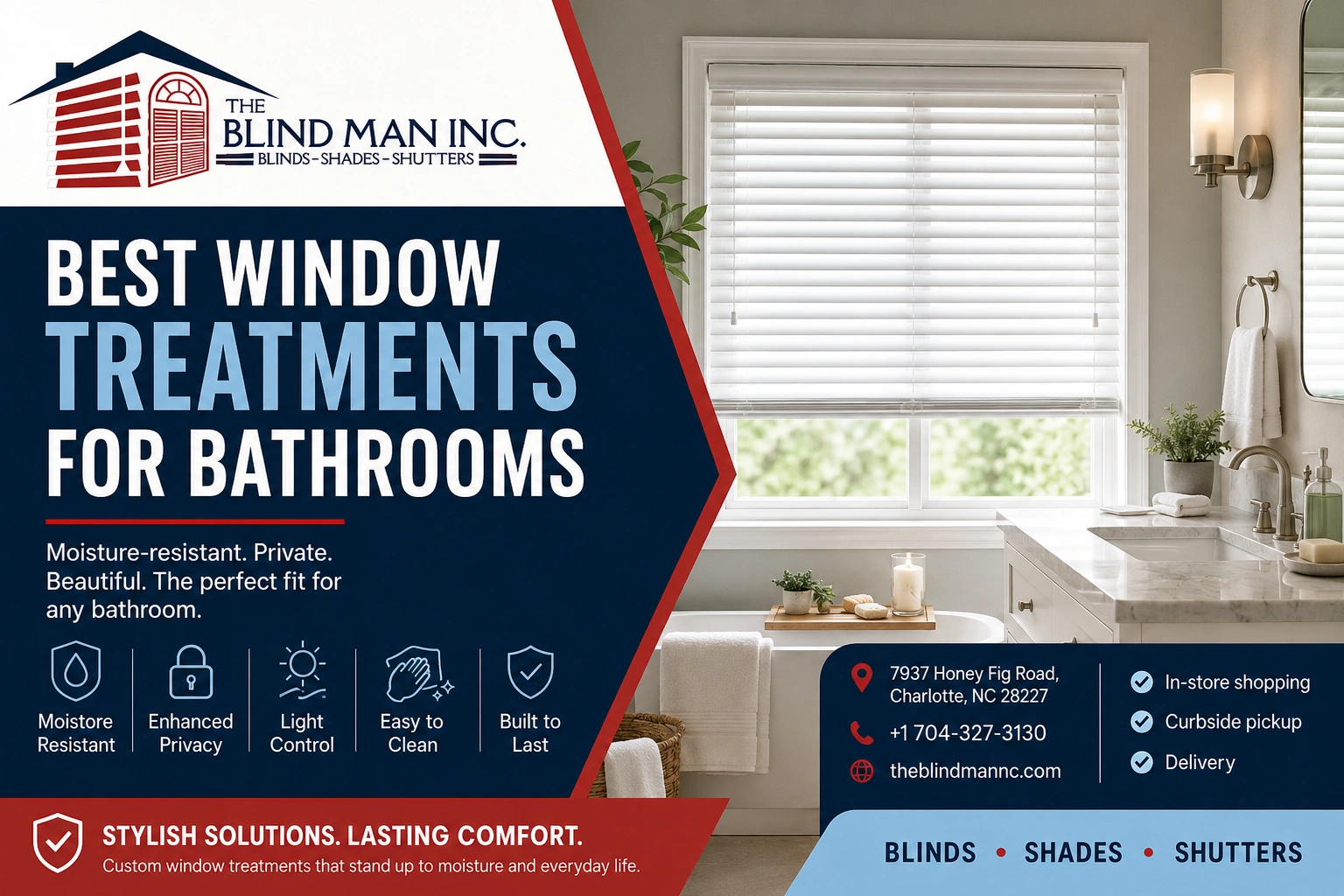
The best window treatments for bathrooms are options that can handle moisture, protect privacy, and still let the room feel bright and comfortable. Faux wood blinds, vinyl blinds, composite shutters, privacy roller shades, and certain cellular shades are often good choices because they can balance durability, light control, and privacy.
Bathrooms create a unique challenge because window coverings are exposed to steam, humidity, splashes, and changing temperatures almost every day. The right choice should resist warping, mildew, fading, and material breakdown while giving you control over visibility and natural light.
For homeowners, the right choice is not just about appearance. A bathroom window treatment needs to function well in a humid space while helping the room feel comfortable and private. At The Blind Man Inc., we help homeowners choose bathroom-friendly window treatments that fit the space, perform well, and hold up to daily use.
Why Bathrooms Need Moisture-Friendly Materials
Bathrooms are one of the most demanding rooms in the home for window treatments. Even with a good exhaust fan, moisture from showers, baths, sinks, and daily use can linger in the air. Over time, that humidity can affect materials that are not designed for damp environments.
Moisture exposure can lead to several common problems, including:
- Warping: Some materials expand and contract when exposed to humidity. Natural wood, for example, may bend, twist, or lose its shape if it absorbs too much moisture. Once a window treatment warps, it may not open, close, or sit evenly against the window.
- Mold growth: Bathrooms that stay damp can create conditions where mold may develop. Window treatments with porous materials, thick fabrics, or surfaces that trap moisture can become harder to clean and maintain.
- Mildew: Mildew is another concern in humid spaces. It can create unpleasant odors, discoloration, and staining. In bathrooms, materials that dry quickly and wipe clean are often a better fit.
- Fading: Bathroom windows may receive strong sunlight, especially in smaller rooms with limited wall space. When moisture and sunlight combine, some fabrics and finishes can fade more quickly.
- Material deterioration: Humidity can weaken adhesives, coatings, fabrics, and finishes over time. This can cause peeling, cracking, fraying, or general wear that shortens the lifespan of the product.
Because of these issues, material selection matters more in bathrooms than in many other rooms. Homeowners should look for window treatments that are moisture resistant, easy to clean, and designed to perform well in humid conditions.
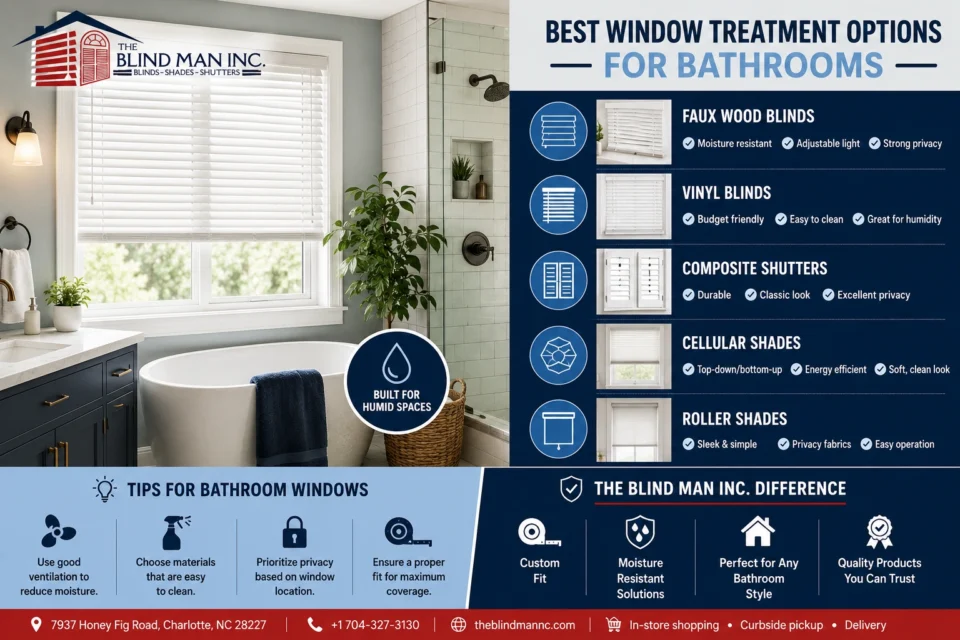
Common moisture-friendly options include faux wood blinds, vinyl blinds, composite shutters, certain roller shades, and some cellular shades made with bathroom-appropriate fabrics. These choices can provide privacy, light control, and durability without requiring heavy maintenance.
Best Bathroom Window Treatments for Privacy
Privacy is usually the top concern for bathroom windows. The right option depends on the window’s size, location, height, and how close it is to neighboring homes, sidewalks, patios, or driveways.
Homeowners who are focused on privacy should compare materials, opacity levels, slat control, and fit before choosing a bathroom window treatment. For bathrooms facing neighbors, sidewalks, or driveways, privacy should be treated as a top priority, not an afterthought.
Faux Wood Blinds
Faux wood blinds are one of the most popular bathroom window treatment options because they offer the look of wood with better moisture resistance. Unlike untreated natural wood, faux wood typically handles humidity more effectively.
They provide strong privacy because the slats can be tilted closed, partially open, or fully raised. This gives homeowners control throughout the day. For bathrooms facing a neighbor’s home or a busy street, faux wood blinds are a practical and durable choice.
Privacy level: High when closed, adjustable when tilted.
Vinyl Blinds
Vinyl blinds are another bathroom-friendly option. They resist moisture, are easy to wipe clean, and are typically lightweight. They can work well in guest bathrooms, powder rooms, or smaller spaces where simple function is the main priority.
Vinyl blinds also provide adjustable privacy. The slats can be tilted to block views while still letting some daylight into the room.
Privacy level: Moderate to high, depending on slat quality and fit.
Composite Shutters
Composite shutters offer a more finished, built-in appearance while still performing well in humid areas. They are often used in bathrooms where homeowners want durability, privacy, and a clean architectural look.
Because shutters have adjustable louvers, they allow excellent privacy control. They can be fully closed when needed or angled to bring in light while limiting visibility from outside.
Privacy level: High, especially with a proper fit.
Cellular Shades
Cellular shades can be a good choice for bathrooms when made from suitable materials. Their soft appearance works well in bathrooms where homeowners want a warmer look than blinds or shutters.
Top-down/bottom-up cellular shades are especially useful in bathrooms. They allow the top portion of the window to remain open for natural light while keeping the lower portion covered for privacy.
For bathrooms, homeowners should choose cellular shade fabrics carefully. Some fabrics are better suited to humidity than others, so material selection matters.
Privacy level: Moderate to high, depending on fabric opacity.
Roller Shades With Privacy Fabrics
Roller shades are simple, clean, and easy to operate. For bathrooms, privacy or room-darkening fabrics are usually better than sheer fabrics. Light-filtering privacy fabrics can soften sunlight while limiting visibility.
Roller shades work especially well for modern bathrooms, narrow windows, and spaces where homeowners prefer a minimal look. The key is choosing a fabric that offers enough privacy for the room’s location.
Privacy level: Moderate to high, depending on fabric selection.
Privacy Glass Pairings
Some homeowners combine window treatments with frosted, textured, or privacy glass. This can be helpful in bathrooms where constant privacy is needed but natural light is still important.
Privacy glass can reduce visibility, while blinds, shades, or shutters add another layer of control. This pairing works well for windows near showers, tubs, or street-facing walls.
Privacy level: High when combined with the right window treatment.
Different bathroom layouts require different privacy solutions. A small powder room facing a backyard may not need the same level of coverage as a primary bathroom window facing a neighboring property. The closer the window is to outside visibility, the more important it is to choose a treatment with strong privacy and a precise fit.
What Window Treatments Should You Avoid in Bathrooms?
Not every window treatment is a good match for a bathroom. Some products may look beautiful at first but struggle with daily exposure to moisture and steam.
Untreated Natural Wood
Natural wood can add warmth and character, but untreated wood is usually not the best choice for humid bathrooms. Moisture can cause it to swell, warp, crack, or lose its finish. If a homeowner wants a wood-like look, faux wood or composite materials are often better choices.
Heavy Drapery Fabrics
Heavy drapes can absorb moisture and take longer to dry. In a bathroom, this can increase the risk of mildew, odor, and staining. Thick fabrics may also be harder to clean, especially if the bathroom lacks strong ventilation.
Moisture-Sensitive Materials
Some woven, paper-based, or delicate fabrics may not hold up well in damp spaces. Materials that absorb humidity can lose their shape or develop discoloration over time.
A common mistake is choosing a bathroom window treatment based only on style. While appearance matters, performance should come first in humid rooms. A product that works well in a bedroom or living room may not be suitable for a bathroom.
Homeowners should also avoid poor-fitting options. Gaps along the sides of a window treatment can reduce privacy, especially at night when the bathroom lights are on. In bathrooms, the fit is just as important as the material.
How to Control Light Without Losing Privacy
A good bathroom window treatment should protect privacy without making the room feel dark or closed in. Natural light is valuable in bathrooms because it makes the space feel cleaner, brighter, and more comfortable.
The challenge is choosing an option that allows daylight while limiting visibility from outside.
Top-Down/Bottom-Up Shades
Top-down/bottom-up shades are one of the best choices for balancing privacy and light. Homeowners can lower the shade from the top, letting sunlight enter through the upper part of the window while keeping the lower part covered.
This is especially helpful for bathrooms where the window is at eye level or faces another home. It gives the room brightness without sacrificing comfort.
Light-Filtering Fabrics
Light-filtering fabrics soften sunlight and reduce glare. They can make a bathroom feel calm and comfortable while still offering daytime privacy.
However, homeowners should choose these fabrics carefully. Some lighter fabrics may provide privacy during the day but become less private at night when indoor lights are on. For bathrooms, privacy-rated light-filtering fabrics are usually a safer option.
Adjustable Blinds
Blinds are practical because the slats can be adjusted throughout the day. They can be tilted upward to bring in light while blocking direct views from outside. They can also be closed completely when full privacy is needed.
Faux wood and vinyl blinds are especially useful in bathrooms because they offer moisture resistance and easy light control.
Frosted or Textured Glass Pairings
Frosted or textured glass can work well with shades, shutters, or blinds. It allows natural light to pass through while blurring visibility.
This option is helpful for bathrooms where the window needs privacy at all times, such as windows near a bathtub or shower. A window treatment can then be added for extra privacy, light control, and design.
The best solution depends on how the bathroom is used. A guest bathroom may only need simple coverage, while a primary bathroom may require more flexible control throughout the day. The goal is to create a space that feels private, bright, and comfortable.
When Custom Bathroom Window Treatments Make Sense
Custom sizing can make a major difference in bathroom window treatments. Bathrooms often have windows that are smaller, narrower, higher, or more unusually shaped than windows in other rooms. Standard sizes may not always provide the best fit.
Unusually Shaped Windows
Some bathrooms include arched, angled, or specialty windows. These can be difficult to cover with off-the-shelf products. Custom window treatments can be made to fit the shape more accurately.
Large Bathroom Windows
Larger bathroom windows may need stronger privacy coverage and better support. Custom sizing helps ensure the treatment operates smoothly and covers the full window properly.
Narrow Windows
Narrow bathroom windows can be tricky because standard products may look bulky or leave gaps. A custom fit can improve the appearance and function of the treatment.
Arched Windows
Arched windows add character, but they can create privacy challenges. Custom options can help homeowners cover the window without hiding its shape completely.
Specialty Privacy Requirements
Some bathrooms need extra privacy because of their location. A window facing a neighbor, sidewalk, pool area, or driveway may need a more precise fit. Custom sizing can help reduce side gaps and improve coverage.
A proper fit also improves light control. When a treatment is too small, light may leak around the edges. When it is too large, it may look awkward or interfere with window trim, handles, or bathroom fixtures.
Custom sizing can help bathroom window treatments look cleaner, perform better, and provide more reliable privacy. For homeowners investing in a bathroom upgrade, proper measurement is often worth considering.
FAQs About Bathroom Window Treatments
What are the best bathroom blinds for moisture?
Faux wood blinds and vinyl blinds are two of the best bathroom blinds for moisture. They resist humidity better than untreated natural wood and are easy to wipe clean. Composite materials can also work well in humid spaces.
Are faux wood blinds good for bathrooms?
Yes, faux wood blinds are a good choice for bathrooms because they offer the look of wood with better moisture resistance. They also provide strong privacy and adjustable light control.
Can roller shades provide enough privacy in a bathroom?
Yes, roller shades can provide enough privacy if the right fabric is selected. For bathrooms, privacy or room-darkening fabrics are usually better than sheer materials. Light-filtering privacy fabrics can also work well when homeowners want natural light.
What window treatments resist mold and mildew?
Moisture-resistant options such as faux wood blinds, vinyl blinds, composite shutters, and certain roller shades are better suited for humid spaces. No window treatment can guarantee mold or mildew prevention, so good ventilation and regular cleaning are still important.
Should bathroom window treatments allow natural light?
Yes, bathroom window treatments should allow natural light when possible. Natural light makes the space feel brighter and more comfortable. Options such as top-down/bottom-up shades, adjustable blinds, and light-filtering fabrics can help balance daylight with privacy.
Are custom bathroom window treatments worth it?
Custom bathroom window treatments can be worth it when windows are unusually shaped, narrow, large, arched, or located in areas where privacy is a concern. A custom fit can reduce gaps, improve appearance, and provide better privacy and light control.
Choose Bathroom Window Treatments With Confidence
Bathroom window treatments need to do more than look good. They should handle humidity, protect privacy, control natural light, and hold up to daily use.
At The Blind Man Inc., we help homeowners compare practical bathroom window treatment options, including blinds, shades, shutters, and custom-fit solutions. Whether you need better privacy, improved light control, or a material that can stand up to moisture, the right window treatment can make your bathroom more functional, comfortable, and easy to maintain.
Share this article
Latest articles
October 13, 2026
October 13, 2026
October 13, 2026