
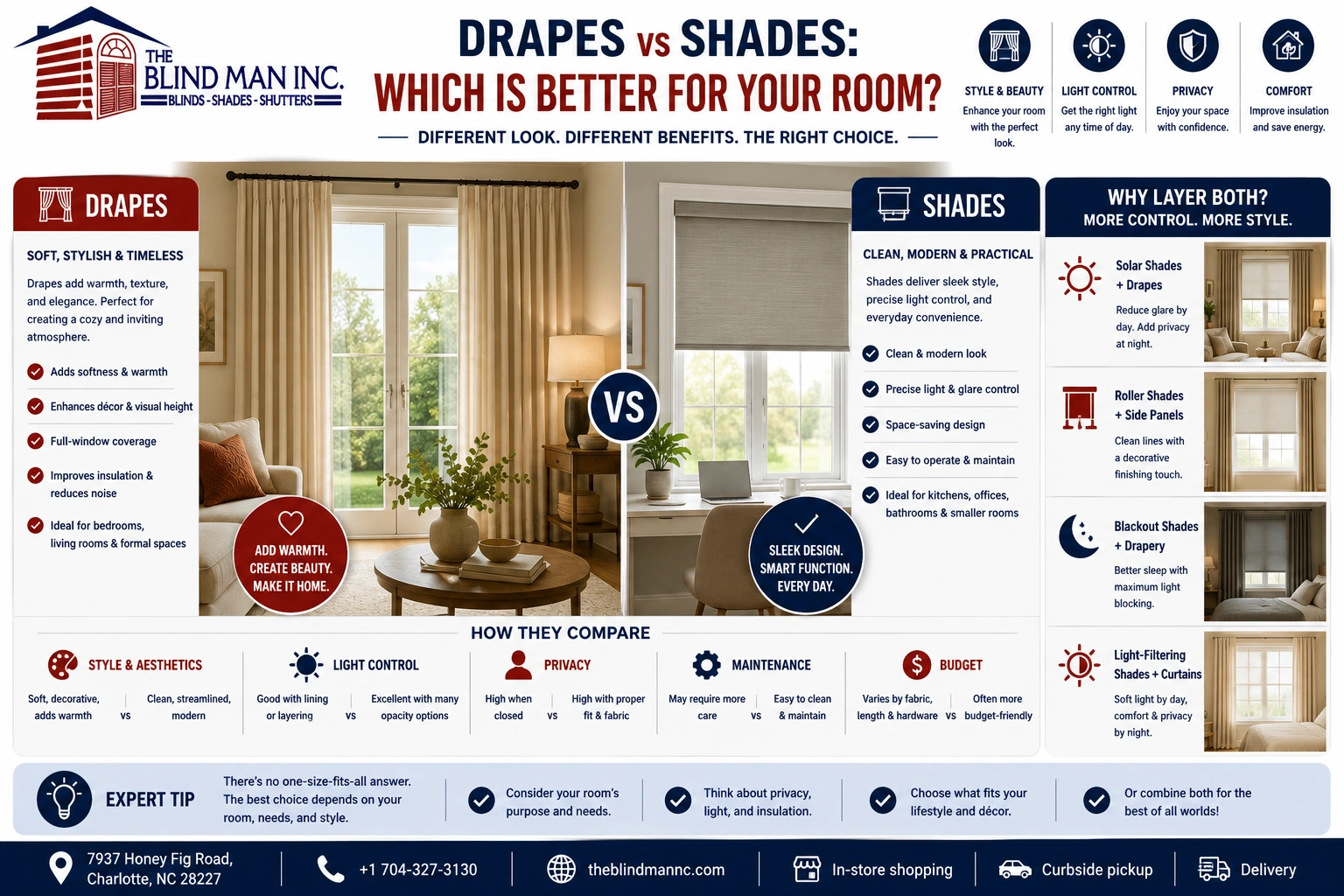
Drapes are often better when you want softness, visual height, decorative warmth, or full-window coverage. Shades are often better when you want clean lines, precise light control, space savings, and easy daily operation.
For many homeowners, the best choice is not always one or the other. Some rooms work best with shades alone, some feel more complete with drapes, and others benefit from layering both. The right option depends on the room, privacy needs, light control, maintenance preferences, and overall style.
At The Blind Man Inc., we help homeowners understand how different window treatments affect comfort, appearance, and everyday function.
Drapes vs. Shades: What Is the Main Difference?
Drapes and shades both cover windows, but they do it in different ways.
Drapes are fabric panels that hang from a rod or track. They usually open from side to side and can frame the window even when they are not fully closed. Drapes are often chosen for their decorative look, softness, and ability to make a room feel more finished.
Shades are fabric or material-based window coverings that fit over or inside the window opening. They usually move up and down instead of side to side. Shades come in many styles, including roller shades, cellular shades, Roman shades, solar shades, and blackout shades.
The main difference is structure. Drapes are fabric panels that hang beside or in front of a window. Shades are more fitted window systems designed to cover the glass directly.
Operation is also different. Drapes may be opened by hand, wand, cord, or motorized track. Shades may lift manually, operate cordless, or use motorization. Because shades fit closer to the window, they often provide more precise light control. Drapes can provide broad coverage and a softer visual effect.
Appearance is another major distinction. Drapes can add texture, color, movement, and visual height. They often become part of the room’s design. Shades tend to feel more tailored and understated. They can blend into the room or create a clean focal point depending on fabric, color, and style.
Coverage also varies. Drapes can extend beyond the window frame, reaching from ceiling to floor or wall to wall. This can make windows appear larger and add drama to a room. Shades are usually mounted inside or just outside the window frame, giving a more compact look.
Mounting methods influence the final result. Drapes need space for rods, tracks, brackets, and stackback on each side of the window. Shades need enough depth for an inside mount or enough wall space for an outside mount.
Drapes create softness and style. Shades create function and clean control. Drapes may be preferable in formal rooms, large spaces, bedrooms, or areas where decorative impact matters. Shades may be better in smaller rooms, modern spaces, kitchens, offices, or windows that need practical daily operation.
When Drapes Work Better
Drapes often work better when the goal is to make a room feel softer, warmer, or more finished. They are especially useful in spaces where design matters as much as function.
Drapes are also helpful when the window treatment should feel like part of the room’s design, not just a practical covering.
Creating a Softer Look
Drapes soften hard surfaces in a room. They can balance windows, walls, floors, and furniture by adding fabric texture. This is helpful in rooms that feel plain, echoey, or unfinished.
In bedrooms and living rooms, drapes can make the space feel calmer and more comfortable. Even simple panels can add warmth without making the room feel overly formal.
Adding Visual Warmth
Drapes are effective when a room needs more warmth or depth. Fabric panels can introduce color, pattern, texture, or contrast. They can also help tie together furniture, rugs, bedding, and wall colors.
Neutral drapes can create a quiet, polished look. Richer fabrics can make a space feel more dramatic or luxurious.
Enhancing Traditional or Luxurious Interiors
Drapes are often a strong choice for traditional, transitional, or luxury-inspired rooms. Floor-length panels can add height and elegance. When installed higher above the window, they can make ceilings appear taller and windows feel larger.
For formal dining rooms, primary bedrooms, sitting rooms, and living rooms, drapes can create a finished look that shades alone may not provide.
Layering With Other Window Treatments
Drapes are also helpful as a layering option. They can be paired with shades, blinds, or shutters to create more privacy, light control, and design flexibility.
For example, a homeowner may use shades during the day for glare control and close drapes at night for privacy. This combination can make a room more functional while also improving its appearance.
Covering Very Large Windows
Drapes can work well for large windows, wide window walls, and sliding doors because they can cover a broad area. They can also frame the glass when open, keeping the view visible while adding softness to the room.
The benefits of drapes include decorative appeal, room-darkening capabilities, improved insulation, and some sound absorption. Heavy or lined drapes can help make a room feel cozier by reducing drafts, softening noise, and blocking more light when closed.
Drapes are not always the lowest-maintenance choice, but they are often ideal when style, softness, and full-window coverage are priorities.
When Shades Work Better
Shades often work better when homeowners want a clean, efficient, and easy-to-use window covering. They are practical for rooms where light control, privacy, space savings, and simple operation matter.
Homeowners comparing shades should think about how much light control is needed, how often the treatment will be adjusted, and whether the room needs privacy, glare reduction, insulation, or a cleaner overall look.
Clean, Modern Designs
Shades are a good fit for modern and minimalist interiors because they have a streamlined appearance. They do not require long fabric panels, rods, or extra wall space on both sides of the window.
Roller shades, solar shades, and cellular shades can give windows a neat, uncluttered look. When raised, many shades nearly disappear into the top of the window, helping the room feel open.
Smaller Rooms
In smaller rooms, drapes can sometimes feel heavy or take up too much visual space. Shades are often a better choice because they fit close to the window and do not crowd the room.
Bathrooms, home offices, kitchens, laundry rooms, and smaller bedrooms often benefit from shades because they provide function without adding bulk.
Precise Light Control
Shades can offer precise light control depending on the style and fabric. Light-filtering shades soften sunlight. Solar shades reduce glare while preserving some view. Room-darkening and blackout shades block more light for bedrooms, nurseries, and media rooms.
Because shades cover the glass more directly, they can manage brightness in a controlled and consistent way.
Limited Wall Space
Some rooms do not have enough wall space for drapery panels. Windows may be close to corners, cabinets, built-ins, furniture, or doors. Shades are useful in these situations because they can mount inside the frame or closely outside it.
This makes shades a practical option where drapes would interfere with furniture placement or room layout.
Minimalist Aesthetics
Shades support a clean, simple design. They can blend with the trim, wall color, or overall room palette. This makes them ideal for homeowners who want the window treatment to function well without becoming the main design feature.
The benefits of shades include a streamlined appearance, space efficiency, energy efficiency, and easy operation. Cellular shades can help with insulation. Solar shades can reduce glare and UV exposure. Roller shades can provide simple everyday control.
Shades are often the better choice for homeowners who want practical performance with a clean finish.
When to Layer Drapes and Shades
Many homeowners choose both drapes and shades because the combination offers more flexibility than either option alone. Layering allows each treatment to serve a different purpose.
Solar Shades With Decorative Drapes
Solar shades can reduce glare and UV exposure during the day while still allowing some outward visibility. Decorative drapes can add softness, color, and evening privacy. This combination works well in living rooms, dining rooms, and home offices.
Roller Shades With Side Panels
Roller shades provide clean light control, while side panels add a decorative frame around the window. The panels do not always need to close. Sometimes they are used mainly to soften the window and complete the room design.
This is a good option for homeowners who like the function of shades but want the finished look of drapery.
Blackout Shades With Drapery
Blackout shades are helpful in bedrooms, nurseries, and media rooms where stronger light blocking is needed. Drapery can add another layer of coverage and make the room feel warmer and more comfortable.
This pairing can support better sleep, improved privacy, and a more finished design.
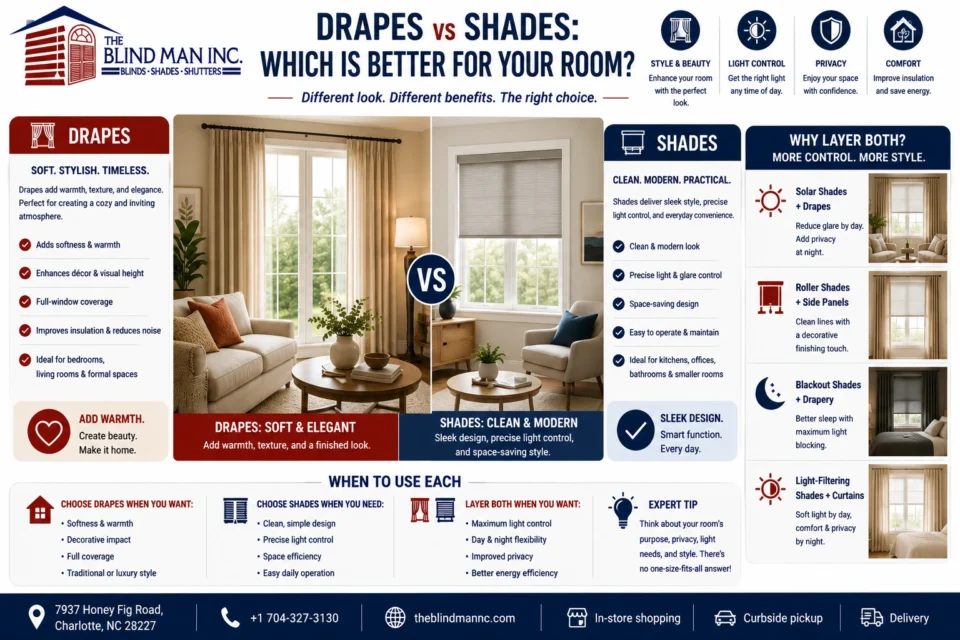
Light-Filtering Shades Paired With Curtains
Light-filtering shades soften sunlight during the day. Curtains or drapes can add privacy and style. This combination works well when homeowners want a bright room during the day but more coverage at night.
Layering can improve privacy, light control, energy efficiency, and design flexibility. It also allows homeowners to adjust the room throughout the day. Shades can handle direct sunlight, while drapes can add comfort and privacy when needed.
Layering is especially useful for rooms with multiple needs. A living room may need glare control during the day and privacy at night. A bedroom may need soft daytime light and darkness for sleep. A dining room may need decorative appeal as well as evening privacy.
Combining treatments gives homeowners more control without forcing one product to do everything.
How to Choose Based on Style and Function
The best choice between drapes and shades depends on how the room is used and what matters most to the homeowner. Before choosing, it helps to think through privacy, light control, maintenance, style, and budget.
Privacy Needs
If the room faces a street, sidewalk, neighbor, or shared outdoor space, privacy should be a priority. Shades can provide consistent coverage across the glass. Drapes can provide full privacy when closed, especially if they are lined.
For bedrooms and bathrooms, stronger privacy may be needed. For living rooms and dining rooms, adjustable daytime privacy may be more important.
Desired Light Control
Some rooms need soft natural light. Others need darkness. Shades offer many fabric choices for different levels of light control. Drapes can block light well when lined or made with heavier fabric.
For glare control, shades are often practical. For a cozy, darkened room, drapes or layered treatments may work better.
Room Purpose
The purpose of the room should guide the choice.
- Bedrooms: Blackout shades, lined drapes, or layered treatments can support privacy and better sleep.
- Living rooms: Solar shades, Roman shades, drapery panels, or layered treatments can help balance glare, view, and design.
- Dining rooms: Drapes often add softness and a polished look, while shades may fit cleaner or more casual spaces.
- Home offices: Solar shades, roller shades, or cellular shades can help manage glare without taking up extra space.
Maintenance Preferences
Shades are often easier to maintain because many styles have a simple surface or compact design. Roller shades and cellular shades can usually be dusted or lightly vacuumed.
Drapes may require more care, depending on the fabric. Some can be vacuumed or spot cleaned, while others may need professional cleaning. Homeowners with pets, children, or allergy concerns may want to consider how much maintenance they are comfortable with.
Design Style
Drapes are ideal when the goal is softness, elegance, warmth, or visual height. Shades are ideal when the goal is simplicity, clean lines, and everyday function.
A traditional room may feel more complete with drapes. A modern room may look better with shades. A transitional room can often use either, or both.
Budget Considerations
Budget can vary based on size, fabric, lining, hardware, motorization, and customization. Shades may be more cost-effective for some windows, while drapes may require more fabric and hardware. Layering both can increase the investment but may also provide the most complete result.
The best choice often depends on the specific room. There is no single answer that works for every home. Drapes may be better when style and softness matter most. Shades may be better when simple operation and precise control are priorities. Both can work beautifully when used together.
FAQs About Drapes vs. Shades
Are drapes or shades better for privacy?
Both drapes and shades can provide privacy. Shades offer consistent coverage over the glass, while drapes provide full coverage when closed. For maximum privacy, many homeowners use shades and drapes together.
Do drapes or shades provide better light control?
Shades usually provide more precise light control because they sit closer to the window and come in different opacity levels. Drapes can also block light well, especially when lined or layered with shades.
Do drapes help insulate a room?
Yes, drapes can help insulate a room, especially when they are lined or made with heavier fabrics. They can reduce drafts, soften the room, and add a layer between the window and interior space.
Are shades easier to maintain than drapes?
In many cases, yes. Shades are often easier to dust or lightly clean because they have a more compact design. Drapes may require more maintenance depending on the fabric, length, and cleaning instructions.
Can I use drapes and shades together?
Yes, drapes and shades work very well together. Shades can provide daily light control and privacy, while drapes add softness, style, and extra coverage when needed.
Which window treatment works best for modern homes?
Shades often work best for modern homes because they have a clean, streamlined look. Roller shades, solar shades, and cellular shades are popular choices. Drapes can still work in modern spaces when the fabric and hardware are simple and understated.
Find the Right Balance for Your Room
Drapes and shades both offer valuable benefits. Drapes bring softness, warmth, and decorative impact. Shades provide clean lines, efficient light control, and practical everyday function. The right choice depends on the room, the amount of privacy needed, the desired style, and how the space is used.
At The Blind Man Inc., we help homeowners compare window treatment options in a practical, room-by-room way. Whether you prefer the polished look of drapes, the simplicity of shades, or the flexibility of layering both, the right window treatment can make your room more comfortable, private, and complete.
Share this article
Latest articles

October 23, 2026

October 23, 2026

October 23, 2026