
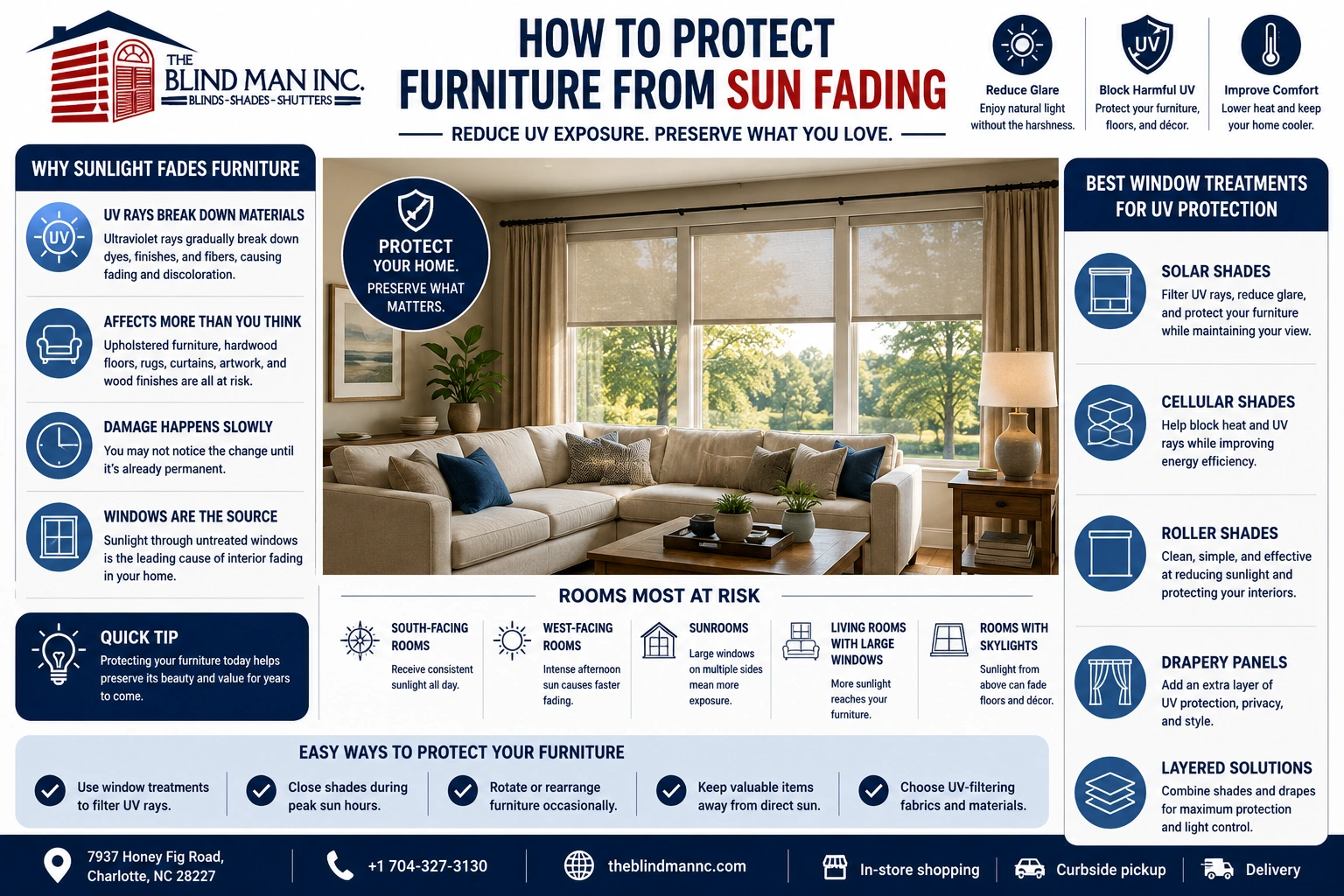
To protect furniture from sun fading, reduce prolonged exposure to direct sunlight and UV rays. Solar shades, cellular shades, roller shades, drapery panels, layered window treatments, and UV-filtering fabrics can all help limit sun exposure while still allowing natural light into the home.
Sunlight can slowly discolor furniture, flooring, rugs, curtains, artwork, and wood finishes. The right window treatments can help reduce UV exposure, soften glare, improve comfort, and preserve the look of your interior spaces.
At The Blind Man Inc., we help homeowners choose window covering solutions that support both style and long-term protection.
Why Sunlight Fades Furniture
Sunlight may make a room feel bright and welcoming, but it can also damage interior materials over time. The main concern is ultraviolet, or UV, light. UV rays break down dyes, finishes, fibers, and surface coatings. When materials are exposed day after day, colors can become dull, uneven, or noticeably lighter.
Visible light and heat can also contribute to fading. A room that receives strong sunlight for several hours each day may experience faster wear than a shaded room. Over time, this can affect how furniture, floors, and décor look and feel.
- Upholstered furniture: Sofas, chairs, ottomans, and upholstered benches can fade when placed near sunny windows. Dark fabrics often show fading more clearly, but lighter fabrics can also lose their original tone. Some materials may become brittle or weaker after long-term sun exposure.
- Hardwood floors: Hardwood floors can change color when exposed to sunlight. Some woods lighten, while others become darker or warmer in tone. Area rugs and furniture can also leave uneven patterns where parts of the floor receive less light than others.
- Area rugs: Area rugs are especially vulnerable because they often sit directly in sunlit areas. Patterns may lose contrast, colors may become muted, and exposed sections may fade differently from areas covered by furniture.
- Artwork: Paintings, prints, photographs, and decorative wall pieces can fade when sunlight reaches them regularly. Even indirect sunlight can cause gradual changes, especially with delicate materials.
- Curtains: Curtains and drapery panels can fade because they are often the first layer exposed to sunlight. Fabric facing the window may fade faster than the interior-facing side.
- Wood furniture: Wood furniture can dry out, discolor, or develop uneven tones from prolonged sunlight. Stained and painted finishes may also lose depth or become patchy over time.
One of the most frustrating parts of sun fading is that it happens slowly. Many homeowners do not notice the problem until they move a rug, rearrange furniture, or compare a faded fabric to an area that was protected.
Window treatments can help reduce this exposure by filtering sunlight before it reaches your furnishings. They act as a practical layer of protection while still allowing homeowners to enjoy natural light.
Best Window Treatments for UV Protection
The best window treatments for UV protection are options that filter sunlight, reduce glare, and limit direct exposure to interior surfaces. The right choice depends on how much light you want, how much privacy you need, and how much sun the room receives.
Homeowners concerned about fading should compare window treatments based on UV protection, fabric opacity, light control, room direction, and how much natural light they still want to enjoy.
Solar Shades
Solar shades are one of the most common choices for reducing sun damage. They are designed to filter sunlight, reduce glare, and help limit UV exposure while still allowing some view to the outside.
Solar shade fabrics come in different openness levels. A tighter weave usually blocks more light and provides more protection, while a more open weave preserves more of the view. This makes solar shades useful for living rooms, offices, sunrooms, and rooms with large windows.
For rooms that also need nighttime privacy, solar shades may need to be paired with drapes or another treatment because visibility can change when indoor lights are on.
Cellular Shades
Cellular shades can also help reduce sun exposure while improving comfort. Their structured design creates pockets that help insulate the window area. This can reduce heat transfer and make rooms feel more comfortable near sunny windows.
Light-filtering cellular shades soften daylight, while room-darkening options provide stronger coverage. For rooms with valuable furniture, flooring, or décor, cellular shades can be a practical option.
Roller Shades
Roller shades offer a clean, simple look and can be made with fabrics that filter light or provide stronger room-darkening coverage. They are easy to use and work well in many rooms.
Light-filtering roller shades can reduce harsh sunlight while keeping the room bright. Room-darkening roller shades provide more privacy and stronger light control, which can be helpful for bedrooms, media rooms, or west-facing spaces.
Layered Window Treatments
Layered treatments combine two or more window covering types. For example, homeowners may use solar shades during the day and drapery panels in the evening. This approach gives more flexibility for changing light, privacy, and comfort needs.
Layering can also add extra UV protection because each treatment creates another barrier between sunlight and interior furnishings.
UV-Filtering Fabrics
Some window treatment fabrics are designed to filter UV rays while still allowing natural light. These fabrics can help reduce fading without making the room feel dark.
Different fabrics offer different levels of UV protection, depending on opacity, weave, color, and material. Sheer and light-filtering fabrics allow more daylight but may provide less protection than tighter or darker fabrics. Room-darkening fabrics block more light and usually provide stronger protection, but they also reduce natural brightness.
The best choice is often a balance. Homeowners who want to protect furniture without losing natural light may prefer solar shades or light-filtering fabrics. Those with intense sun exposure may need stronger fabrics or layered treatments.
How Shades and Drapes Help Protect Furniture
Shades and draperies help by creating a barrier between the window and the interior of the home. Instead of sunlight hitting furniture, rugs, floors, and artwork directly, the window treatment filters or blocks part of that exposure.
UV Reduction
Many shades and drapery fabrics can reduce UV exposure. This helps slow the fading process and protect surfaces from direct sunlight.
Glare Control
Glare can make a room uncomfortable, especially in living rooms, offices, kitchens, and media spaces. Shades and drapes soften harsh light, making the room easier to use throughout the day.
Improved Comfort
A room with too much direct sunlight can feel hot and bright. Window treatments can make the space feel more comfortable by softening the light and reducing heat near the windows.
Heat Reduction
Direct sunlight can warm furniture, flooring, and indoor air. By filtering sunlight, window treatments can help reduce heat buildup, especially in rooms with large windows or strong afternoon sun.
Enhanced Privacy
Many UV-protective window treatments also improve privacy. This is helpful for rooms facing streets, neighbors, patios, or shared outdoor spaces.
Light-Filtering vs. Room-Darkening Options
Light-filtering shades and drapes allow natural light to enter while reducing glare and softening sunlight. They are a good choice for homeowners who want protection but still want the room to feel bright.
Room-darkening options provide stronger light control. They are often better for bedrooms, nurseries, media rooms, or rooms with furnishings that need extra protection.
Layered treatments offer the most flexibility. A homeowner may keep solar shades lowered during sunny hours and close drapes when stronger privacy or light blocking is needed. This combination can provide better protection than one treatment alone.
Rooms Most at Risk for Sun Fading
Some rooms are more vulnerable to fading because of window size, direction, and daily sun exposure. Understanding which spaces are most at risk can help homeowners decide where upgraded window treatments are most important.
South-Facing Rooms
South-facing rooms often receive consistent sunlight throughout much of the day. This can make them bright and pleasant, but it also increases the risk of gradual fading.
Furniture, rugs, and floors in these rooms may need extra UV protection, especially if sunlight reaches the same area for several hours.
West-Facing Rooms
West-facing rooms often receive strong afternoon sunlight. This light can be intense and warm, causing glare, heat buildup, and faster fading.
Living rooms, bedrooms, and dining spaces with west-facing windows may benefit from solar shades, cellular shades, or layered coverings.
Sunrooms
Sunrooms are designed to bring in natural light, so they often have large windows on multiple walls. Because of this, furniture, cushions, rugs, and décor in sunrooms can fade more quickly.
Window treatments in sunrooms need to balance light, comfort, and UV protection without taking away the open feel of the space.
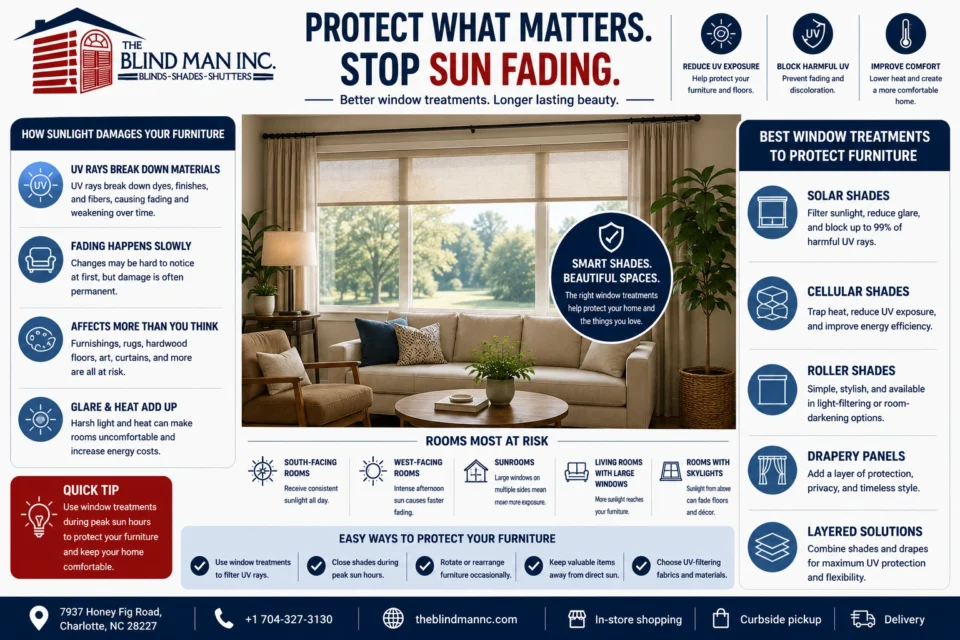
Living Rooms With Large Windows
Large living room windows can expose sofas, chairs, flooring, and artwork to long periods of sunlight. Since living rooms often contain some of the most used and visible furniture in the home, protection matters.
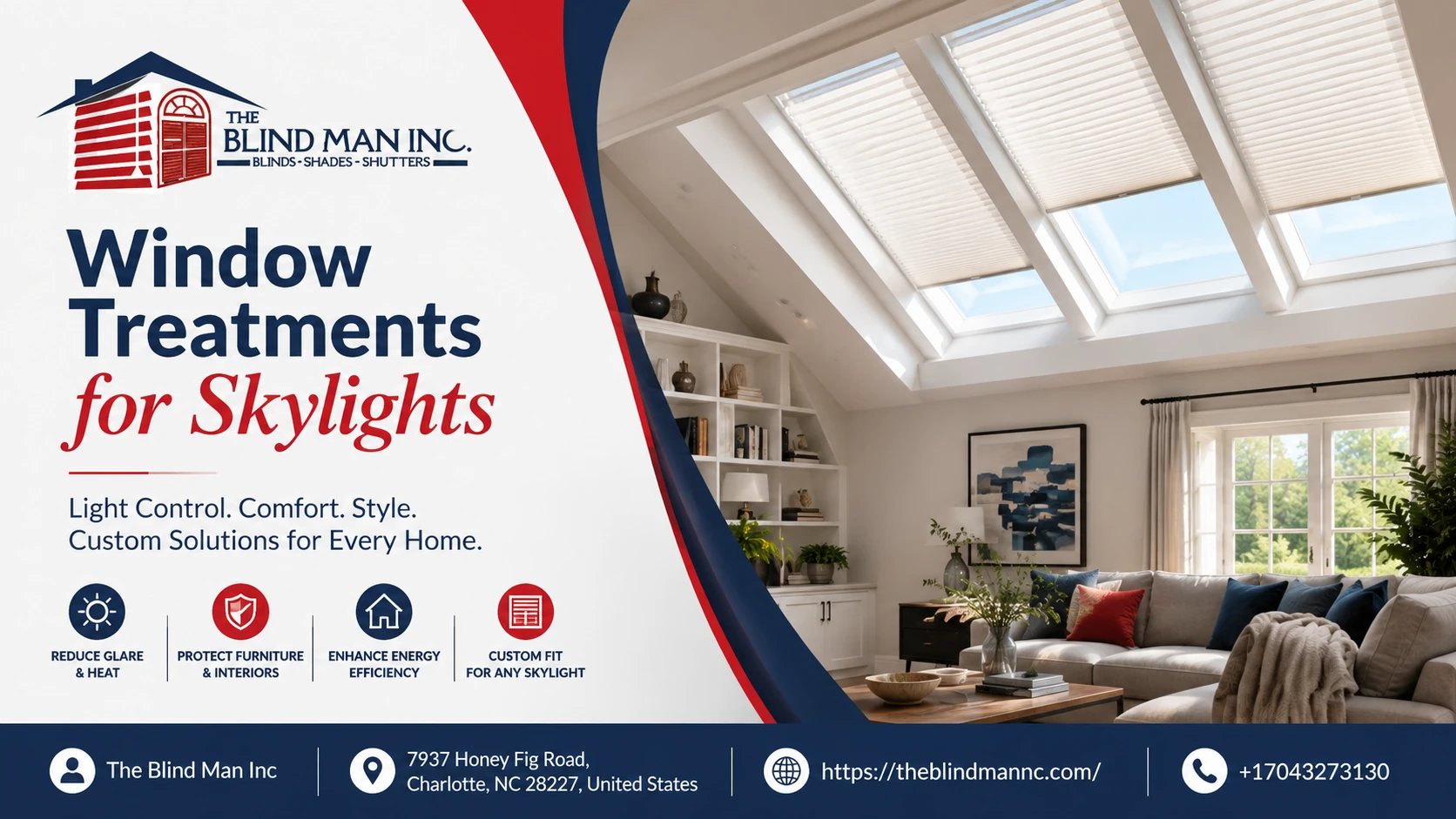
Rooms With Skylights
Skylights can bring in beautiful natural light, but they also allow sunlight to enter from above. This can affect flooring, furniture, countertops, and décor in areas that may not be protected by standard window coverings.
Window orientation plays a major role in fading risk. The direction a window faces, the size of the glass, and the time of day the sun enters the room all affect how much protection is needed.
When to Upgrade Window Coverings
Older or basic window coverings may not provide enough protection from UV rays, glare, and heat. Homeowners may want to consider an upgrade if they notice signs that sunlight is affecting their home.
Signs it may be time to upgrade include:
- Noticeable furniture discoloration
- Excessive glare
- Uneven fading patterns
- Heat buildup near windows
- Aging or damaged window treatments
Noticeable Furniture Discoloration
If sofas, chairs, cushions, or wood furniture are starting to look lighter or uneven in color, sunlight may be part of the problem. Fading is often easier to spot when comparing exposed areas to protected areas.
Excessive Glare
If glare makes it hard to watch TV, work, read, or use a room comfortably, the current window coverings may not be filtering enough light.
Uneven Fading Patterns
Uneven fading on rugs, floors, curtains, or upholstery is a clear sign that sunlight is repeatedly hitting certain areas. This often happens near large windows, sliding glass doors, and sun-facing rooms.
Heat Buildup Near Windows
If areas near the window feel noticeably warmer, the room may benefit from window treatments that reduce solar heat and improve comfort.
Aging or Damaged Window Treatments
Faded, frayed, warped, or difficult-to-use window coverings may not perform as well as they should. Replacing them can improve both function and appearance.
When upgrading, homeowners should evaluate both performance and design. A window treatment should protect furnishings, fit the room’s style, operate smoothly, and provide the right level of privacy and light control.
Updated UV-filtering solutions can help preserve furniture, flooring, artwork, and interior finishes while keeping the home comfortable and attractive.
FAQs About Protecting Furniture From Sun Fading
Can sunlight permanently damage furniture?
Yes, sunlight can permanently damage furniture over time. UV rays, heat, and prolonged exposure can fade fabrics, discolor wood, weaken fibers, and change the appearance of finishes.
What window treatments block the most UV rays?
Solar shades, room-darkening shades, layered window treatments, and UV-filtering fabrics can all help reduce UV exposure. The level of protection depends on the fabric, opacity, weave, color, fit, and how well the treatment covers the window.
Do solar shades help prevent fading?
Yes, solar shades can help reduce fading by filtering sunlight and limiting UV exposure. They are especially useful in rooms with strong sun, large windows, or glare problems.
Can hardwood floors fade from sunlight?
Yes, hardwood floors can fade or change color from sunlight. Some woods lighten, while others darken or develop uneven tones. Rugs and furniture can also create visible patterns where sunlight exposure varies.
Are drapes or shades better for UV protection?
Both can help with UV protection. Shades are often better for clean, daily light control, while drapes can add another layer of coverage. For stronger protection, many homeowners use shades and drapes together.
How can I reduce fading without blocking natural light?
Solar shades and light-filtering shades can reduce fading while still allowing natural light into the room. UV-filtering fabrics are also helpful because they soften sunlight without making the space feel dark.
Protect Your Home From Sun Damage
Sunlight can make a home feel warm and inviting, but too much exposure can slowly damage furniture, flooring, rugs, artwork, and interior finishes. The right window treatments can reduce UV exposure, control glare, improve comfort, and help preserve the look of your home.
At The Blind Man Inc., we help homeowners choose window treatment solutions that fit their rooms, protect their interiors, and support the way they use each space. Whether you are dealing with fading furniture, harsh afternoon sun, or bright rooms that need better control, the right window coverings can make a noticeable difference.
Share this article
Latest articles
September 3, 2026

September 3, 2026
September 3, 2026