
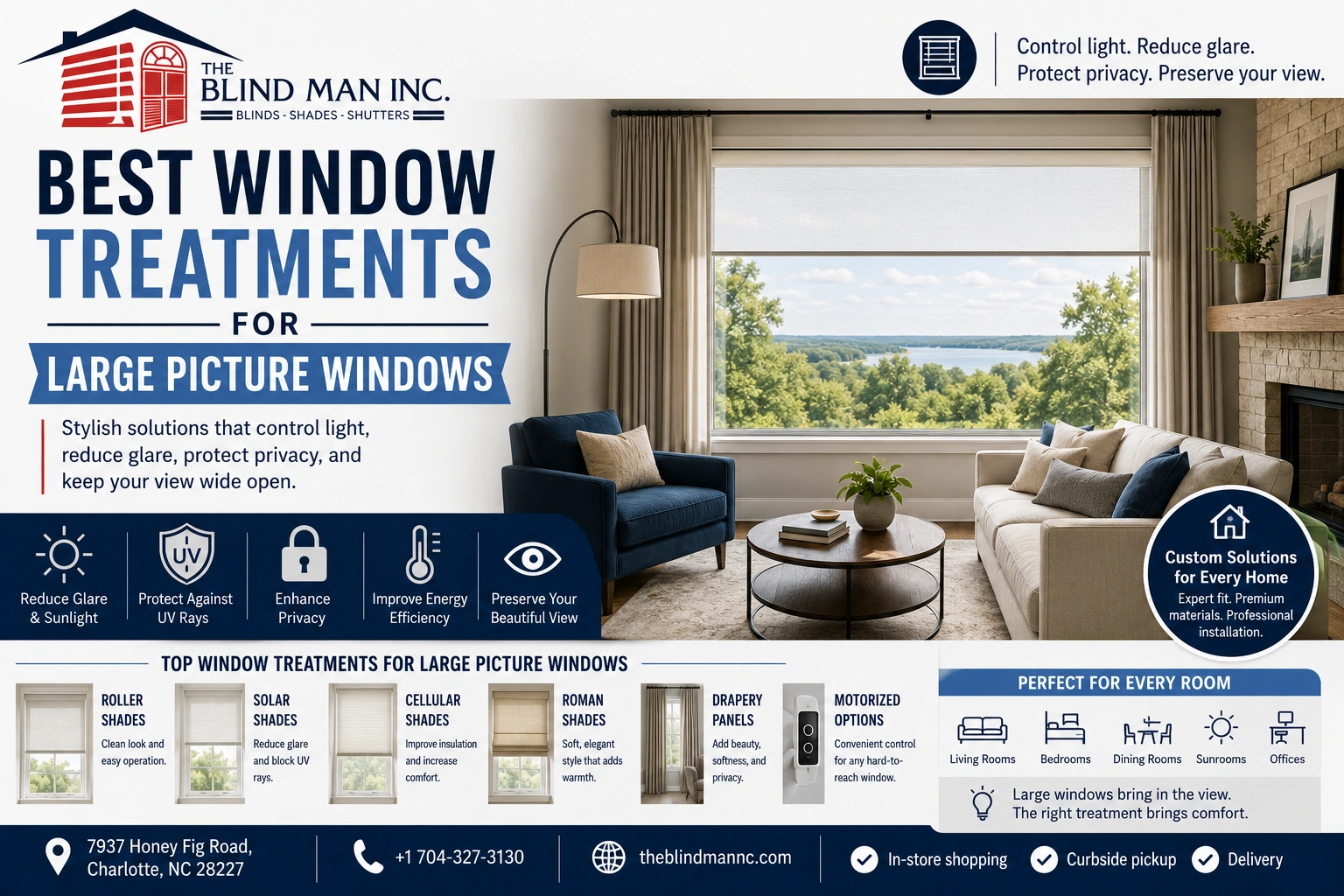
The best window treatments for large picture windows are options that control light, reduce glare, protect privacy, and preserve the open look of the glass. Roller shades, solar shades, cellular shades, Roman shades, drapery panels, and motorized window treatments can all work well depending on the room’s sunlight, privacy needs, and design style.
Picture windows bring in natural light and outdoor views, but they can also create challenges with heat, brightness, fading, and visibility. The right treatment should make the room more comfortable without making the window feel heavy or closed off.
For homeowners, the goal is to cover the window in a way that improves comfort while keeping the clean, spacious appeal that picture windows are known for. At The Blind Man Inc., we help homeowners compare window treatment options that fit the room, protect the view, and make large windows easier to live with every day.
Why Picture Windows Are Tricky to Cover
Picture windows are designed to create a wide, uninterrupted view. They often become a focal point in living rooms, dining rooms, bedrooms, sunrooms, and open-concept spaces. While that large glass area can make a room feel brighter and more inviting, it also requires careful planning when choosing window treatments.
One of the biggest concerns is excessive sunlight. Large windows can allow intense sunlight to pour into the room during certain times of day. This can make the space uncomfortable, especially in areas where the window faces direct afternoon sun.
Glare is another common issue. Homeowners may love the view, but too much glare can make it difficult to watch television, work on a computer, read, or relax. A room with large picture windows can quickly feel too bright if there is no way to soften the incoming light.
Heat gain is also important. Expansive glass can allow sunlight to warm the room, which may make the home feel less comfortable during warmer months. In cooler months, large windows can also contribute to heat loss, especially if the glass is older or less insulated.
Privacy can be another challenge. A picture window facing a street, sidewalk, neighboring home, or backyard entertaining area may leave the inside of the home too visible. Homeowners often want privacy without completely blocking the view or natural light.
Sizing is one more reason picture windows can be tricky. Standard window coverings may not always fit oversized glass areas correctly. A treatment that is too narrow, too short, too heavy, or difficult to operate may not provide the right coverage or appearance.
Because of these challenges, picture windows often need window treatments that are simple, properly sized, easy to use, and suited to the room’s light and privacy needs.
Best Window Treatments for Large Glass Areas
Large picture windows can work well with several different types of window treatments. The best choice depends on the room, the amount of sunlight, the privacy needed, and the overall design style of the home.
Homeowners comparing large window treatment options should think about how much sunlight the room gets, how much privacy is needed, and whether the treatment should preserve the view, soften the room, or improve comfort.
Roller Shades
Roller shades are one of the most popular options for picture windows because they have a clean, simple design. They roll up neatly when not in use, helping preserve the view. When lowered, they provide light control, privacy, and a smooth appearance across large glass areas.
Roller shades are available in different opacity levels, from light-filtering to room-darkening fabrics. This makes them flexible for rooms that need soft daylight, reduced glare, or stronger privacy.
Best for: Clean design, simple operation, light control, and modern interiors.
Solar Shades
Solar shades are a strong choice for large windows that receive direct sun. They are designed to reduce glare and help block UV rays while still allowing some outward visibility, depending on the openness of the fabric.
For picture windows with scenic views, solar shades can be especially useful because they reduce brightness without fully covering the outdoor view. They are often used in living rooms, offices, sunrooms, and large open areas.
For rooms that need nighttime privacy, solar shades may need to be paired with another treatment because visibility can change when indoor lights are on.
Best for: Glare reduction, UV protection, sun-facing windows, and preserving views.
Cellular Shades
Cellular shades are helpful for homeowners who want better energy efficiency from large picture windows. Their honeycomb-style structure helps trap air, which can reduce heat transfer through the glass.
These shades can also provide privacy and light control. Light-filtering cellular shades soften daylight, while room-darkening options offer stronger coverage. They can work well in bedrooms, living spaces, and rooms where insulation is a priority.
Best for: Energy efficiency, privacy, insulation, and softer light.
Roman Shades
Roman shades bring a softer, more decorative look to large picture windows. When raised, they fold neatly. When lowered, they create a smooth fabric appearance that can make a room feel warmer and more finished.
Because picture windows are large, fabric selection matters. A heavy or bold fabric may overpower the room, while a neutral or lightly textured fabric can add style without distracting from the view.
Best for: Decorative warmth, softer design, and formal living spaces.
Drapery Panels
Drapery panels can frame a large picture window beautifully. They are often used to add softness, height, and visual balance to a room. When open, drapes can sit on each side of the window and leave the view mostly unobstructed.
Drapery can also be layered with shades for more control. For example, solar shades can reduce glare during the day, while drapery panels can provide privacy and warmth in the evening.
Best for: Layered design, added softness, privacy, and traditional or transitional rooms.
Motorized Window Treatments
Motorized window treatments can be very helpful for large picture windows, especially when the windows are tall, wide, or difficult to reach. Instead of manually pulling on cords or lifting heavy treatments, homeowners can adjust the window coverings with a remote, wall switch, or compatible control system.
Motorization can also make it easier to manage changing sunlight throughout the day. This is useful for rooms that receive different light patterns from morning to afternoon.
Best for: Large windows, high windows, convenience, safety, and smooth operation.
Each option offers a different balance of appearance, light control, energy efficiency, and ease of use. For many homeowners, the best solution is the one that improves comfort while keeping the large window from feeling covered up or crowded.
How to Reduce Heat and Glare From Picture Windows
Large picture windows can contribute to solar heat gain, especially when they face direct sunlight. Solar heat gain happens when sunlight passes through glass and warms the room. This can make the space feel hot, bright, and uncomfortable during certain parts of the day.
The right window treatments can help manage this problem without eliminating natural light entirely.
Solar Shades
Solar shades are one of the most effective choices for reducing glare on large windows. They filter sunlight and can help reduce brightness while still keeping the room connected to the outdoors.
The openness factor of the fabric affects how much light and visibility remain. A tighter weave usually provides more glare control and privacy, while a more open weave may preserve more of the view.
Cellular Shades
Cellular shades help reduce heat transfer by creating an insulating barrier at the window. This can be especially helpful for large windows that make the room feel warmer in summer or cooler in winter.
For picture windows in bedrooms, family rooms, or main living areas, cellular shades can improve comfort while also offering privacy and light control.
Light-Filtering Fabrics
Light-filtering fabrics soften incoming sunlight rather than blocking it completely. This can make a bright room feel more comfortable while still maintaining a pleasant, natural glow.
These fabrics are useful when homeowners want the room to feel open and bright but do not want harsh sunlight, glare, or too much visibility from outside.
UV-Blocking Materials
Sunlight can fade furniture, flooring, rugs, artwork, and upholstery over time. Large picture windows increase this risk because more sunlight enters the room.
Window treatments with UV-blocking properties can help reduce sun damage. Solar shades are often chosen for this purpose, but some other shade fabrics may also offer UV protection depending on the material.
Reducing heat and glare is not only about comfort. It can also help protect the finishes and furnishings inside the home. For rooms with hardwood floors, leather furniture, artwork, or bright sunlight exposure, window treatments can play an important role in long-term protection.
Style Options That Do Not Overwhelm the Room
Picture windows are often chosen because they make a room feel open and spacious. The wrong window treatment can make that same room feel heavy or crowded. The best design approach is usually to enhance the window, not compete with it.
Minimalist Roller Shades
Minimalist roller shades work well because they have a simple profile. When raised, they take up very little visual space. When lowered, they provide a clean and uncluttered look.
This makes them a strong choice for modern, transitional, and open-concept homes. Neutral fabrics can blend into the room while still giving homeowners light and privacy control.
Layered Drapery
Layered drapery can add depth and softness without overwhelming the window when designed correctly. For example, drapery panels can be placed outside the window frame so they stack beside the glass instead of covering part of the view.
Layering drapery with shades also gives homeowners more flexibility. Shades can handle daytime glare, while drapes can add privacy, warmth, or a finished look in the evening.
Neutral Fabric Selections
Neutral fabrics often work best for large picture windows because they do not draw too much attention away from the view. Soft whites, warm grays, creams, taupes, and other understated colors can help the window treatment blend naturally into the room.
Patterns can still work, but large picture windows already create a strong visual feature. If the fabric is too bold, the window treatment may dominate the space.
Inside-Mount vs. Outside-Mount Installations
Inside-mount treatments fit within the window frame, creating a clean and built-in appearance. This can work well when the window has enough frame depth and the homeowner wants a streamlined look.
Outside-mount treatments are installed beyond the window frame. They can make the window appear larger, improve coverage, and help reduce light gaps. Outside mounts are also useful when the window does not have enough depth for an inside mount.
The right installation style depends on the window size, trim, wall space, privacy needs, and design goals. For large picture windows, small details like mount style and fabric color can have a major impact on the overall look of the room.
When Custom Window Treatments Make Sense for Large Windows
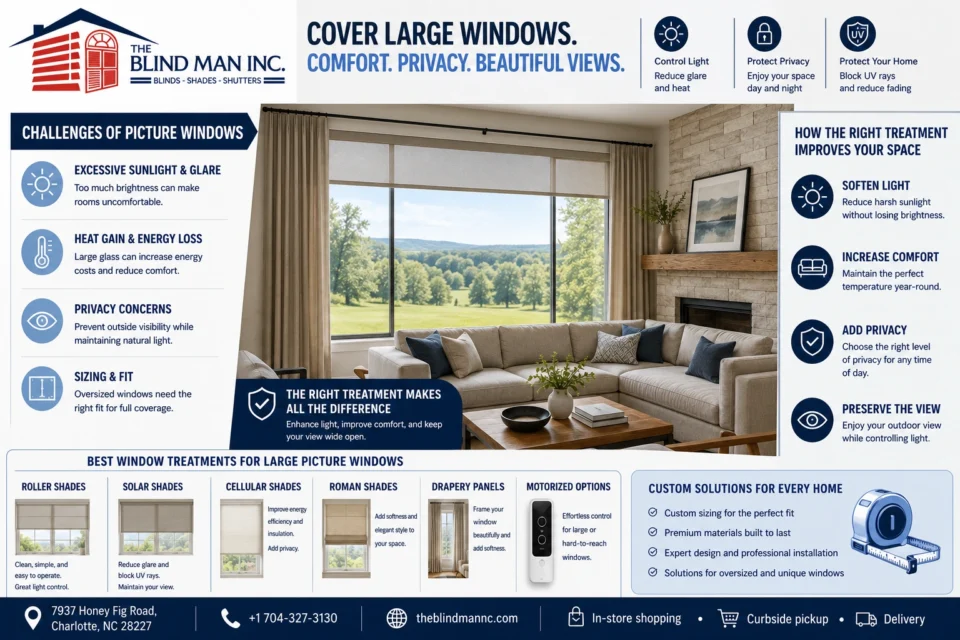
Custom window treatments are often helpful for picture windows because large windows do not always match standard sizes. When a window treatment is custom measured and made for the space, it usually looks better and performs more effectively.
Oversized Windows
Oversized picture windows may need special sizing to ensure proper coverage. A standard shade may not be wide enough, strong enough, or balanced enough for a large glass area.
Custom sizing helps create a better fit and a cleaner finished appearance.
Unusual Dimensions
Some picture windows are wider, taller, or more uniquely shaped than typical windows. Custom treatments can account for these dimensions so the window covering does not look awkward or leave unwanted gaps.
Multi-Panel Glass Walls
Some homes have large picture windows as part of a larger glass wall or multi-window arrangement. In these cases, custom treatments can help create a consistent look across multiple panels.
Homeowners may choose one large treatment or several coordinated treatments, depending on the size, function, and style of the space.
High or Hard-to-Reach Windows
Picture windows in vaulted rooms, stairwells, or two-story spaces can be difficult to access. In these situations, motorized window treatments can be a practical option.
Motorization allows homeowners to adjust the coverings without reaching, climbing, or pulling on large treatments manually. It can also help protect the treatment from uneven handling over time.
Benefits of Custom Sizing
Custom window treatments can improve:
- Fit
- Operation
- Energy efficiency
- Appearance
- Privacy control
- Proportion across large glass areas
A better fit can also help reduce light gaps, improve insulation, and make the treatment easier to use. For large windows, these details matter because even small sizing issues can be noticeable.
Custom options are especially worth considering when the window is oversized, unusually shaped, exposed to strong sun, or central to the room’s design.
FAQs About Picture Window Treatments
What are the best window treatments for large picture windows?
The best options include roller shades, solar shades, cellular shades, Roman shades, drapery panels, and motorized window treatments. The right choice depends on whether the homeowner needs glare reduction, privacy, energy efficiency, or a softer design look.
Are shades or drapes better for picture windows?
Shades are often better for simple light control and a clean look, while drapes add softness and decorative style. Many homeowners use both together, with shades for daily function and drapes for added privacy or design.
How do I reduce glare on large windows?
Solar shades are one of the best ways to reduce glare on large windows. Light-filtering fabrics and cellular shades can also help soften brightness. The best option depends on how much sunlight the window receives and how much view you want to maintain.
Can large window treatments improve energy efficiency?
Yes, some window treatments can help improve comfort and energy efficiency near large glass areas. Cellular shades are especially helpful because their structure can reduce heat transfer. Properly fitted shades or layered treatments may also help reduce drafts, heat gain, and glare.
Are motorized shades worth it for picture windows?
Motorized shades can be worth it for picture windows that are large, tall, heavy, or hard to reach. They make operation easier and can help homeowners adjust sunlight and privacy more consistently throughout the day.
Should picture windows have custom window treatments?
Custom window treatments are often a smart choice for picture windows because large glass areas may not fit standard sizes. Custom sizing can improve appearance, reduce light gaps, support smoother operation, and provide better privacy and energy performance.
Choose Picture Window Treatments That Balance View and Comfort
Large picture windows can make a home feel open, bright, and connected to the outdoors. The right window treatment should protect that feeling while helping solve common concerns like glare, heat, privacy, and fading.
At The Blind Man Inc., we help homeowners choose window treatments that fit the size, style, and function of their picture windows. Whether you prefer clean roller shades, energy-efficient cellular shades, soft drapery panels, or motorized options for convenience, the right solution can make your large windows more comfortable and more beautiful every day.
Share this article
Latest articles
September 3, 2026

September 3, 2026
September 3, 2026