
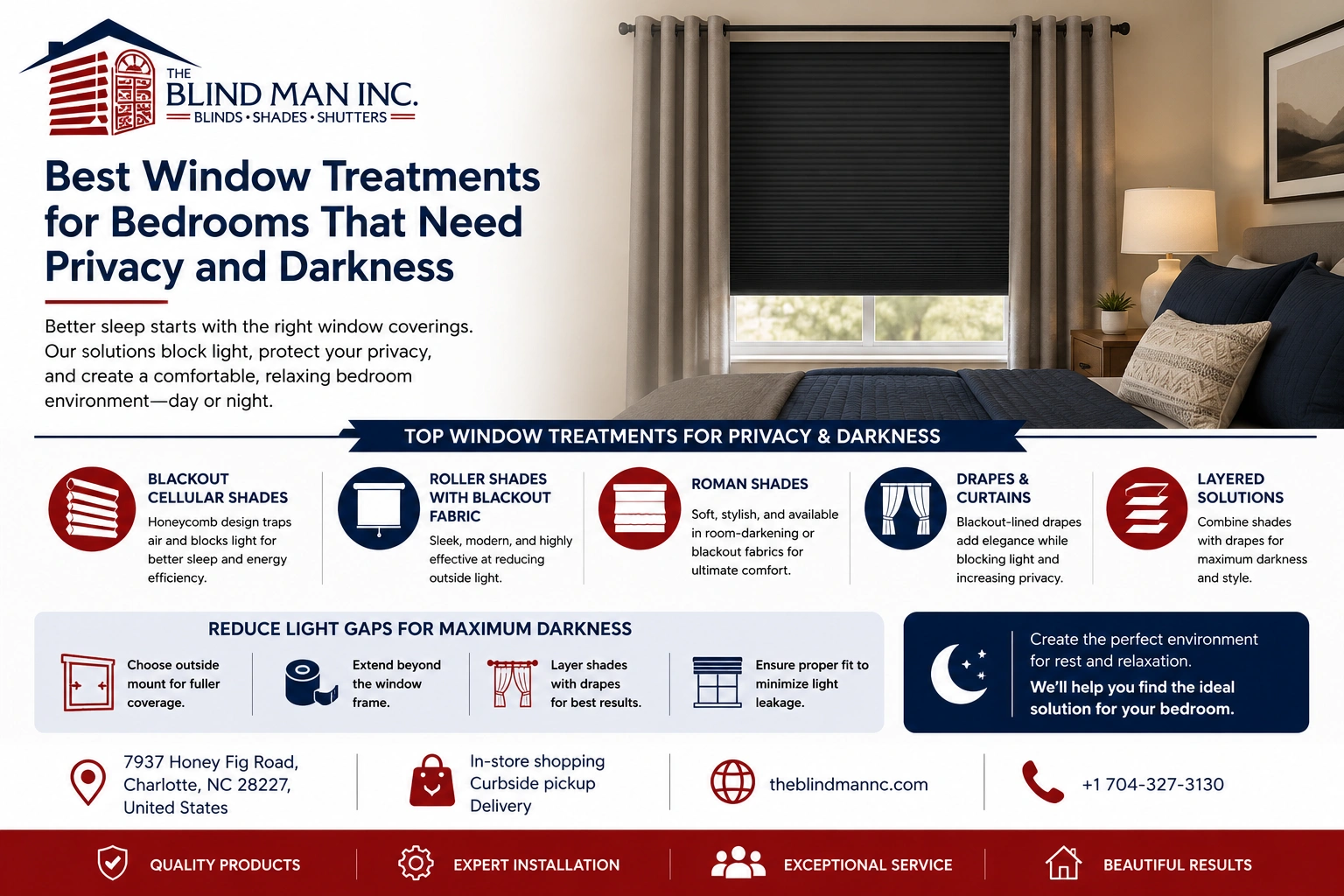
A bedroom should feel comfortable, quiet, and relaxing at any time of day. For many homeowners, that comfort depends heavily on how well the room blocks outside light and maintains privacy. Streetlights, headlights, early morning sun, and nearby homes can all affect sleep quality and overall comfort, especially when windows are left uncovered or lightly covered.
Choosing the right bedroom window treatments can make a noticeable difference in how the space feels. Some homeowners want a darker room for better sleep, while others are more focused on reducing visibility from outside without making the room feel closed in during the day.
The good news is that several practical options can help balance privacy, darkness, style, and everyday functionality. Understanding how different materials, fabrics, and layering techniques work can help homeowners create a bedroom environment that supports rest while still fitting the style of the home.
Why Bedrooms Need Privacy and Light Control
Bedrooms serve a different purpose than most other rooms in the house. While kitchens and living rooms often prioritize open light and visibility, bedrooms are designed for rest and personal comfort. Because of this, controlling outside light and maintaining privacy become much more important.
Light exposure can affect sleep quality more than many homeowners realize. Early morning sunlight, illuminated signs, neighboring porch lights, and passing traffic can interrupt sleep patterns or make it harder to fall asleep. For shift workers or people who sleep during daytime hours, light control can become even more important.
Privacy is another common concern. Bedrooms located near streets, sidewalks, or neighboring homes may feel exposed without the right window coverage. Even upper-floor bedrooms can benefit from treatments that soften visibility from outside while still allowing natural light during the day.
Effective bedroom window treatments can help with:
- Reducing outside light intrusion
- Improving sleep comfort
- Minimizing glare from outdoor lighting
- Increasing privacy from nearby homes
- Creating a more relaxing atmosphere
- Supporting media-room or guest-room comfort
Many homeowners explore different shade options because they can provide adjustable light control while maintaining a clean, uncluttered appearance.
Best Bedroom Window Treatments for Darkness and Privacy
When homeowners want the darkest possible bedroom environment, blackout or room-darkening window treatments are usually the first options considered. While the terms are sometimes used interchangeably, there is a difference between the two.
Room-Darkening Treatments
Room-darkening fabrics reduce a significant amount of incoming light but may still allow a soft glow into the room. These options work well for homeowners who want privacy and reduced brightness without creating complete darkness.
Blackout Treatments
Blackout window treatments are designed to block much more outside light. They are commonly used in bedrooms, nurseries, and media rooms where minimizing light exposure is a priority.
Several types of window treatments can help create darker sleeping environments.
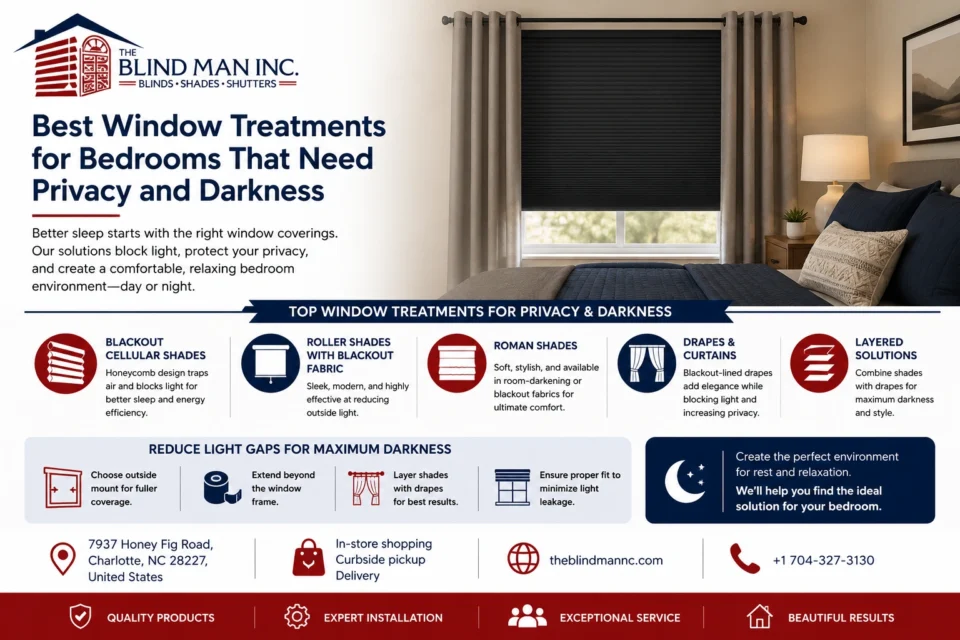
Blackout Cellular Shades
Cellular shades use a honeycomb-style design that helps reduce light and may also contribute to better insulation around windows. Blackout versions are often chosen for bedrooms because they combine light reduction with a softer appearance.
Roller Shades With Blackout Fabric
Roller shades offer a streamlined look and can be highly effective when paired with blackout materials. Depending on the installation and fit, they can significantly reduce outside light.
Roman Shades
Roman shades provide a softer, more decorative appearance while still offering room-darkening or blackout fabric options. They work well in bedrooms where homeowners want a balance between comfort and style.
Drapes and Curtains
Heavy drapes with blackout linings can help block sunlight and improve privacy. Floor-length panels often create more complete window coverage compared to shorter treatments.
Different homeowners may prioritize different features. Some focus on achieving the darkest possible room, while others prefer a softer filtered-light effect that still maintains privacy.
How to Reduce Light Gaps Around Windows
Even high-quality blackout materials may allow light into a room if gaps remain around the edges of the window treatment. This is one of the most common frustrations homeowners experience when trying to darken a bedroom.
Light gaps typically appear:
- Along the sides of shades
- At the top of window coverings
- Near uneven window frames
- Around improperly sized treatments
Reducing these gaps often depends on choosing the right fit and installation style.
Inside Mount vs Outside Mount
Inside-mounted shades fit within the window frame, creating a cleaner and more minimal appearance. However, they may leave small gaps where light can enter around the edges.
Outside-mounted treatments extend beyond the window frame and can provide more complete coverage. Many homeowners choose this style when maximizing darkness is a priority.
Layering Window Treatments
Using multiple layers can also help reduce light leakage. Pairing blackout shades with drapes often creates more complete coverage while adding softness to the room design.
Choosing Wider Coverage
Window treatments that extend slightly beyond the width and height of the window opening can help reduce sunlight entering from the edges.
It is important to understand that complete blackout conditions may still vary depending on window size, orientation, and the amount of outdoor light exposure.
When to Layer Shades With Drapes
Layering window treatments is one of the most practical ways to combine privacy, light control, and bedroom style. Instead of relying on a single product, layered treatments allow homeowners to adjust the room based on the time of day and their comfort preferences.
For example, a homeowner may use light-filtering shades during the day to maintain privacy while still allowing natural light into the room. At night, heavier drapes can be closed for additional darkness and insulation.
Layering can offer several advantages:
- Better control over incoming light
- Improved privacy
- A softer room appearance
- Enhanced texture and depth in the design
- Additional reduction of light gaps
- Increased flexibility throughout the day
One common combination is pairing cellular or roller shades with decorative drapes. This approach allows homeowners to enjoy both functionality and visual warmth without making the room feel overly heavy.
Layered treatments can also work well in guest rooms and media rooms where lighting needs may change frequently.
While layering can improve performance, homeowners should also consider room size and overall design. In smaller bedrooms, lighter fabrics and slimmer shade profiles may help maintain a more open feeling.
Choosing a Bedroom Style That Fits Your Space
Bedroom window treatments should support comfort, but they should also fit the overall style of the room. The right choice often depends on the room’s layout, lighting conditions, and personal preferences.
Modern Bedrooms
Homeowners with modern or minimalist bedrooms often prefer roller shades or cellular shades because of their clean lines and simple appearance.
Traditional Bedrooms
Layered drapes, Roman shades, and textured fabrics can create a warmer, more classic look while still improving privacy and darkness.
Small Bedrooms
Compact rooms may benefit from lighter colors and treatments that sit close to the window to avoid making the room feel crowded.
Large Windows
Bedrooms with oversized windows often benefit from layered solutions that soften the scale of the space while improving light control.
Media Rooms or Multipurpose Bedrooms
Spaces used for both sleeping and entertainment may prioritize blackout performance more heavily to reduce glare on screens and create darker viewing conditions.
There is rarely one “best” solution for every bedroom. The ideal combination depends on how much natural light the homeowner wants, how close neighboring homes are, and how the room is used throughout the day.
Create a More Comfortable Bedroom With The Blind Man
The right bedroom window treatments can help create a space that feels more private, darker, and more relaxing at the end of the day. Whether you are trying to reduce early morning sunlight, soften glare from streetlights, or improve nighttime privacy, choosing the right combination of shades and drapes can make a meaningful difference in comfort.
At The Blind Man, we help homeowners choose bedroom window treatments that match their style, privacy needs, and light-control goals. From layered designs to blackout-friendly options, our team can help you create a bedroom that feels darker, more comfortable, and easier to enjoy.
Share this article
Latest articles

October 13, 2026
October 13, 2026

October 13, 2026