

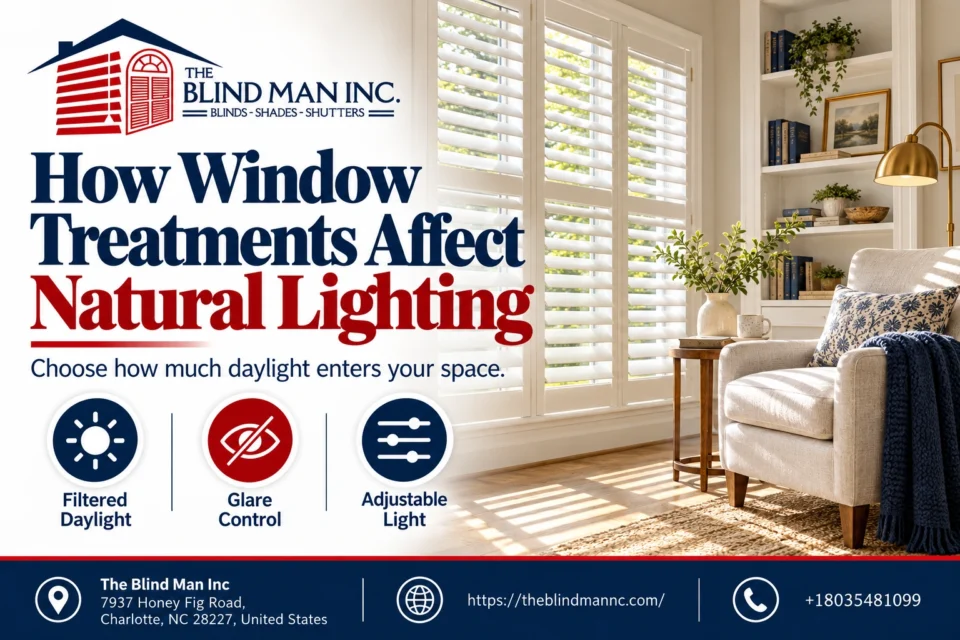
Window treatments affect natural lighting by controlling how much sunlight enters a room, how evenly that light spreads, and how much glare reaches your eyes. Different fabrics and materials can filter, diffuse, or block incoming light while providing varying levels of privacy and protection from sunlight.
Sheer shades allow more daylight to pass through, while light-filtering materials soften brightness. Room-darkening and blackout treatments reduce incoming light more substantially.
The right choice depends on how you use each room, where its windows face, and how much daylight you want throughout the day.
How Do Window Treatments Affect Natural Lighting?
How Do Window Coverings Change the Amount of Sunlight Indoors?
Windows allow natural light into a home, but uncovered glass provides limited control over brightness and glare.
Window treatments help manage these conditions by changing how sunlight passes through or around the covering.
Some materials allow light to pass through while scattering it across the room. Others absorb or reflect more incoming sunlight, reducing indoor brightness.
Adjustable treatments, such as blinds and certain shades, also allow homeowners to change how much of the window is exposed.
This flexibility is useful in Charlotte, NC, where sunlight conditions can vary considerably between morning and afternoon.
Why Does Window Direction Matter?
The direction a window faces influences when sunlight enters the room.
East-facing windows often receive stronger morning sunlight. West-facing windows may experience intense afternoon brightness and glare.
South-facing windows can receive substantial sunlight throughout the year, while north-facing windows generally provide more consistent indirect light.
These differences matter when choosing natural light window treatments.
For example, a home office with afternoon glare may need greater light control than a living room receiving soft indirect daylight.
What Is the Difference Between Filtering and Blocking Light?
What Does Light Filtering Mean?
Light-filtering window treatments allow some sunlight to pass through the material while reducing its intensity.
Instead of producing sharp patches of direct sunlight, the fabric helps create softer, more evenly distributed illumination.
This can make living spaces comfortable without completely darkening them.
The amount of light transmitted depends on fabric density, weave, color, and material composition.
Not all light-filtering shades provide the same brightness or privacy.
What Does Light Blocking Mean?
Light-blocking materials reduce the amount of sunlight passing through the covering.
Room-darkening fabrics substantially decrease brightness, while blackout fabrics are designed to prevent light from passing through the material itself.
However, even blackout shades may allow sunlight around their edges.
For homeowners who need near-total darkness, installation details and side gaps matter as much as fabric selection.
Which Option Is Better?
Light-filtering treatments are usually preferable when maintaining a bright atmosphere is important.
Room-darkening or blackout materials are more appropriate when sleep, screen visibility, or stronger light control takes priority.
Many homes benefit from using different light-control materials in different rooms.
Which Fabrics Let in the Most Natural Light?
Sheer Fabrics
Sheer fabrics allow considerable daylight to pass through because of their lightweight, relatively open construction.
They soften the appearance of direct sunlight without making a room feel enclosed.
Sheer materials work well in living rooms, dining areas, and other spaces where brightness is a priority.
However, they offer limited privacy, especially after dark.
Light-Filtering Fabrics
Light-filtering fabrics typically have a denser construction than sheer materials.
They allow daylight to enter while reducing harsh brightness.
Depending on their opacity, they may also provide more privacy than transparent fabrics.
They are useful for homeowners who want natural light without leaving windows completely uncovered.
Solar Screen Fabrics
Solar shade fabrics contain openings that allow varying amounts of light and outward visibility.
Their openness factor describes the proportion of open area within the fabric.
A lower openness percentage generally reduces more incoming light and visibility, although performance also depends on the material and color.
Solar shades are particularly useful for windows facing strong sunlight.
They can reduce glare while preserving some connection to outdoor views.
How Do Sheer and Light-Filtering Shades Work?
How Do Sheer Shades Diffuse Sunlight?
Sheer shades often combine translucent fabric with adjustable vanes or layered materials.
Incoming sunlight passes through the fabric and becomes more diffused.
This reduces the sharp contrast between bright windows and darker interior spaces.
Some sheer shades allow homeowners to adjust the vanes, changing the balance between visibility, brightness, and privacy.
They are useful in rooms where natural light contributes to an open, comfortable atmosphere.
Do Light-Filtering Shades Provide Privacy?
Light-filtering shades can provide daytime privacy, but their effectiveness depends on fabric opacity and lighting conditions.
Some materials obscure detailed views while still allowing silhouettes to remain visible.
At night, bright interior lighting can make certain fabrics less private than they appear during daylight.
Homeowners should evaluate fabric samples under both daytime and nighttime conditions.
For more information about available materials and light-control options, explore our Shades page.
When Are Room-Darkening or Blackout Treatments Better?
When Should You Choose Room-Darkening Shades?
Room-darkening shades are useful when homeowners want to reduce brightness significantly without necessarily creating complete darkness.
They are commonly suitable for bedrooms, television rooms, and spaces with persistent sunlight.
These materials reduce the amount of daylight entering the room but may still allow some light through the fabric or around its edges.
They offer a practical middle ground between light filtering and blackout coverage.
When Are Blackout Treatments More Appropriate?
Blackout treatments are designed for stronger light control.
They are useful for bedrooms occupied by daytime sleepers, nurseries, and rooms where darkness supports the intended activity.
Blackout fabrics can also improve screen visibility by reducing sunlight entering through the covered window.
However, homeowners should understand that blackout fabric does not guarantee a completely dark room.
Light may enter through side gaps, mounting clearances, or areas around the headrail.
Can You Combine Light-Filtering and Blackout Treatments?
Yes. Layering allows homeowners to manage different lighting needs throughout the day.
For example, light-filtering shades can maintain daytime brightness, while blackout curtains provide greater darkness when needed.
Dual-shade systems may also combine two fabrics with different light-control properties.
This approach is useful in rooms that serve several purposes.
How Can Window Treatments Reduce Glare?
Why Does Glare Occur?
Glare occurs when sunlight or reflected light creates uncomfortable brightness within your field of vision.
It is especially noticeable on televisions, computer monitors, glossy countertops, and polished furniture.
Even a room that benefits from natural daylight can become uncomfortable when sunlight reaches screens directly.
Which Treatments Are Effective for Glare Control?
Solar shades, light-filtering roller shades, and adjustable blinds can help reduce glare without necessarily eliminating daylight.
Solar shades are particularly useful when maintaining outdoor visibility matters.
Adjustable blinds allow homeowners to redirect sunlight by changing the slat angle.
Light-filtering shades soften incoming brightness, making them useful when direct sun produces harsh contrasts.
The appropriate material depends on window orientation, screen placement, and how much outdoor visibility you want to preserve.
Can You Reduce Glare Without Darkening the Entire Room?
Yes. The goal is to control direct sunlight rather than eliminate all natural light.
For example, adjusting blinds to redirect sunlight toward the ceiling may reduce glare while maintaining illumination.
Partially lowering a shade can also block direct rays without covering the entire window.
When choosing a treatment, consider where sunlight falls during the hours you normally use the room.
Can Window Treatments Help Protect Furniture and Flooring From Sunlight?
How Does Sunlight Affect Interior Materials?
Prolonged sunlight exposure can contribute to fading and changes in the appearance of furniture, rugs, flooring, and decorative materials.
Ultraviolet radiation is one factor, but visible light and heat can also contribute to deterioration.
Wood finishes, upholstery, artwork, and textiles may respond differently depending on their composition.
Windows can reduce some ultraviolet exposure, but they do not necessarily prevent all sunlight-related damage.
Which Treatments Help Reduce Sun Exposure?
Solar shades, lined curtains, cellular shades, and other suitable window coverings can reduce the amount of sunlight reaching interior surfaces.
The degree of protection depends on fabric construction and tested performance.
Materials with stronger light-blocking properties generally limit more direct sunlight when closed.
However, no ordinary window treatment should be assumed to eliminate every source of fading.
Is UV Protection the Same as Light Blocking?
No. Ultraviolet protection and visible light reduction describe different performance characteristics.
A fabric may reduce substantial ultraviolet radiation while still allowing visible daylight into the room.
This distinction matters when homeowners want to maintain brightness while reducing exposure.
Ask about product-specific performance rather than assuming that darker fabrics always provide superior UV protection.
Which Window Treatments Work Best for Living Rooms?
What If You Want a Bright, Open Living Room?
Living rooms often benefit from window treatments that preserve natural light while softening harsh sunlight.
Sheer shades, light-filtering roller shades, and suitable woven materials can support an inviting atmosphere.
These treatments work particularly well when windows provide attractive outdoor views.
For connected living and dining spaces, choosing complementary fabrics can maintain visual consistency.
What If the Living Room Has a Television?
A television changes the room’s lighting requirements.
Direct sunlight on the screen may create glare that makes viewing uncomfortable.
Solar shades or adjustable blinds may provide more effective control than highly transparent fabrics.
Consider the television’s position relative to the windows.
A treatment that works well for general brightness may require adjustment during certain viewing hours.
Should All Living Room Windows Use the Same Fabric?
Not necessarily.
Windows facing different directions may need different light-control properties.
Homeowners can maintain a consistent appearance by selecting coordinated colors and similar treatment styles with varying fabric opacities.
This approach allows practical customization without making the room feel mismatched.
What Works Best for Bedrooms, Kitchens, and Home Offices?
Bedrooms: Prioritize Sleep and Privacy
Bedrooms generally require stronger privacy and light control than shared living areas.
Room-darkening shades may provide enough darkness for some households.
Blackout materials are useful for people who prefer darker sleeping conditions or need to sleep during daylight hours.
Layered treatments can provide flexibility between daytime brightness and nighttime privacy.
Kitchens: Preserve Daylight With Practical Materials
Kitchens benefit from natural light because cooking, food preparation, and cleaning require clear visibility.
Light-filtering roller shades and suitable easy-care blinds can reduce direct sunlight while maintaining useful daylight.
Consider materials that tolerate the moisture and cleaning requirements of the installation area.
Avoid delicate fabrics near sinks or cooking surfaces where residue may accumulate.
Home Offices: Reduce Screen Glare
Home offices require a balance between natural daylight and comfortable screen viewing.
Direct sunlight can make computer monitors difficult to see.
Solar shades, adjustable blinds, and light-filtering materials can help manage brightness.
Consider the position of your desk and monitor before selecting a fabric.
If the room receives strong afternoon sunlight, greater glare control may be necessary during working hours.
How to Balance Natural Light With Privacy
Why Does Privacy Change Throughout the Day?
Privacy depends on the difference between indoor and outdoor lighting.
During daylight, some partially transparent treatments limit views into a home while allowing occupants to see outside.
At night, interior lighting can reverse this relationship.
A material that provides acceptable daytime privacy may allow people outside to see silhouettes or interior activity after dark.
Which Treatments Provide Both Light and Privacy?
Light-filtering fabrics with suitable opacity can provide a balance between daylight and privacy.
Top-down, bottom-up shades, where available, offer additional flexibility by allowing homeowners to cover lower portions of a window while admitting light from above.
Layered coverings provide another solution.
For example, a sheer treatment may maintain brightness during the day, while an opaque second layer provides evening privacy.
How Should Charlotte Homeowners Choose?
Consider the amount of natural light each room receives, neighboring properties, street exposure, and daily activities.
A living room facing a private backyard may require different treatments from a bedroom facing a nearby home.
Window direction also matters because strong morning or afternoon sunlight can affect how comfortable a room feels.
Evaluating windows individually helps homeowners select materials that support each room’s needs.
Our Window Treatments page provides more information about coordinating different covering styles throughout the home.
FAQs
Do light-filtering shades make a room dark?
Light-filtering shades generally soften daylight rather than eliminate it. The resulting brightness depends on fabric opacity, color, window size, and sunlight conditions. They are often suitable for spaces where natural lighting remains important.
What window treatments allow the most natural light?
Sheer curtains, sheer shades, and highly transparent solar fabrics generally allow substantial daylight to enter. However, these materials may offer less privacy and glare reduction than more opaque alternatives.
Are solar shades better than blackout shades?
Neither is universally better. Solar shades are useful when homeowners want glare reduction and some outdoor visibility. Blackout shades are better suited to spaces where significantly reduced light is the priority.
Can window treatments reduce UV damage?
Yes. Certain window coverings can reduce ultraviolet exposure and the amount of direct sunlight reaching furniture and flooring. Protection varies by product, and reducing UV exposure does not eliminate every cause of fading.
What is the best window treatment for a sunny room?
Solar shades, adjustable blinds, and appropriate light-filtering shades can be effective options. The best choice depends on glare intensity, window orientation, privacy requirements, and whether outdoor visibility matters.
Can blackout shades provide complete darkness?
Blackout fabrics prevent light from passing through the material, but light may still enter around the covering. Specialized mounting systems and additional light-blocking details may be necessary for greater darkness.
Find the Right Balance of Natural Light With The Blind Man
Choosing window treatments should begin with understanding how sunlight affects the comfort and function of each room.
At The Blind Man, we help homeowners in Charlotte, NC compare window covering materials, styles, and light-control options based on their individual spaces.
We consider window orientation, daytime brightness, privacy needs, and how each room is used before discussing suitable treatments.
Whether you prefer soft natural lighting in your living room or stronger light control in your bedroom, our goal is to help you make an informed choice.
Explore our Shades options or learn more about our Charlotte, NC window treatment services.
If you are considering new window coverings, contact The Blind Man to discuss how different materials and designs may help create more comfortable lighting throughout your home.
Key Takeaways
Window treatments influence how natural light enters a home, how evenly it spreads, and how much glare reaches interior spaces. Sheer and light-filtering materials support brightness, while room-darkening and blackout options provide greater control.
Solar shades and adjustable blinds can help manage strong sunlight without necessarily eliminating outdoor visibility. Certain materials also reduce UV exposure, although protection varies by product.
The most suitable treatment depends on window direction, room function, privacy requirements, and personal preferences. Choosing window coverings with these factors in mind helps create comfortable, functional spaces throughout the home.
Share this article
Latest articles
October 22, 2026

October 22, 2026

October 22, 2026