Window treatments naturally face sunlight, heat, dust, moisture, and everyday wear, all of which can gradually affect their color and appearance. Homeowners can help prevent blinds from fading by choosing appropriate materials, limiting unnecessary UV exposure, cleaning them correctly, and keeping indoor heat and humidity under control.
Some fading is unavoidable over many years, particularly on windows that receive strong direct sunlight. However, the right combination of material selection and routine care can slow discoloration and help blinds, shades, shutters, and fabric treatments maintain a more consistent appearance.
Why Do Window Treatments Fade or Discolor?
Window treatments can change color for several reasons, and sunlight is only one of them.
Common causes include:
- Prolonged ultraviolet exposure
- Heat from direct sunlight
- High indoor humidity
- Dust and airborne residue
- Smoke, cooking oils, and household pollutants
- Harsh cleaning products
- Excess moisture during cleaning
- Normal aging of dyes, finishes, and materials
The amount of discoloration also depends on where the window treatment is installed.
A shade on a south- or west-facing window that receives hours of intense afternoon sun may fade more quickly than the same material installed on a shaded side of the home.
Color can matter as well. Dark or highly saturated fabrics may make fading more noticeable, while very light materials can sometimes show yellowing, dirt, or staining more easily.
Understanding what is affecting the material is the first step toward preserving it.
How Does UV Exposure Affect Blinds and Shades?
Ultraviolet radiation from sunlight can gradually break down dyes, pigments, fabrics, coatings, and finishes.
Over time, this can cause colors to become lighter, less vibrant, or uneven. The side of a blind or shade facing the window may also age differently from the side facing the room.
Direct sunlight is generally the biggest concern.
A window that receives strong sun for several hours every day exposes its window treatment to far more UV energy than a window facing a covered porch or shaded yard.
UV exposure can affect more than color. Depending on the material, long-term sun exposure may also contribute to brittleness, weakening, or changes in surface texture.
Homeowners cannot completely eliminate exposure while still using their windows, but they can manage it. Adjusting blinds during peak sunlight, using solar-control products, and selecting materials designed for sun-exposed areas can all help.
Which Window Treatment Materials Resist Fading Best?
Some materials are better suited to sunny windows than others.
Faux Wood Blinds
Faux wood blinds are often a practical choice for rooms that receive substantial sunlight or experience moisture. Because they are made from engineered materials rather than natural wood, they generally offer good resistance to moisture-related warping and color changes.
Their performance still depends on product quality and installation conditions, so they should not be considered completely fade-proof.
Composite Shutters
Composite shutters can also work well in bright rooms. Their manufactured materials typically provide consistent finishes and are often selected for areas where sunlight or humidity could be harder on natural wood.
Solar Shades
Solar shades are specifically designed to manage sunlight and glare. Their woven materials can reduce the amount of direct solar exposure entering a room while maintaining varying levels of outward visibility.
Because they are intended for sun-exposed windows, they can be a useful option for rooms where UV control is a priority.
Natural Wood
Wood blinds and shutters offer a distinctive appearance, but natural materials may gradually change when exposed to strong sunlight.
Protective finishes can help, but homeowners should still expect natural wood to age over time.
Fabric Shades
Fabric performance varies considerably.
Synthetic fibers and solution-dyed materials may resist fading better than certain natural fibers or highly saturated dyes. Fabric quality, lining, window direction, and UV exposure all influence longevity.
When selecting a treatment for a particularly sunny window, it is worth considering fade resistance before focusing solely on color or style.
Can Window Films or Solar Shades Help Reduce UV Damage?
Yes. Window films and solar shades can help reduce the amount of ultraviolet radiation and solar heat reaching interior furnishings and window coverings.
Solar shades are particularly useful because they manage incoming sunlight directly at the window.
Different openness factors affect how much light and visibility the shade allows. A more open weave may preserve the outdoor view, while a tighter weave generally provides stronger glare and solar control.
Window films provide another option. Depending on the film, they may help reduce UV transmission, glare, or solar heat gain without requiring a permanently closed window covering.
However, films should be selected carefully for the specific type of glass.
Some windows, particularly insulated glass units or windows with existing coatings, may have manufacturer restrictions regarding aftermarket films. Homeowners should verify compatibility before installation.
Solar shades can also be paired with decorative treatments such as drapes or Roman shades. The solar layer manages intense daylight, while the decorative treatment provides additional privacy or style when needed.
How Cleaning Habits Affect Window Treatment Color
Cleaning can preserve window treatments, but using the wrong method can also cause discoloration.
Strong household cleaners, bleach, abrasive products, and certain solvents may damage finishes or alter dyes.
Before cleaning any blind, shade, or shutter, homeowners should follow the manufacturer’s care instructions.
For routine maintenance, gentle cleaning is usually best.
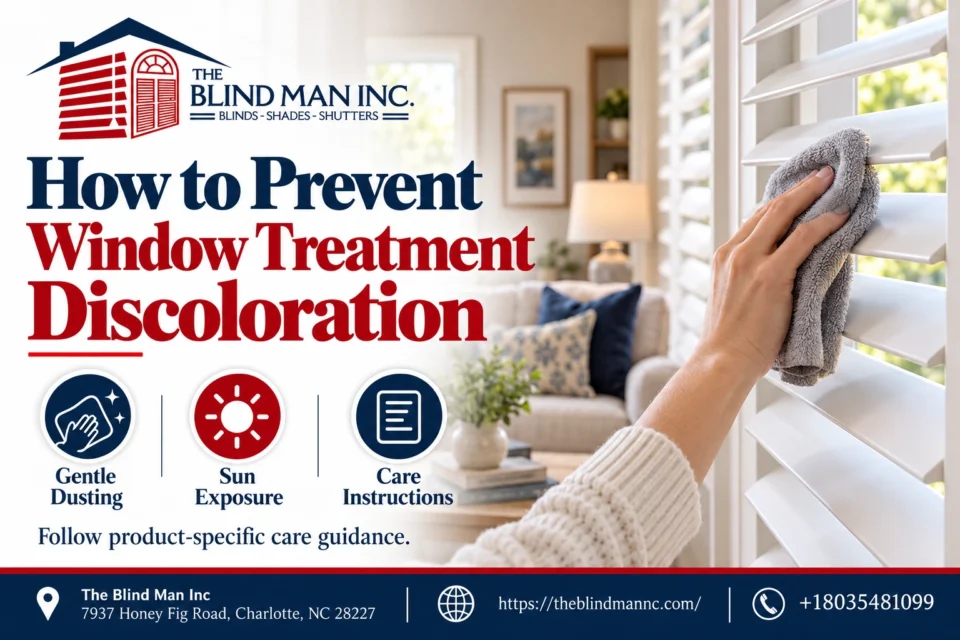
Dust blinds and shutters regularly with a microfiber cloth, soft duster, or appropriate vacuum attachment. Removing dust before it accumulates can reduce the need for aggressive cleaning later.
For washable surfaces, use only the cleaning solution recommended for that material.
Avoid soaking materials that are not designed for wet cleaning. Excess moisture can stain fabrics, damage wood finishes, or leave visible water marks.
Spot cleaning fabric shades should also be approached carefully. Rubbing one small area heavily can create a visibly lighter or cleaner patch that no longer matches the surrounding fabric.
Testing any cleaner in an inconspicuous area first can help reduce that risk.
Can Heat and Humidity Cause Discoloration?
Yes. Heat and humidity can contribute to changes in both appearance and material condition.
Windows can become significantly warmer than the rest of a room, particularly during strong afternoon sun. Repeated heating may accelerate the aging of certain finishes, coatings, adhesives, and fabrics.
Humidity creates a different problem.
In kitchens, bathrooms, laundry rooms, and humid climates, moisture can interact with dust and airborne residue, leaving stains or dulling surfaces.
Natural wood can be particularly sensitive to repeated changes in humidity. Expansion and contraction may affect the finish or cause warping over time.
Fabric treatments may also absorb moisture, especially if ventilation is poor.
For rooms with frequent humidity, faux wood, composite materials, or other moisture-resistant options may be more practical than treatments made from more sensitive natural materials.
Ventilation also matters. Using bathroom exhaust fans, kitchen ventilation, and indoor climate control can reduce the amount of moisture that reaches window treatments.
How to Protect Fabric Shades From Fading
Fabric shades can stay attractive for years when they are matched to the correct environment and maintained appropriately.
Start by considering how much direct sunlight reaches the window.
For especially sunny rooms, homeowners may want fabrics designed for greater fade resistance or treatments with liners that reduce the amount of light reaching the decorative fabric.
Additional ways to protect fabric shades include:
- Closing or adjusting them during periods of intense direct sunlight
- Using solar shades underneath decorative treatments
- Avoiding harsh chemical cleaners
- Vacuuming gently to prevent dust buildup
- Keeping fabric away from condensation
- Addressing indoor humidity problems
- Following the manufacturer’s cleaning directions
Rotating or changing how a treatment is positioned can sometimes help distribute exposure more evenly, although this depends on the style.
It is also worth considering color.
A deep navy, red, or other highly saturated material may show fading more clearly than a neutral fabric when exposed to strong sunlight over a long period.
How to Protect Wood and Faux Wood Blinds
Wood and faux wood blinds have different maintenance needs.
Caring for Wood Blinds
Natural wood should generally be protected from excessive moisture.
Dust frequently using a soft cloth or vacuum attachment. If additional cleaning is necessary, use a method approved for the finish rather than soaking the slats.
Limiting intense sunlight can also help preserve the finish.
Tilting the slats during the brightest part of the day can reduce direct exposure while still allowing some daylight into the room.
Caring for Faux Wood Blinds
Faux wood blinds generally tolerate moisture better, making them useful in kitchens and bathrooms.
They can often be wiped with a slightly damp cloth, although homeowners should still follow product-specific cleaning instructions.
Even faux wood can experience gradual color changes after prolonged exposure to intense heat and sunlight. Keeping the slats clean and adjusting them during peak sun can help reduce unnecessary exposure.
For both wood and faux wood blinds, avoid abrasive scrubbers that could scratch or dull the surface.
When Should Faded Window Treatments Be Replaced?
Fading alone does not always mean a window treatment needs immediate replacement.
Minor color changes may be purely cosmetic, especially if the blinds or shades continue to operate properly.
Replacement may make more sense when discoloration is combined with other problems, such as:
- Brittle or cracking materials
- Frayed fabric
- Warped slats
- Peeling or damaged finishes
- Broken operating mechanisms
- Permanent stains
- Uneven fading that is highly visible
- Poor privacy or light control
- Treatments that no longer match the room
Older window treatments may also lack features homeowners now want, such as improved light control, updated operating systems, or materials better suited to heat and humidity.
Before replacing a treatment solely because of fading, consider whether professional cleaning or minor maintenance could restore its appearance.
If the underlying material has deteriorated, however, replacement is usually more practical.
Best Practices for Preventing Window Treatment Discoloration
There is no single method that completely prevents window treatments from changing over time, but several habits can help slow the process.
To help prevent blinds from fading:
- Choose materials suited to the window. Use more fade-resistant or moisture-resistant materials where sunlight and humidity are intense.
- Manage direct sunlight. Adjust blinds, shades, or shutters during the brightest hours rather than leaving them fully exposed every day.
- Consider solar protection. Solar shades or compatible window films can reduce the amount of intense sunlight entering the room.
- Dust regularly. Routine dusting prevents residue from building up and becoming harder to remove.
- Avoid harsh cleaning products. Use manufacturer-approved cleaning methods whenever possible.
- Control indoor humidity. Ventilate bathrooms, kitchens, and other moisture-prone spaces.
- Address condensation. Repeated moisture against fabrics, blinds, or window frames can lead to staining or deterioration.
- Select colors carefully. Highly saturated colors may show fading more obviously in very sunny rooms.
- Follow care instructions. Different fabrics, woods, composites, and finishes require different maintenance methods.
Good maintenance begins before the window treatment is installed. Choosing the correct material for the window’s light exposure and environment can make it much easier to preserve its appearance.
FAQs
Can blinds be completely protected from fading?
No window treatment is completely immune to aging or UV exposure. However, fade-resistant materials, good cleaning habits, and managing direct sunlight can significantly slow visible discoloration.
Do white blinds turn yellow over time?
Some white materials may yellow because of UV exposure, heat, smoke, cooking residue, cleaning chemicals, or normal material aging. Regular cleaning and choosing higher-quality materials suited to the environment can help.
Do dark blinds fade faster than light blinds?
Not necessarily, but fading is often more noticeable on dark or highly saturated colors because the contrast between the original and faded shade can be greater.
Can sunlight damage faux wood blinds?
Long-term exposure to strong sunlight and heat can affect many materials, including faux wood. Quality faux wood products are generally well suited to sunny areas, but they are not completely immune to aging.
Should blinds stay closed during the hottest part of the day?
Closing or adjusting blinds during strong direct sunlight can reduce solar exposure to both the treatment and the room. The best position depends on the amount of daylight and privacy homeowners want.
Can faded fabric shades be restored?
Sometimes professional cleaning can improve fabric that looks dull because of dust or residue, but true UV fading generally cannot be reversed. Severely faded fabric may eventually need replacement.
Keep Window Treatments Looking Their Best
Preventing discoloration starts with choosing a window treatment that fits the conditions around the window. A material that works well in a shaded bedroom may not be the best choice for a sunny living room, humid bathroom, or kitchen exposed to heat and airborne residue.
The Blind Man Inc. helps homeowners compare blinds, shades, shutters, and other window treatments based on sunlight, moisture, maintenance needs, privacy, and style. Selecting the right material from the beginning can help reduce fading and make everyday care easier.
For homeowners replacing faded blinds or looking for window treatments better suited to bright or humid rooms, The Blind Man Inc. can help identify options designed for the way each space is actually used.
Share this article
Latest articles
October 15, 2026
October 15, 2026
October 15, 2026