
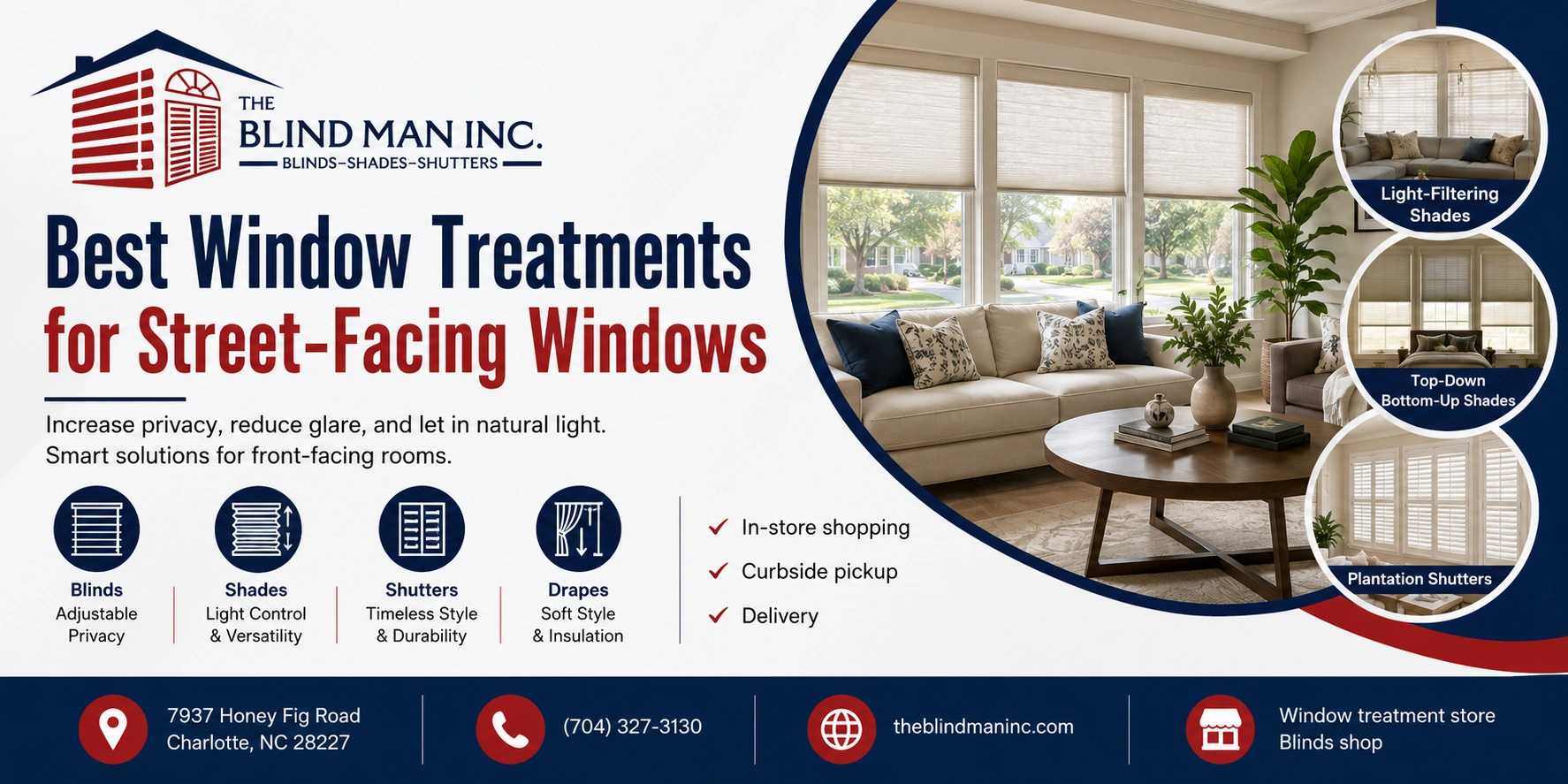
Street-facing windows can make rooms feel exposed, especially at night, but the right window treatments can improve privacy without making your home feel dark. Options like light-filtering shades, top-down bottom-up shades, sheer shades, and plantation shutters help block direct sightlines while still allowing natural daylight into the room.
Many homeowners want a balance between privacy, sunlight, and style. Heavy curtains and dark blinds may solve visibility issues, but they often make rooms feel smaller and less inviting. Modern privacy window treatments are designed to soften sunlight, reduce outside visibility, and maintain a bright, open feel throughout the home.
Whether you want more privacy in a front-facing living room, a bedroom near the street, or a home office with large windows, there are several practical solutions that can fit both your needs and your design style.
Why Street-Facing Windows Need Extra Privacy
Homes with windows facing the street often experience unique privacy challenges. Large front-facing windows may improve curb appeal and allow more daylight into the home, but they can also create uncomfortable sightlines from sidewalks, neighboring homes, and nearby roads.
At night, the problem often becomes more noticeable. Interior lighting can make living spaces highly visible from outdoors, especially in rooms without layered window coverings.
Street-facing windows commonly affect:
- Living rooms
- Front bedrooms
- Dining rooms
- Home offices
- Bathrooms
- Entryways
Many homeowners initially try temporary fixes like blackout curtains or inexpensive blinds, only to realize those solutions block too much light and make the room feel closed off. Instead, modern privacy window treatments are designed to maintain brightness while improving comfort and visibility control.
Privacy solutions become especially important for homes located near:
- Busy roads
- Sidewalks
- Neighboring houses
- Schools or parks
- Commercial areas
- Corner lots
The right window treatment can reduce outside visibility without making your rooms feel closed in.
When Privacy Becomes a Problem in Street-Facing Rooms
Privacy concerns are not always about security. In many homes, they affect how comfortable people feel using certain spaces throughout the day.
Some homeowners avoid opening blinds in front rooms altogether because they feel too exposed. Others struggle with glare from headlights or passing traffic at night. Work-from-home spaces may also feel distracting when windows directly face sidewalks or neighboring homes.
Common signs your current window coverings are not working well include:
- Keeping blinds closed most of the day
- Feeling uncomfortable in front-facing rooms at night
- Excess glare during the day
- Rooms feeling dark despite large windows
- Limited control over visibility and sunlight
The right privacy solution should allow you to enjoy your windows rather than constantly adjusting coverings throughout the day.
Best Window Treatments for Privacy Without Blocking Light
One of the biggest misconceptions homeowners have is that privacy automatically means darker rooms. Fortunately, many modern window treatments are specifically designed to diffuse sunlight while limiting visibility from outside.
Here are some of the best options for balancing privacy and natural light.
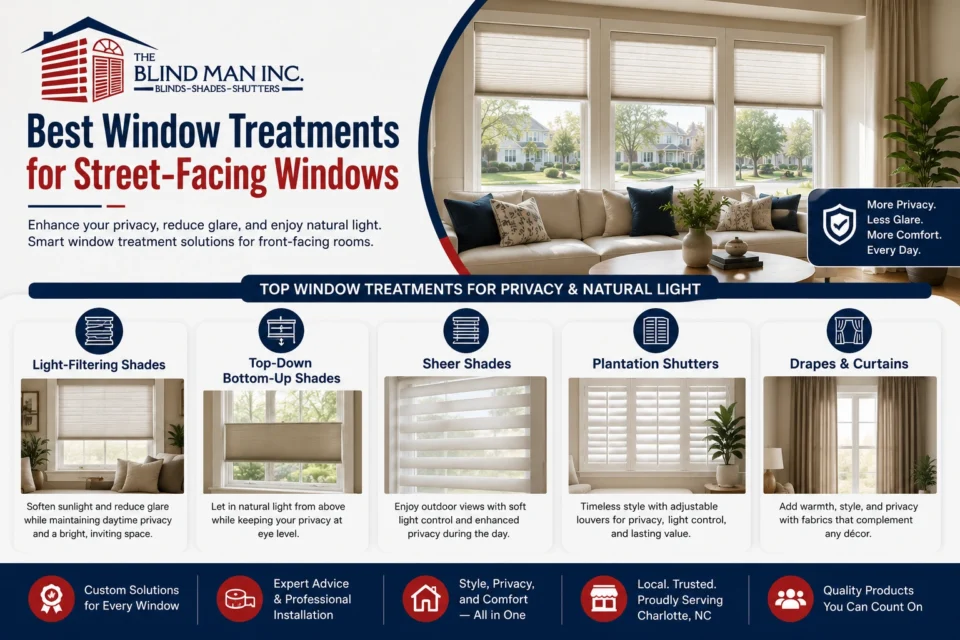
Light-Filtering Shades
Light-filtering shades are one of the most popular choices for front-facing windows. These shades soften incoming sunlight while obscuring direct views into the home.
Benefits include:
- Maintains natural daylight
- Reduces harsh glare
- Creates a soft, inviting atmosphere
- Improves daytime privacy
- Works with modern and traditional interiors
Popular styles include roller shades, cellular shades, and Roman shades. Many homeowners also choose dual-layer shades that combine sheer and blackout fabrics for better flexibility throughout the day.
Light-filtering shades work especially well in living rooms, dining areas, and home offices where brightness is still important.
Top-Down Bottom-Up Shades
Top-down bottom-up shades provide one of the smartest privacy solutions available for street-facing rooms.
These shades allow the upper portion of the window to remain open while the bottom stays covered. This setup lets sunlight enter from above while maintaining privacy at eye level.
Homeowners often choose this option because it:
- Maximizes natural light
- Maintains daytime privacy
- Works well in front-facing bedrooms
- Creates a clean, balanced appearance
- Offers flexible light control
They are especially useful in neighborhoods where pedestrians or neighboring homes have a direct view into the space.
Sheer Shades
Sheer shades combine soft fabric vanes with light-filtering materials to create a bright and airy look while limiting visibility into the room.
These shades are popular because they:
- Preserve outdoor views
- Reduce harsh sunlight
- Add a softer designer appearance
- Improve daytime privacy
- Create a bright, open feel
Sheer shades work best for homeowners who want privacy without completely covering their windows.
Plantation Shutters
Plantation shutters provide timeless style along with adjustable privacy control. Louvers can be tilted to direct sunlight while blocking outside views.
Advantages include:
- Excellent durability
- Strong curb appeal
- Adjustable light control
- Easy maintenance
- Long-term value
Cafe-style shutters are particularly effective for street-facing windows because they cover only the lower portion of the window while leaving the upper section open for natural light.
Shutters are often chosen for homes where both appearance and functionality matter equally.
Blinds vs Shades vs Drapes vs Shutters
Choosing the best privacy window treatment often comes down to your priorities, style preferences, and how much daylight you want to preserve.
Blinds: Best for Adjustable Privacy
Blinds use tilting slats to control light and visibility throughout the day.
Pros:
- Affordable
- Adjustable light control
- Available in many materials
- Easy to operate
Cons:
- Small gaps may still allow visibility
- Less insulation than fabric options
- Can feel less decorative in some spaces
Blinds work well in kitchens, offices, and modern interiors where flexible light control matters most.
Shades: Best for Soft Light Filtering
Shades are one of the most versatile privacy solutions available today.
Pros:
- Soft appearance
- Excellent light diffusion
- Wide range of fabric styles
- Energy-efficient options available
- Easy to layer with drapery
Cons:
- Some styles offer less precise light adjustment
- Privacy levels vary by fabric type
Shades are ideal for homeowners who want a balance of comfort, style, and flexibility.
Drapes: Best for Nighttime Privacy
Drapes provide strong nighttime coverage while adding softness and texture to a room.
Pros:
- Excellent nighttime privacy
- Elegant appearance
- Improves insulation
- Works well for layering
Cons:
- Can block more daylight
- Heavy fabrics may overwhelm smaller rooms
- Requires more maintenance
Layering sheer curtains with blackout drapes is a common solution for balancing privacy and brightness.
Shutters: Best for Long-Term Value
Shutters are often considered one of the most premium privacy solutions available.
Pros:
- High-end appearance
- Adjustable louvers
- Excellent durability
- Adds resale value
- Timeless style
Cons:
- Higher upfront cost
- Permanent installation
Shutters are especially popular in upscale homes and neighborhoods where curb appeal is a major consideration.
How to Balance Privacy and Curb Appeal
Many homeowners worry that adding privacy solutions will make the outside of their home look closed off or unattractive. In reality, thoughtfully selected window treatments can improve both privacy and exterior appearance.
Consistency plays a major role. Coordinating front-facing window treatments creates a cleaner, more polished look from the street.
Here are several ways to improve privacy while maintaining curb appeal.
Choose Consistent Window Treatments
Even if different rooms have different needs, maintaining a coordinated appearance across front-facing windows helps create a more cohesive exterior.
Neutral tones and clean lines typically work best for creating visual balance.
Use Layered Window Coverings
Combining shades with drapery creates more flexibility throughout the day. Homeowners can adjust privacy levels based on lighting conditions without sacrificing style.
Layered treatments also add depth and softness to the room.
Select Light-Filtering Fabrics
Heavy blackout materials can sometimes create a flat or overly dark appearance from outside. Light-filtering fabrics help maintain brightness while still limiting visibility into the home.
Think About Nighttime Visibility
Some materials provide strong daytime privacy but become more transparent once interior lights are turned on at night.
Layered solutions, shutters, or blackout liners can help improve nighttime coverage without eliminating natural light during the day.
Match the Style of Your Home
Traditional homes often pair well with shutters and drapery, while modern homes may benefit from sleek roller shades or minimalist blinds.
Well-designed window treatments should feel like part of the home rather than an afterthought.
When Custom Window Treatments Make Sense
While store-bought products may work for some windows, custom window treatments often provide better long-term performance for street-facing spaces.
Custom solutions are especially helpful when:
- Windows have unusual sizes or shapes
- Privacy needs vary by room
- You want layered treatments
- Better light control is important
- Your home has specific design goals
- Energy efficiency matters
Custom window treatments also allow homeowners to choose:
- Exact fabric opacity
- Precise fit
- Motorized operation
- Cordless safety features
- Coordinated styles
- Enhanced UV protection
Professional guidance can also help identify solutions homeowners may not have considered, especially in homes with difficult front-facing layouts.
Motorized shades continue to grow in popularity because they allow homeowners to quickly adjust privacy levels throughout the day while improving convenience and energy efficiency.
Conclusion
Street-facing windows do not have to leave your home feeling exposed. The right privacy window treatments can help you maintain natural light, improve comfort, and create a more inviting living space without sacrificing style.
From light-filtering shades and layered drapes to shutters and top-down bottom-up designs, there are many ways to reduce outside visibility while still keeping rooms bright and open.
If your front-facing rooms feel too exposed, professionally designed window treatments can help you create better privacy while maintaining the look and feel you want throughout your home.
Frequently Asked Questions
What are the best window treatments for privacy while still letting in light?
Light-filtering shades, sheer shades, and top-down bottom-up shades are some of the best options for maintaining privacy while preserving natural daylight.
Are shades better than blinds for privacy?
Shades often provide better overall privacy because they use continuous fabric rather than slats with small gaps. However, blinds offer more adjustable light control throughout the day.
Do sheer curtains provide enough privacy?
Sheer curtains provide limited daytime privacy but may become more transparent at night when interior lights are on. Layering them with drapes or shades usually improves nighttime coverage.
What window treatments work best for front-facing living rooms?
Top-down bottom-up shades, plantation shutters, and layered drapery are excellent options for front-facing living rooms because they balance privacy, light control, and style.
Do window treatments provide privacy at night?
Some light-filtering materials provide good daytime privacy but become more transparent at night when interior lights are on. Layered treatments, blackout liners, or shutters typically provide stronger nighttime privacy.
Are custom window treatments worth it?
Custom window treatments often provide a better fit, improved appearance, stronger durability, and more functional light control compared to standard store-bought products, especially for street-facing windows.
Share this article
Latest articles

October 13, 2026
October 13, 2026

October 13, 2026