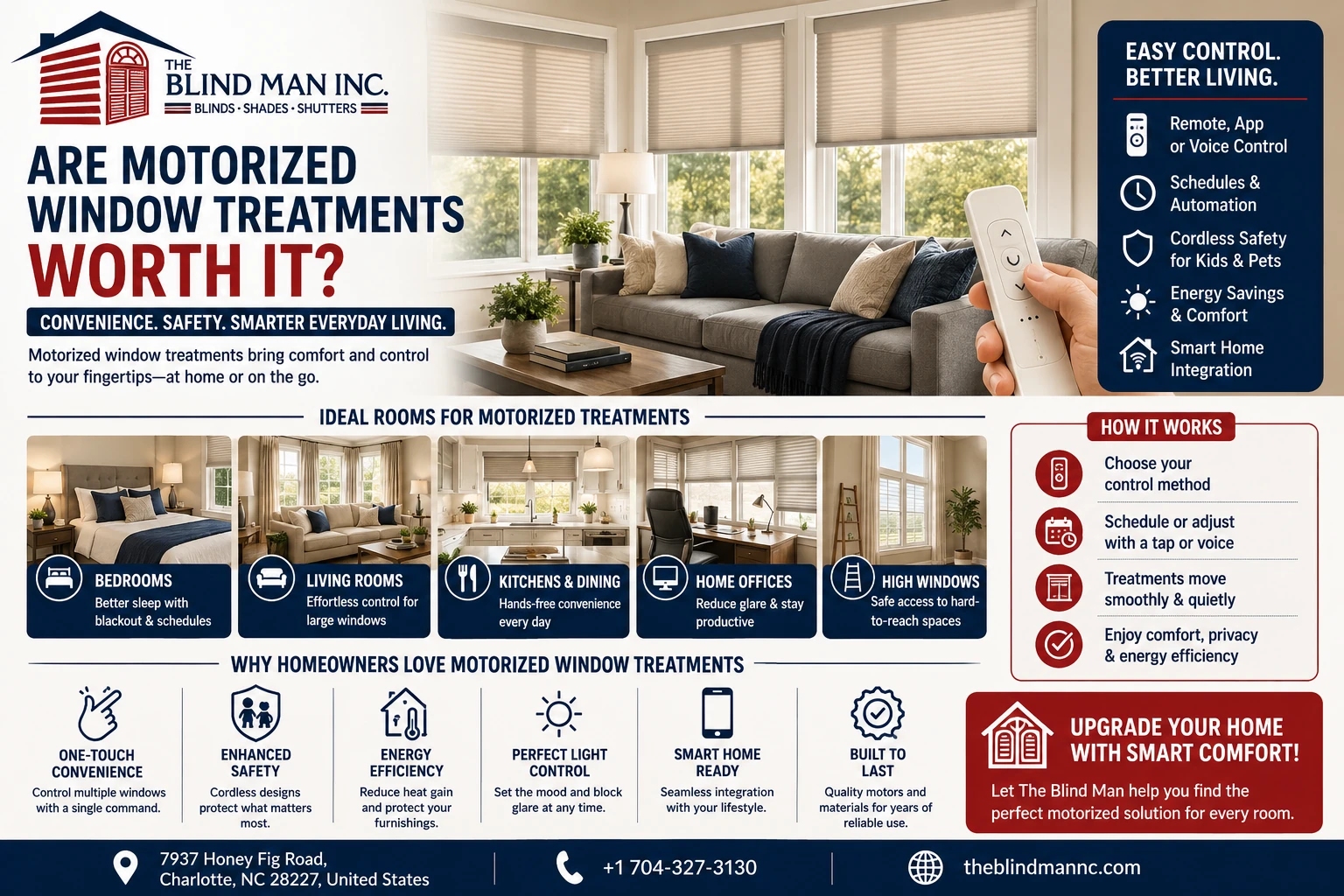
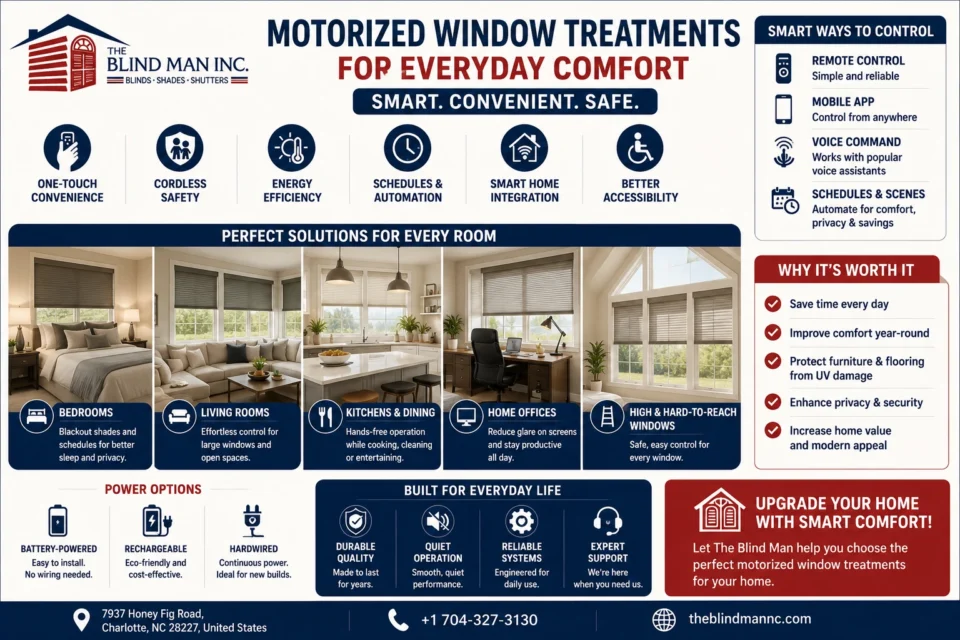
Motorized window treatments are worth it for everyday use when convenience, safety, accessibility, and consistent light control matter in your home. They are especially valuable for large windows, hard-to-reach areas, bedrooms, and households that want easier control through remotes, apps, schedules, or smart home systems.
The upgrade costs more than manual blinds or shades, but the daily benefits can justify the investment. Motorization reduces physical effort, improves child and pet safety, supports energy management, and helps window treatments operate more consistently throughout the day for most households over many years.
What Motorized Window Treatments Do
Motorized window treatments use a powered system to raise, lower, tilt, or adjust blinds, shades, shutters, or drapery. The motor may run on batteries, a rechargeable power source, a plug-in connection, or hardwired electricity.
Most systems are controlled by a handheld remote, wall switch, mobile app, voice assistant, or programmed schedule. Some products support several control methods, which gives homeowners flexibility based on the room and daily routine.
Common Functions
Motorized systems can perform several tasks. Roller and cellular shades can move up or down. Blinds may tilt their slats. Drapery tracks can open and close curtains. Some advanced systems allow grouped control, so several treatments move together.
This makes it easier to manage large rooms, multiple windows, or spaces with changing sunlight. A single command can close every shade on one wall instead of requiring separate manual adjustments.
Battery and Wired Systems
Battery-powered systems are common because they are easier to install in existing homes. Many use replaceable or rechargeable batteries and do not require opening walls.
Hardwired systems are often preferred during new construction or major renovations. They provide continuous power and reduce the need for battery maintenance, but installation is more involved.
Best Rooms for Motorized Treatments
Bedrooms
Bedrooms are one of the strongest applications for motorized shades. Homeowners can program treatments to close at night and open gradually in the morning.
Blackout motorized shades are useful for shift workers, children, light-sensitive sleepers, and anyone who wants better control over early sunlight. Scheduled operation can also support a more consistent sleep routine.
Living Rooms and Great Rooms
Large living areas often have several windows, tall ceilings, or wide glass doors. Manual operation can become inconvenient when treatments are heavy or difficult to reach.
Kitchens and Dining Areas
Kitchens benefit from hands-free operation when cooking, cleaning, or handling food. A remote or voice command prevents the need to touch cords or fabric with wet or messy hands.
Home Offices
Motorized shades help manage changing glare on computer screens. A programmed schedule can adjust treatments as sunlight moves across the room.
High or Hard-to-Reach Windows
Windows above staircases, entryways, bathtubs, counters, or vaulted ceilings are difficult to operate manually. Motorized treatments provide practical control without ladders, poles, or unsafe stretching.
Convenience, Safety, and Accessibility
Easier Daily Operation
Opening and closing every treatment manually takes time, especially in larger homes. Motorized systems simplify this process with one button, voice command, or automated schedule.
Grouped controls are particularly useful in open floor plans. Homeowners can manage several windows at once and create consistent light levels across the room.
Improved Safety
Motorized treatments are typically cordless, which reduces loose cords that may pose risks to children and pets. Cordless operation also creates a cleaner appearance and prevents tangled lift cords.
Better Accessibility
People with limited mobility, arthritis, injuries, or reduced hand strength may find manual blinds and shades difficult to operate. Motorized controls require less physical effort and can support greater independence.
Remote and voice controls are especially helpful when reaching the window is difficult. Accessibility should be considered during product selection because control type and placement affect ease of use.
Smart Home and Remote Options
Handheld Remotes
A handheld remote is the most straightforward option. It can control one treatment, one room, or several grouped treatments.
Mobile Apps
App-based control allows homeowners to adjust treatments from a phone or tablet. Depending on the system, users may create schedules, control groups, check treatment positions, and manage several rooms.
Voice Control
Compatible systems can connect with common voice assistants. Homeowners can open, close, or adjust treatments using spoken commands.
Voice control is convenient when hands are occupied and can improve accessibility. Compatibility should be confirmed before purchase because not every motor or hub works with every platform.
Automated Schedules and Sensors
Schedules allow treatments to move at selected times. Shades may close during the hottest part of the day, open in the morning, and lower at sunset.
Some systems work with sunlight or temperature sensors. These features can improve comfort and reduce heat gain, although they may require additional equipment and professional setup.
When Motorized Is Worth the Upgrade
Motorization is most worthwhile when it solves a recurring problem or provides a benefit used every day.
You Have Large or Heavy Treatments
Wide shades, tall draperies, and large blinds can be difficult to move manually. A properly sized motor provides smoother operation and reduces strain on the treatment.
Your Windows Are Difficult to Reach
Motorization is a practical solution for windows located high on walls, behind furniture, above counters, or near staircases.
The upgrade improves safety and makes the treatment useful instead of leaving it permanently open or closed.
You Want Consistent Light and Temperature Control
Scheduled treatments can reduce direct sunlight before a room overheats. They can also protect flooring, artwork, furniture, and upholstery from repeated ultraviolet exposure.
Motorization does not replace insulation or efficient glass, but it helps window treatments perform consistently.
Convenience Has Meaningful Daily Value
A feature is worth the cost when it is used regularly. Homeowners who adjust several treatments every morning and evening may gain more value than those who rarely move their blinds.
The decision should reflect habits, room use, and how much convenience matters to the household.
Things to Consider Before Choosing Motorized Window Treatments
Motorized products require more planning than manual treatments. The right system should match the window, power source, control preference, and long-term maintenance expectations.
Initial Cost
Motorized treatments cost more because they include a motor, controls, power components, and sometimes a smart home hub. Custom sizing, premium fabrics, and professional installation can increase the total.
Homeowners should compare the upgrade cost with the practical value it provides. Motorizing selected rooms may be more sensible than installing it throughout the entire home.
Power and Battery Maintenance
Battery-powered treatments need occasional charging or battery replacement. The frequency depends on motor size, shade weight, usage, and battery type.
Hardwired systems avoid this maintenance but require more complex installation. Power planning should happen early, especially during construction or remodeling.
Noise Level
Quality motors usually operate quietly, but no motor is completely silent. Bedrooms, nurseries, and media rooms may require quieter products.
Ask to hear a working sample when possible. Motor speed and treatment size can affect the sound.
Compatibility and Future Support
Smart systems should work with the homeowner’s current devices and preferred platform. Product support, warranties, replacement parts, and software updates also matter.
Choosing an established system can make future repairs or additions easier.
Manual Backup
Some motorized treatments include manual override options, while others depend entirely on power. Ask how the treatment operates during a dead battery, power outage, or control failure.
Understanding backup options prevents surprises later.
Upgrade Everyday Comfort and Convenience
The Blind Man helps homeowners compare motorized blinds, shades, shutters, and drapery based on room use, window size, power options, control preferences, and budget. A professional consultation can identify where motorization provides meaningful value and where a manual option may be sufficient.
Careful measurements, proper motor selection, and reliable installation are essential for smooth operation. Whether you want easier control, safer cordless products, smart home integration, or better management of hard-to-reach windows, the right motorized system can make daily living more comfortable and practical.
Key Takeaways
Motorized window treatments are worth considering when they solve daily problems involving access, safety, glare, privacy, or repeated manual operation. Bedrooms, living rooms, offices, kitchens, and high windows often gain the most value. Remote controls offer simplicity, while apps, schedules, sensors, and voice commands provide greater automation. Costs, power sources, compatibility, maintenance, noise, and backup operation should be reviewed before choosing a system. A professional consultation helps match the motor, treatment, and controls to the room so the upgrade remains useful, reliable, convenient, and practical through changing daily household routines.
Share this article
Latest articles
October 13, 2026
October 13, 2026

October 13, 2026