
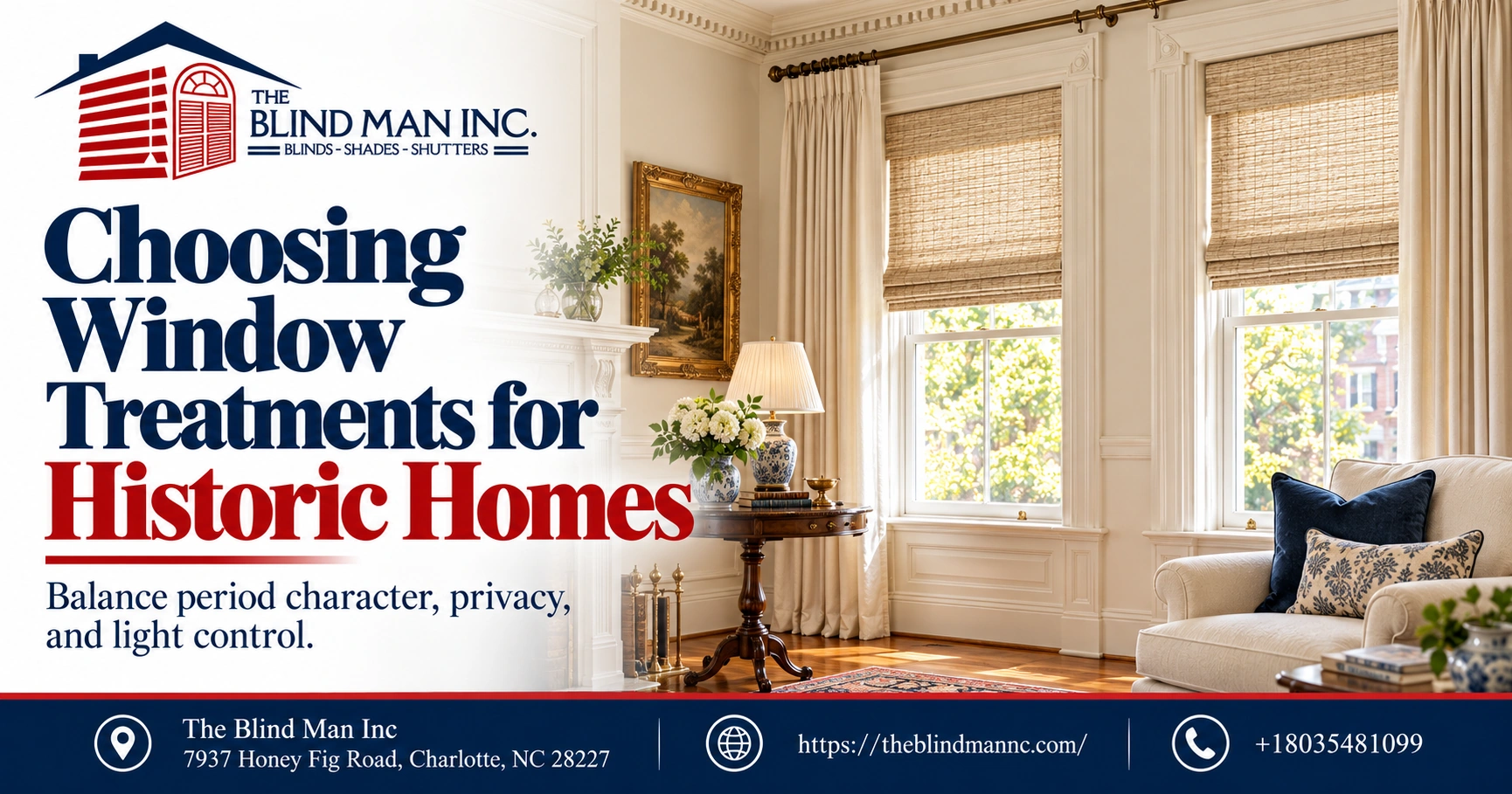
The best window treatments for historic homes complement the home’s original architecture while providing privacy, light control, and comfort. Interior shutters, custom drapes, Roman shades, and simple blinds can all work well when their proportions, materials, and finishes suit the building’s character.
Older homes often feature tall windows, decorative woodwork, deep window recesses, and irregular openings. These details make window treatment selection different from furnishing a newer home.
The goal is not to recreate every historical detail. It is to choose practical coverings that respect existing craftsmanship without overpowering the windows themselves.
What Window Treatments Work Best in Historic Homes?
Which styles complement older architecture?
Historic home window treatments should support the architectural style rather than compete with it.
A Victorian home with ornate trim may accommodate tailored drapes, traditional Roman shades, or carefully selected interior shutters.
A Colonial-style home may benefit from simple shutters, understated curtains, or treatments that maintain symmetrical window arrangements.
Craftsman homes often look balanced with natural materials, warm wood finishes, and straightforward fabric designs.
The right choice depends on the actual building rather than its age alone.
Not every older house was built in the same architectural tradition. Even homes from the same period can have different window proportions and interior details.
How do popular treatments compare?
| Window treatment | Best suited for | Main consideration |
| Interior shutters | Traditional rooms with compatible window proportions | Frames and louvers may cover original details |
| Custom drapes | Tall windows and formal living spaces | Fabric fullness and hardware placement |
| Roman shades | Smaller rooms and decorative window trim | Mounting location and fabric selection |
| Wood blinds | Traditional interiors with simple detailing | Slat width, finish, and operating clearance |
| Cellular shades | Historic homes needing discreet insulation | Contemporary appearance and mounting fit |
| Roller shades | Rooms needing unobtrusive light control | Material and hardware visibility |
No single treatment is historically appropriate for every property.
The best approach considers the home’s architectural period, surviving features, and everyday requirements.
How Can You Preserve the Home’s Original Character?
What architectural details should remain visible?
Historic windows often contribute significantly to a home’s character.
Original wood casings, decorative moldings, window stools, muntins, and distinctive sash arrangements may be important architectural features.
Window treatments should be selected and installed with these elements in mind.
For example, heavy shutter frames may conceal narrow decorative trim. A large curtain rod may interfere with an ornamental window surround.
Before choosing a treatment, identify which architectural details you want to preserve and display.
The National Park Service recommends retaining character-defining historic window features and avoiding alterations that diminish their appearance.
Should you change original window frames for a modern treatment?
Generally, homeowners should avoid unnecessary modifications to original historic materials.
A window covering that requires extensive cutting, drilling, or removal of decorative trim may not be the most appropriate option.
Consider whether the treatment can be mounted outside the original casing or installed using existing suitable mounting locations.
Some solutions may allow more reversible installation than others.
For properties subject to preservation requirements, confirm applicable restrictions before altering historic features.
Why Do Window Proportions Matter in Older Homes?
How do tall, narrow windows affect treatment selection?
Many older homes feature windows with proportions that differ from modern standard openings.
Tall, narrow windows can look elegant with appropriately sized drapery panels.
However, oversized hardware or excessive fabric may overwhelm narrow frames.
For particularly tall windows, treatment length and mounting position should reinforce the window’s vertical proportions.
Roman shades and simple blinds may also work when their dimensions align with the opening.
The objective is to maintain a balanced relationship between the treatment and surrounding architecture.
What about deep window recesses?
Deep window recesses provide opportunities for treatments that sit within the opening.
However, the available mounting depth must be measured carefully.
Original sash hardware, window locks, and opening mechanisms can affect clearance.
An inside-mounted shade should not prevent a historic window from operating properly.
Similarly, shutters must have adequate space to open and close without interfering with handles or decorative trim.
Do unusually shaped windows need custom treatments?
Sometimes.
Arched windows, bay windows, and irregular openings can be difficult to accommodate with standard products.
Custom sizing may provide a better fit while preserving the architectural shape.
In some cases, leaving a decorative upper window section uncovered and treating only the lower portion can be visually appropriate.
The design should also account for privacy and light control.
Are Plantation Shutters a Good Fit for Historic Interiors?
When do shutters complement older homes?
Interior shutters can suit many traditional interiors because they provide structured lines and adjustable light control.
Wood shutters with appropriate finishes may complement painted trim, paneled walls, and traditional millwork.
However, shutter design should be selected according to the architectural setting.
Wide contemporary louvers may look different from narrower historical shutter styles.
A modern plantation shutter is not automatically a historically accurate replacement for an original interior shutter.
Should shutters match the existing woodwork?
Matching shutters to surrounding trim can create a consistent appearance.
Painted white or cream shutters may complement traditional painted millwork.
Wood finishes can work well in rooms featuring original stained trim.
However, the finish should be chosen carefully.
A wood stain that is noticeably different from existing historic woodwork can make the shutters appear disconnected.
For homes with especially distinctive or original window trim, a more understated treatment may be preferable.
Can shutters hide important details?
Yes.
The frame used to support interior shutters can cover portions of the existing window casing or reduce the visible glass area.
This may change how the window looks from both inside and outside.
Before ordering shutters, consider frame width, louver size, panel configuration, and mounting position.
Homeowners comparing available styles can review our Plantation Shutters page.
The purpose is to determine whether shutters complement the specific windows, not simply whether they suit a traditional decorating style.
When Do Drapes Work Better Than Shades or Blinds?
Why are drapes appropriate for tall historic windows?
Drapes can emphasize vertical window proportions and introduce softness to rooms with substantial architectural detailing.
They are particularly useful in formal dining rooms, parlors, and living spaces with high ceilings.
Fabric panels can frame decorative window trim without covering it when properly positioned.
Drapes also provide flexibility in fabric weight, lining, and fullness.
This makes them suitable for homeowners who want a traditional appearance alongside modern privacy and light-control requirements.
Which drapery styles look appropriate?
Pleated drapes, tailored panels, and restrained decorative headings can work well in older interiors.
The most suitable design depends on the room’s formality and architectural style.
A formal nineteenth-century interior may accommodate richer fabric and more decorative hardware.
A modest early twentieth-century home may look better with simpler cotton or linen panels.
Avoid assuming that every historic home requires heavy velvet or elaborate tassels.
Overly decorative treatments can distract from original architectural features.
Can drapes be combined with shades?
Yes.
Combining drapes with discreet shades can provide both decorative character and practical control.
For example, light-filtering Roman shades may handle daytime privacy while drapery panels frame the window.
In a bedroom, a room-darkening shade can be paired with traditional curtains.
This approach allows homeowners to preserve a period-inspired appearance without relying on decorative fabric alone for functionality.
Explore our Drapes page for additional fabric and style considerations.
How Should You Choose Colors, Fabrics, and Finishes?
Which colors work with historic interiors?
Colors should complement the home’s existing finishes rather than follow a particular trend.
Warm white, ivory, cream, muted green, soft blue, and earthy neutrals can work well in many traditional rooms.
However, historical color palettes varied considerably between architectural periods.
A Victorian interior may accommodate deeper colors and decorative patterns.
A Craftsman interior might benefit from warmer, nature-inspired tones.
The best choice should account for wall colors, flooring, furniture, and original woodwork.
What fabrics complement older homes?
Natural-looking fabrics often work well because they introduce texture without appearing overly modern.
Linen, cotton, and suitable woven blends can create a relaxed traditional appearance.
Velvet and heavier fabrics may suit formal rooms where greater visual weight is appropriate.
Patterned textiles can also work, especially when their scale complements the room.
Small windows may look overwhelmed by oversized patterns.
Large windows can sometimes accommodate more substantial designs.
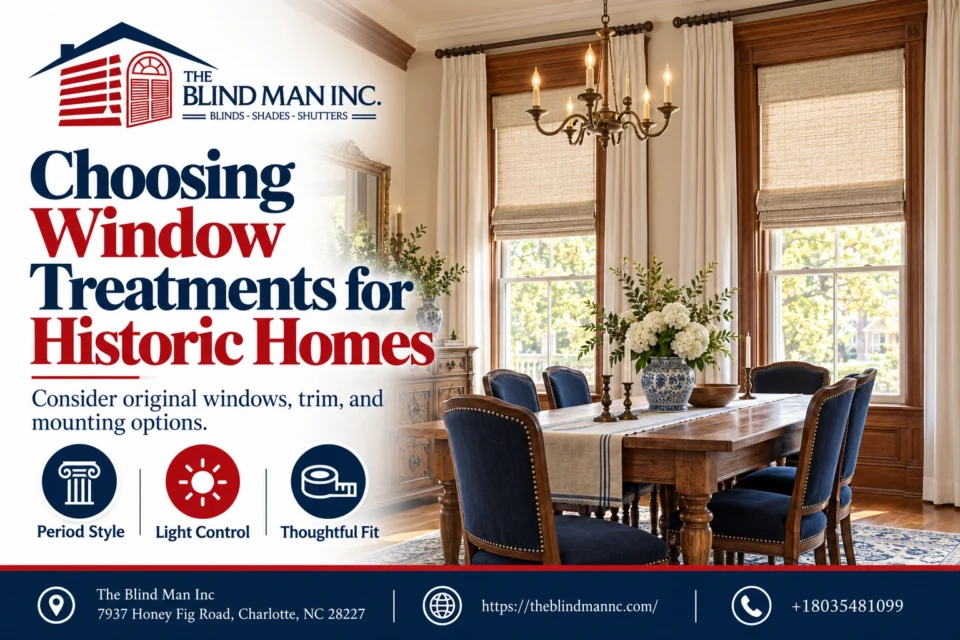
Should hardware look antique?
Not necessarily.
Hardware should complement the existing architecture without pretending to be original when it is not.
Simple brass, bronze, iron-inspired, or painted finishes can suit many older interiors.
Highly decorative finials may work in formal spaces, while understated rods may be more appropriate elsewhere.
Consistency with existing door handles, lighting fixtures, and other visible hardware helps create a cohesive appearance.
Can Modern Window Treatments Still Look Period-Appropriate?
Are contemporary shades unsuitable for old houses?
No. Modern window treatments can work well in historic homes when their visual impact is carefully controlled.
A simple roller shade mounted discreetly within an appropriate window opening may have very little effect on the room’s appearance when raised.
Similarly, Roman shades in traditional fabrics can provide modern operation without introducing an obviously contemporary aesthetic.
The key is separating the treatment’s functionality from its visible design.
Homeowners do not need to sacrifice convenience to maintain architectural character.
Can motorized treatments work in historic interiors?
Motorized window treatments may be useful for tall windows or difficult-to-reach openings.
However, their suitability depends on installation requirements.
Some systems require electrical access, mounting space, or visible components.
Battery-powered options may reduce wiring needs where suitable products are available.
Before choosing motorization, consider how equipment will be concealed and whether installation could affect original materials.
Avoid making permanent modifications without understanding their implications.
What about cordless window treatments?
Cordless operating systems can provide a cleaner appearance by reducing visible cords.
They may be particularly useful in rooms where homeowners want a simple treatment that does not distract from decorative trim.
For homes with children, selecting products that meet current window covering safety standards is also important.
Function and architectural compatibility should be considered together.
What Custom Options Help With Unusual Window Sizes?
Why are custom measurements important?
Older window openings may be slightly out of square, uneven, or inconsistent in size.
Even windows that appear identical can have different dimensions.
Standard-sized treatments may leave visible gaps, fit poorly, or interfere with window operation.
Accurate measurements help identify these issues before installation.
Measurements should account for the width and height of the opening, depth, sash movement, and nearby architectural features.
Can custom treatments accommodate bay windows?
Yes. Bay windows can often be treated with individually sized shades, coordinated drapery panels, or appropriately configured shutters.
The best arrangement depends on the angles between windows and the available mounting space.
Individual shades may preserve the geometry of the bay.
Drapery hardware designed for angled configurations may provide a softer alternative.
Avoid selecting a bulky system that conceals the bay window’s distinctive shape.
What about windows that are not perfectly straight?
An older opening may have uneven sides or slight variations in width.
Custom products can sometimes accommodate these differences, but the limitations depend on the treatment type.
A shade still needs suitable clearance for smooth operation.
Professional measurement can help determine whether an inside mount is practical or whether another configuration would create a better result.
How to Balance Energy Efficiency With Historic Style
Can window treatments make older homes more comfortable?
Yes. Appropriate coverings can help reduce drafts felt near windows, limit unwanted solar heat, and improve room comfort.
Cellular shades create insulating air pockets that help reduce heat transfer.
Lined drapes can provide additional coverage, especially when installed to limit air circulation near the window.
However, results depend on fit, window condition, fabric properties, and operating habits.
Window coverings should not be presented as a complete solution to significant air leakage or deteriorated window components.
How can you improve comfort without replacing original windows?
Start by assessing the condition of the existing windows.
Weatherstripping, appropriate maintenance, and professionally evaluated repairs may improve comfort while retaining original materials.
Suitable interior coverings can provide another layer of thermal control.
In a historic room, discreet insulating shades may be combined with traditional curtains.
This allows homeowners to improve everyday comfort without significantly changing the room’s appearance.
The National Park Service emphasizes maintenance and compatible improvements when preserving historically significant windows.
Does sunlight exposure affect fabric selection?
Yes.
Strong sunlight can contribute to fading in fabrics, flooring, and furniture.
For windows receiving substantial direct sun, consider linings or materials designed to reduce sunlight exposure.
However, fabric performance varies.
Ask about light control and product-specific UV performance rather than assuming that a particular color or thickness provides complete protection.
What Design Mistakes Should You Avoid in an Older Home?
Choosing treatments before studying the architecture
One common mistake is selecting window coverings based entirely on appearance in a showroom.
A treatment that looks attractive on a modern display may not suit a historic window with decorative trim or unusual proportions.
Study the home’s existing architecture first.
Using oversized frames or hardware
Large shutter frames, heavy rods, or bulky headrails can conceal original details.
Choose proportions that support rather than dominate the window.
Assuming every older home needs elaborate decoration
Historic character does not always mean ornate design.
Many traditional homes feature restrained detailing and straightforward materials.
An overly decorative treatment can look less appropriate than a simple, carefully fitted alternative.
Ignoring window operation
Window treatments must accommodate opening, closing, locking, and cleaning.
Avoid configurations that obstruct original hardware or make necessary maintenance difficult.
Making irreversible alterations unnecessarily
Drilling into valuable original woodwork or modifying decorative casings should not be the default approach.
Explore less invasive mounting options where practical.
Forgetting about privacy and daily function
An attractive treatment still needs to meet the household’s requirements.
A bedroom may need greater nighttime privacy, while a living room may benefit from filtered daylight.
The most successful historic home window treatments combine architectural compatibility with practical everyday use.
FAQs
What are the best window treatments for Victorian homes?
Custom drapes, Roman shades, and appropriately styled interior shutters can complement Victorian interiors. The best choice depends on the home’s surviving architectural details, window proportions, and room formality. Ornate fabrics are not necessary for every Victorian home.
Are plantation shutters historically accurate?
Some historic homes originally used interior shutters, but modern plantation shutters are not automatically period-appropriate. Louver size, frame proportions, materials, and mounting details affect compatibility. Evaluate the specific architectural style before choosing them.
Should window treatments cover original wood trim?
Generally, preserving visibility of distinctive original trim is preferable when possible. Treatments that conceal decorative casings may reduce the architectural character of the room. Mounting arrangements should be planned around important surviving features.
Can you install modern shades in a historic house?
Yes. Modern shades can work in historic interiors when their appearance is discreet and installation respects original materials. Roman, roller, and cellular shades may provide useful privacy and light control without requiring major architectural changes.
Which window treatments are best for tall historic windows?
Custom drapes and properly proportioned shades are often suitable. Drapes can emphasize window height, while shades provide a more understated appearance. The best option depends on trim details, ceiling height, and available mounting space.
Can window treatments improve insulation in an older home?
Yes. Cellular shades and suitably lined drapes may help reduce heat transfer and improve comfort. Actual performance depends on construction, fit, and window condition. Coverings are most effective as part of a broader approach to maintaining the home’s existing windows.
Preserve Historic Character With Thoughtful Window Treatments From The Blind Man
Choosing window treatments for a historic home involves balancing original craftsmanship with the privacy, lighting, and comfort needs of modern living.
At The Blind Man, we help Charlotte, NC homeowners explore custom window covering options that complement their home’s architectural details.
We consider window proportions, existing trim, fabric choices, finishes, and everyday function when discussing suitable designs.
Whether you prefer traditional shutters, custom drapes, or understated shades, our goal is to help you find treatments that respect the character of your home.
Explore our Plantation Shutters and Drapes options, or visit our Charlotte, NC window treatment website to learn more about our services.
If you’re updating the window coverings in an older home, contact The Blind Man to discuss a design that complements its existing architecture.
Key Takeaways
The best window treatments for historic homes preserve architectural character while improving privacy, light control, and comfort. Interior shutters, custom drapes, Roman shades, and discreet modern coverings can all be appropriate when carefully selected.
Window proportions, original trim, hardware, colors, and materials should guide each decision. Custom measurements are particularly valuable for unusual or uneven openings.
Homeowners should avoid oversized treatments, unnecessary alterations, and designs that obscure distinctive features. Thoughtful window covering choices can make an older home more functional while allowing its original craftsmanship to remain the focus.
Share this article
Latest articles
October 28, 2026
October 28, 2026
October 28, 2026