
High-quality plantation shutters typically last 20 to 30 years, and many remain functional for even longer with proper care. Their lifespan depends on the material, installation quality, sun exposure, humidity, maintenance, and how often they are opened, closed, or adjusted.
The long plantation shutters lifespan is one reason homeowners often view them as a lasting window treatment rather than a short-term decorating choice. Unlike fabric shades or basic blinds, shutters are built with solid frames, adjustable louvers, hinges, and panels that can withstand years of daily use.
However, shutters are not completely maintenance-free. Dust, moisture, direct sunlight, loose hardware, and improper cleaning can gradually affect their appearance and operation. Understanding how shutters age can help homeowners prevent avoidable damage, complete minor repairs early, and recognize when replacement is truly necessary.
What Is the Expected Lifespan of Plantation Shutters?
Most well-made plantation shutters can last between 20 and 30 years. Premium products that are installed correctly and maintained consistently may remain attractive and functional for several decades.
There is no single replacement age that applies to every shutter. Some products begin showing wear after 10 or 15 years, while others continue operating smoothly well beyond 30 years.
The expected lifespan depends heavily on the material and surrounding environment.
Wood Plantation Shutters
Wood shutters are valued for their natural appearance, strength, and ability to complement traditional and contemporary interiors. Quality hardwood shutters can last for decades when installed in dry, climate-controlled rooms.
Wood is sensitive to moisture and changing humidity levels. Excessive moisture can cause panels or louvers to swell, warp, crack, or become difficult to operate.
Wood shutters may be best suited for:
- Living rooms
- Dining rooms
- Bedrooms
- Home offices
- Low-humidity areas
- Rooms without frequent condensation
Direct sunlight can also fade stained or painted finishes over time. Protective coatings and regular maintenance can reduce visible deterioration.
Composite Plantation Shutters
Composite shutters are manufactured from engineered wood, medium-density fiberboard, polymers, or blended materials. They are often designed to provide the appearance of painted wood with improved resistance to warping and moisture.
A well-made composite shutter may last 15 to 25 years or longer, depending on its construction and environment.
Composite products can be a practical choice for rooms that experience moderate humidity. However, not all composite materials perform the same way. Lower-quality products may chip, swell, peel, or become heavy enough to strain hinges over time.
Vinyl Plantation Shutters
Vinyl shutters are resistant to moisture and are commonly selected for bathrooms, kitchens, laundry rooms, and other humid spaces. They are easy to clean and do not absorb water in the same way natural wood can.
Quality vinyl shutters may last 15 to 25 years. Their longevity depends on the thickness of the material, internal reinforcement, sun exposure, and installation quality.
Prolonged heat or direct sunlight may cause some vinyl materials to yellow, become brittle, or warp. Reinforced vinyl shutters generally hold their shape better than thin, hollow products.
Installation Quality
Even durable materials can wear prematurely when shutters are not measured, mounted, or aligned correctly.
Poor installation can lead to:
- Panels rubbing against the frame
- Uneven gaps
- Hinges carrying excessive weight
- Louvers that do not close fully
- Frames pulling away from the wall
- Stress cracks around mounting points
- Difficulty opening or closing panels
Professional installation helps distribute weight evenly and ensures that panels operate without unnecessary pressure on the frame or hardware.
Everyday Use
Shutters installed in frequently used rooms may experience more mechanical wear than shutters that remain in one position most of the time.
Louvers adjusted several times a day, panels opened for window access, and shutters used by children or pets may require more frequent maintenance.
Gentle operation makes a difference. Forcing a stuck panel or pulling on the louvers rather than using the tilt rod can damage components and shorten the shutter’s useful life.
Sunlight and UV Exposure
Strong sunlight can gradually fade paint, stain, and other finishes. It can also dry out natural wood or weaken certain synthetic materials.
Charlotte homes with south- or west-facing windows may receive intense afternoon sunlight. Shutters in these areas may age faster than treatments installed on shaded windows.
The rate of wear depends on:
- Window direction
- Glass type
- Shutter material
- Finish quality
- Indoor temperature
- Daily sun exposure
- Whether the shutters remain closed for long periods
Humidity and Moisture
Charlotte’s seasonal humidity can affect shutter materials, particularly in rooms with limited ventilation.
Wood may expand during humid periods and contract when indoor air becomes dry. Repeated changes can eventually cause cracking, warping, or joint separation.
Bathrooms and kitchens may expose shutters to additional moisture from steam, splashing, or condensation. Choosing moisture-resistant materials for these rooms can help prevent premature deterioration.
How Can You Extend the Life of Your Plantation Shutters?
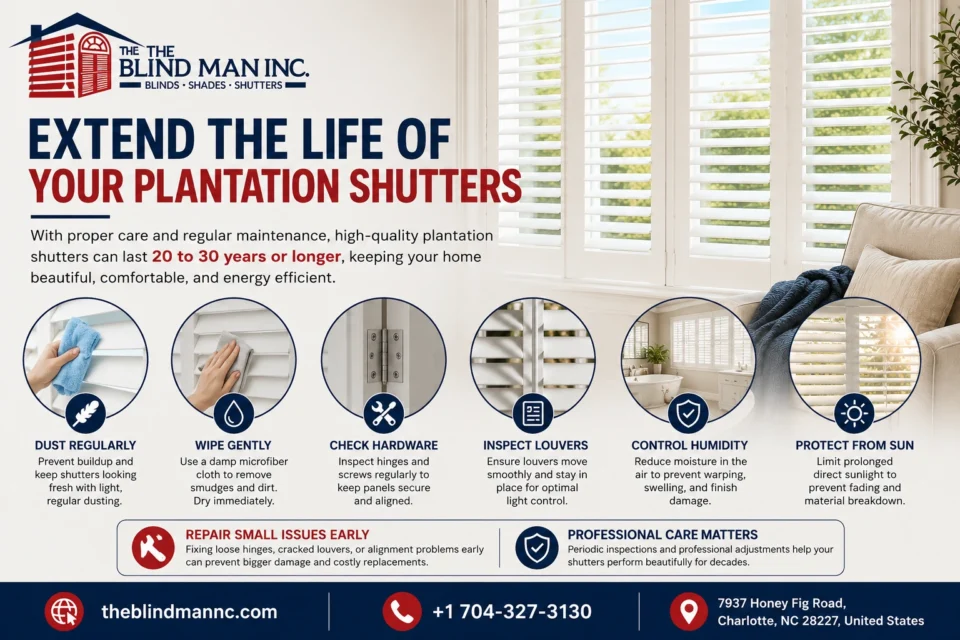
Plantation shutters are relatively easy to maintain, but consistency matters. Light, regular cleaning is safer and more effective than allowing heavy buildup to develop.
Dust the Shutters Regularly
Dust can accumulate along louver edges, frames, hinges, and tilt mechanisms. Over time, buildup may make the shutters look dull and interfere with smooth movement.
Use one of the following:
- A clean microfiber cloth
- A feather duster
- An electrostatic duster
- A vacuum with a soft brush attachment
Close the louvers in one direction and wipe across them gently. Then rotate them in the opposite direction to clean the other side.
Avoid pressing hard on the louvers. Thin or wide louvers may crack or shift if too much pressure is applied.
Wipe With a Damp Microfiber Cloth
For fingerprints, smudges, or light grime, use a slightly damp microfiber cloth. The cloth should not be dripping wet.
Wipe the affected area gently, then dry it with a separate cloth. This is especially important for wood shutters because standing moisture can enter joints, edges, or damaged finishes.
When cleaning vinyl or composite shutters, follow the manufacturer’s care instructions. Some materials tolerate moisture better than others, but soaking is rarely necessary.
Avoid Harsh Chemical Cleaners
Bleach, ammonia, solvents, abrasive powders, and strong multipurpose cleaners may damage the finish or discolor the material.
Harsh cleaners can cause:
- Cloudy surfaces
- Uneven fading
- Peeling paint
- Streaking
- Brittleness
- Damage around joints and hardware
A small amount of mild soap mixed with water may be appropriate for stubborn marks, but it should be tested on an inconspicuous area first.
Do not spray cleaning products directly onto the shutters. Apply the solution to the cloth instead.
Check Hinges Periodically
Hinges support the weight of each shutter panel. Loose screws can cause panels to sag, rub, or become difficult to close.
Inspect the hinges every few months for:
- Loose screws
- Rust or discoloration
- Bent hardware
- Unusual movement
- Gaps around mounting points
- Panels that no longer sit level
Loose screws may be tightened carefully, but avoid overtightening them. Too much force can strip the screw hole or crack the frame.
If screws repeatedly loosen, the mounting point may need professional repair.
Inspect the Louvers and Tilt System
Louvers should rotate smoothly and remain in the selected position. If they fall open, move unevenly, or feel unusually stiff, the tilt system may need adjustment.
Watch for:
- Loose louvers
- Cracked pins
- Detached connectors
- A bent tilt rod
- Hidden tilt mechanisms that no longer engage
- Louvers that will not remain closed
Addressing a small connection problem early may prevent additional louvers from becoming damaged.
Open and Close Panels Gently
Use the frame or designated handle area when opening shutter panels. Do not pull on the tilt rod or louvers because they are not designed to carry the weight of the entire panel.
If a panel feels stuck, check for an obstruction or alignment problem. Forcing it may damage the hinge, frame, or mounting hardware.
Control Indoor Humidity
Managing humidity can help protect wood and composite shutters from swelling, warping, and finish damage.
Helpful steps include:
- Running bathroom exhaust fans
- Using kitchen ventilation
- Repairing window leaks
- Wiping away condensation
- Using a dehumidifier when needed
- Maintaining consistent indoor temperatures
- Keeping air vents unobstructed
If condensation forms frequently on the windows, the moisture source should be addressed rather than simply cleaning the shutters more often.
Protect the Finish
Painted and stained shutters may eventually need touch-ups, particularly around edges and high-contact areas.
Small finish problems should be addressed before exposed wood or composite material absorbs moisture. Use products approved for the original shutter material and finish.
A professional may be needed when fading, peeling, or surface damage affects multiple panels.
Repair Minor Problems Promptly
A loose hinge, detached louver, or damaged magnet may seem minor, but continued use can place stress on surrounding components.
Early repair can prevent:
- Additional hardware failure
- Frame damage
- Misaligned panels
- Broken louvers
- Scraping and finish wear
- Complete operating-system failure
Routine inspection once or twice a year can identify issues before they become expensive or difficult to correct.
What Are the Signs Your Plantation Shutters Are Wearing Out?
Plantation shutters usually age gradually. Homeowners may become accustomed to small changes and overlook signs that the shutters are no longer functioning properly.
The following problems may indicate normal wear, repair needs, or material deterioration.
Warped Panels
A warped panel may no longer sit flat against the frame. It can create uneven gaps, rub against nearby panels, or become difficult to latch.
Warping is often related to:
- Humidity
- Heat
- Moisture exposure
- Poor material quality
- Improper storage before installation
- An uneven frame
Slight alignment problems may be adjustable. Severe warping usually cannot be corrected permanently.
Fading or Yellowing
Direct sunlight may gradually change the color of painted, stained, vinyl, or composite shutters.
Fading may appear as:
- Uneven coloring
- Lighter areas near the window
- Yellowed white finishes
- Dull surfaces
- Visible differences between panels
Minor fading is cosmetic, but severe discoloration may indicate that the finish or material has deteriorated.
Cracked or Broken Louvers
Louvers may crack from impact, rough handling, age, or material brittleness. A single damaged louver can often be repaired or replaced.
Multiple cracked louvers may suggest widespread deterioration, especially when the shutter has experienced years of strong sunlight or heat.
Loose Louvers
Louvers should stay in position after being adjusted. If they slowly fall open or close on their own, the tension system may be worn.
Loose louvers can reduce:
- Privacy
- Light control
- Glare reduction
- Visual consistency
Some shutter designs allow tension adjustment. Others may require replacement parts or professional repair.
Loose or Sagging Hinges
A sagging panel may scrape against the sill, frame, or adjacent panel. This places additional pressure on the hinges and can damage the finish.
Hinges may loosen because of frequent use, panel weight, stripped screw holes, or movement in the surrounding frame.
Difficulty Opening or Closing
Shutters should open, close, and latch without excessive force.
Difficulty operating them may result from:
- Warped panels
- Loose hinges
- Frame movement
- Paint buildup
- Swollen materials
- Damaged magnets
- Misalignment
- Obstructions near the window
A professional inspection can determine whether the issue is mechanical, structural, or material-related.
Peeling, Chipping, or Cracking Finish
Damaged finishes expose the underlying material to moisture and dirt. Peeling paint may also make shutters difficult to clean.
Localized finish damage may be repairable. Widespread peeling, especially on multiple panels, may require refinishing or replacement.
Damaged Frames or Mounting Points
The shutter frame should remain securely attached to the wall or window opening. Separation, cracking, or movement around the mounting points may indicate installation or structural problems.
A loose shutter frame should be inspected promptly because it may become unstable.
Shutters That No Longer Meet the Room’s Needs
Shutters do not have to be broken to become less useful.
Homeowners may consider updating them when:
- The color no longer suits the room
- The louver size feels outdated
- More light control is needed
- Privacy needs have changed
- The window has been replaced
- The room has a new purpose
- The existing material is unsuitable for humidity
- Smart or automated operation is desired
Outdated appearance alone does not require replacement, but changing needs may make an upgrade worthwhile.
When Should You Repair or Replace Plantation Shutters?
The decision to repair or replace depends on the amount of damage, the shutter’s age, the availability of parts, and the expected cost of continued maintenance.
Repair May Be the Better Option When:
- One louver is cracked
- A hinge is loose
- A magnet or catch is damaged
- A tilt rod has become disconnected
- A panel needs minor alignment
- The finish has a small chip
- Replacement parts are available
- The surrounding frame is still secure
- The shutter material remains in good condition
A targeted repair can restore operation and extend the life of a well-made shutter.
Replacement May Be More Practical When:
- Several panels are warped
- Multiple louvers are cracked or loose
- The material has widespread moisture damage
- The finish is peeling across large areas
- Frames are separating from the window
- Repair parts are no longer available
- The shutters have been repaired repeatedly
- The material is unsuitable for the room
- The shutters no longer fit after window replacement
- The homeowner’s privacy or light-control needs have changed
Replacement may also be more cost-effective when repairs would require extensive disassembly, refinishing, and custom parts.
Consider the Remaining Lifespan
Repair costs should be compared with the overall condition of the shutters. Spending money on one broken component may make sense when the rest of the system is strong.
The same repair may not be worthwhile when the panels are already warped, faded, and difficult to operate.
Homeowners should consider:
- Current age
- Material quality
- Number of damaged parts
- Frequency of previous repairs
- Availability of matching components
- Condition of the frame
- Current room needs
- Cost of repair versus replacement
Refinishing as an Alternative
Wood shutters with a solid structure may be candidates for refinishing rather than full replacement.
Refinishing may help correct:
- Faded stain
- Worn paint
- Surface scratches
- Minor finish peeling
- Outdated color
However, refinishing will not correct severe warping, broken joints, damaged frames, or failing hardware.
When Safety Becomes a Concern
Loose frames, unstable panels, broken hinges, and shutters pulling away from the wall should be addressed promptly.
Large shutter panels can be heavy. Continued use after mounting hardware begins to fail can increase the risk of the panel falling or damaging the surrounding window area.
How The Blind Man Can Help
The Blind Man can help homeowners evaluate whether their plantation shutters need cleaning, adjustment, repair, refinishing, or replacement. A professional inspection can identify the cause of sticking panels, loose louvers, sagging hinges, fading, and frame movement.
This type of assessment is especially useful when damage may be related to humidity, material selection, or installation rather than normal age alone. Correcting a minor problem early may add years to the life of the shutters.
When replacement is appropriate, homeowners can explore Plantation Shutters suited to the room’s moisture level, sun exposure, privacy needs, window dimensions, and interior design.
The purpose of professional guidance is not to replace shutters that still perform well. It is to help homeowners protect their existing investment and determine when continued repairs are no longer the most practical long-term option.
FAQs
Can plantation shutters really last 30 years?
Yes. High-quality plantation shutters can last 20 to 30 years or longer when they are properly installed, cleaned regularly, and protected from excessive moisture or rough handling.
Which plantation shutter material lasts the longest?
Quality hardwood shutters can last for several decades in dry, climate-controlled rooms. Composite and reinforced vinyl shutters can also offer long service lives, particularly in humid areas where natural wood may be less suitable.
How often should plantation shutters be cleaned?
Light dusting every one to two weeks can prevent buildup. A more detailed cleaning can be completed every few months or as needed, depending on pets, open windows, indoor air quality, and room usage.
Can I use furniture polish on wood shutters?
Furniture polish should only be used when it is approved by the shutter manufacturer. Some polishes leave residue, attract dust, or affect painted and stained finishes.
Why are my plantation shutter louvers loose?
Louvers may become loose when tension screws, connectors, or internal tilt components wear down. Some shutters can be adjusted, while others may need replacement hardware.
Can warped plantation shutters be repaired?
Minor alignment problems may be corrected, but severely warped panels usually cannot be restored permanently. The cause of the warping should also be identified before replacement.
Are plantation shutters suitable for bathrooms?
Yes, but moisture-resistant materials such as vinyl or certain composites are generally better suited to bathrooms than natural wood. Ventilation is still important for preventing condensation and mildew.
Why are my shutters difficult to close?
Difficulty closing may result from loose hinges, swelling, warping, frame movement, paint buildup, or improper alignment. Forcing the panels can cause further damage.
Can plantation shutters be repainted?
Some wood and composite shutters can be repainted or refinished, depending on the material and original coating. Proper preparation and compatible paint are necessary for a durable result.
When should plantation shutters be replaced?
Replacement may be appropriate when panels are badly warped, several louvers are broken, frames are unstable, finishes are extensively damaged, or repeated repairs no longer restore reliable operation.
Does direct sunlight damage plantation shutters?
Long-term UV exposure can fade finishes, dry out wood, yellow some vinyl materials, and make lower-quality products brittle. Material quality and protective finishes affect how well shutters tolerate sunlight.
How can I protect shutters in Charlotte’s humid climate?
Use moisture-resistant materials in humid rooms, run ventilation fans, wipe away condensation, maintain stable indoor humidity, and address window leaks promptly. Regular inspections can also catch swelling or finish damage early.
Share this article
Latest articles
August 22, 2026
August 22, 2026
August 22, 2026