
Window treatments have become more focused on convenience and everyday comfort than ever before. While style and light control still matter, many homeowners also want options that are easier to operate, safer for children and pets, and better suited for modern lifestyles.
Two popular choices that support easier operation are cordless and motorized window treatments. Both eliminate traditional dangling cords, but they function very differently in daily use. Some homeowners prefer the simplicity of cordless operation, while others appreciate the added convenience and accessibility that motorized systems can provide.
Understanding how these two options compare can help homeowners decide which solution makes the most sense for their routines, window layouts, and long-term comfort goals.
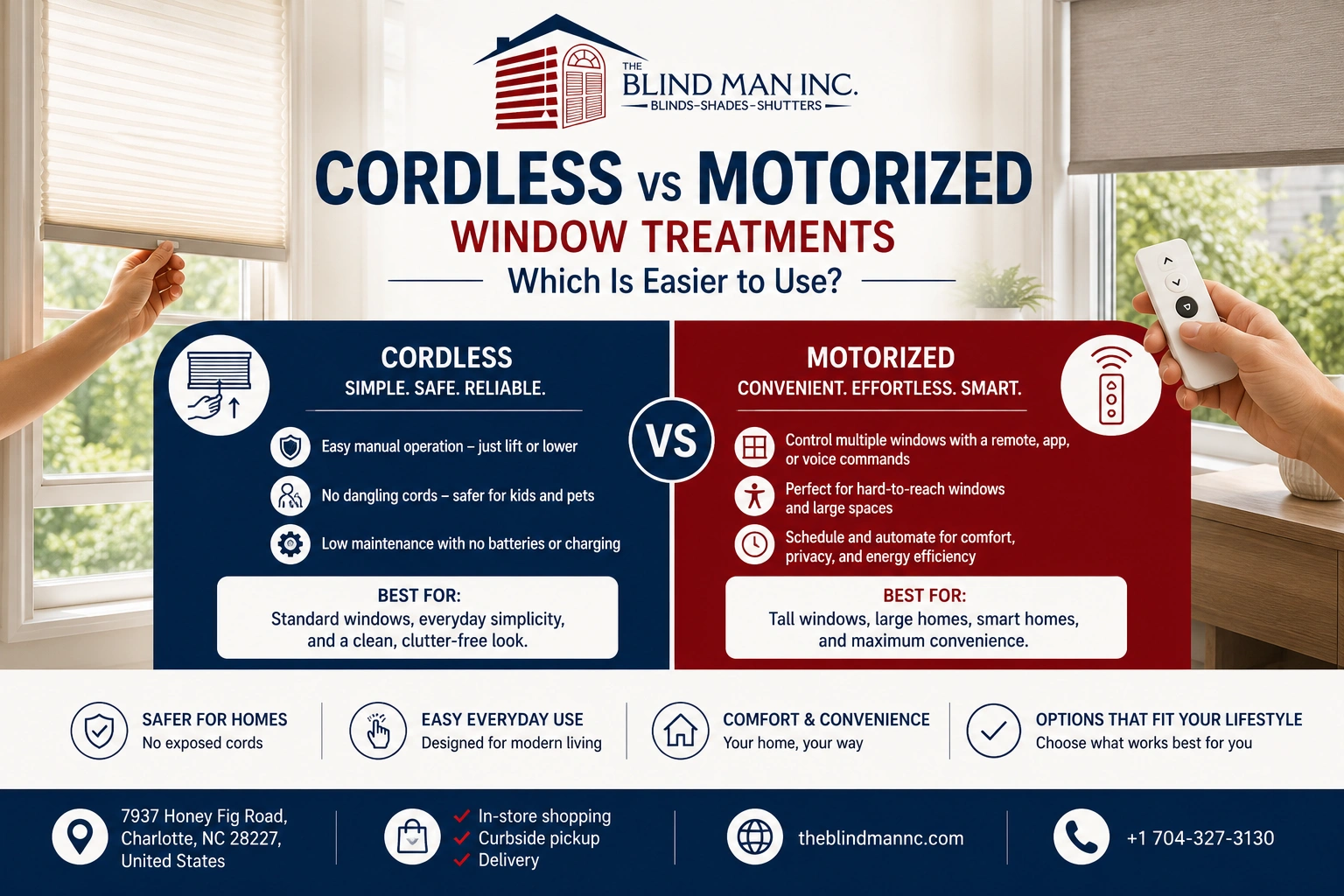
Cordless vs Motorized: What Is the Main Difference?
The biggest difference between cordless and motorized window treatments is how they are operated.
Cordless Window Treatments
Cordless systems are manually operated without exposed pull cords. Instead of using cords to raise or lower the shades or blinds, homeowners simply adjust them by hand using a bottom rail or handle.
Cordless designs are popular because they create a cleaner appearance while reducing cord-related safety concerns.
Motorized Window Treatments
Motorized window treatments use a powered system that allows homeowners to open, close, or adjust shades electronically. Depending on the setup, operation may happen through:
- A handheld remote
- Wall-mounted controls
- Smartphone apps
- Voice commands
- Smart-home automation systems
Motorized systems are often associated with convenience, especially for large windows or difficult-to-reach areas.
Both cordless and motorized options can improve the usability of modern window treatments, but they fit different lifestyles and preferences.
When Cordless Window Treatments Make Sense
Cordless window treatments are often a practical option for homeowners who want straightforward operation without adding technology or automation features.
Many people appreciate cordless systems because they are simple and intuitive to use. There are no cords to tangle, fewer visible components, and minimal learning involved.
Cordless options may work especially well for:
- Standard-height windows
- Smaller rooms
- Homes seeking a clean, uncluttered appearance
- Homeowners who prefer manual operation
- Spaces where shades are adjusted occasionally rather than constantly
Because cordless systems eliminate hanging cords, they are also commonly chosen in homes with children or pets. Reducing exposed cords can help create a safer environment while maintaining easy access to the window treatments themselves.
Another advantage is simplicity. Homeowners do not need batteries, charging schedules, remotes, or app integrations to operate cordless systems.
For some households, that simplicity is exactly the appeal.
However, cordless systems may become less convenient for:
- Very large windows
- Tall ceilings
- Hard-to-reach windows
- Frequently adjusted treatments
- Multiple windows opened and closed throughout the day
In these situations, repeated manual adjustments may feel less practical over time.
When Motorized Window Treatments Are Easier
Motorized window treatments are often chosen for convenience and accessibility, especially in homes with challenging window layouts or busy daily routines.
Instead of manually adjusting each window covering individually, homeowners can control multiple treatments at once using a remote or automated settings schedule.
Motorized systems may be especially useful for:
- Tall or hard-to-reach windows
- Large sliding glass doors
- High-ceiling living rooms
- Media rooms
- Smart-home environments
- Homes with many windows
For homeowners with mobility limitations or accessibility concerns, motorized systems can also make daily adjustments easier. Opening and closing shades no longer requires reaching, lifting, or walking from window to window.
Some homeowners also enjoy scheduling automatic adjustments throughout the day. Shades can be programmed to open in the morning, close during strong afternoon sunlight, or adjust automatically for privacy in the evening.
Another benefit is consistency. Multiple window treatments can move together at the same speed and height, creating a more uniform appearance across larger spaces.
Of course, motorized systems also come with additional considerations. Depending on the setup, they may involve batteries, charging, electrical wiring, or smart-home integration. Some homeowners enjoy these features, while others prefer a simpler approach.
Neither option is automatically “better.” The right fit depends on how the windows are used and what level of convenience matters most to the homeowner.
Safety, Convenience, and Everyday Use
Both cordless and motorized window treatments are designed to improve usability compared to older cord-operated systems.
Child and Pet Safety
One of the biggest advantages of both options is the removal of dangling cords. Homes with young children or pets often prioritize cordless or motorized systems because they reduce potential cord-related hazards.
Daily Convenience
Cordless treatments are generally quick and easy for standard windows. Many homeowners appreciate being able to adjust shades manually without needing additional devices.
Motorized systems may feel more convenient in homes where shades are adjusted frequently or where windows are difficult to access.
Accessibility
Motorization can provide significant accessibility benefits for individuals with mobility challenges, limited reach, or physical limitations that make manual adjustments difficult.
Maintenance Considerations
Cordless systems typically have fewer electronic components, which some homeowners view as a simpler long-term option.
Motorized systems may require battery replacement, charging, or occasional technology updates depending on the product design.
Noise and Operation
Some homeowners also consider operational feel and sound. Cordless systems operate manually and quietly, while motorized systems may produce a soft motor sound during movement.
Daily usability often comes down to how the room functions. Bedrooms, living rooms, offices, and media spaces may all have different priorities when it comes to convenience and control.
How to Choose the Right Option for Your Home
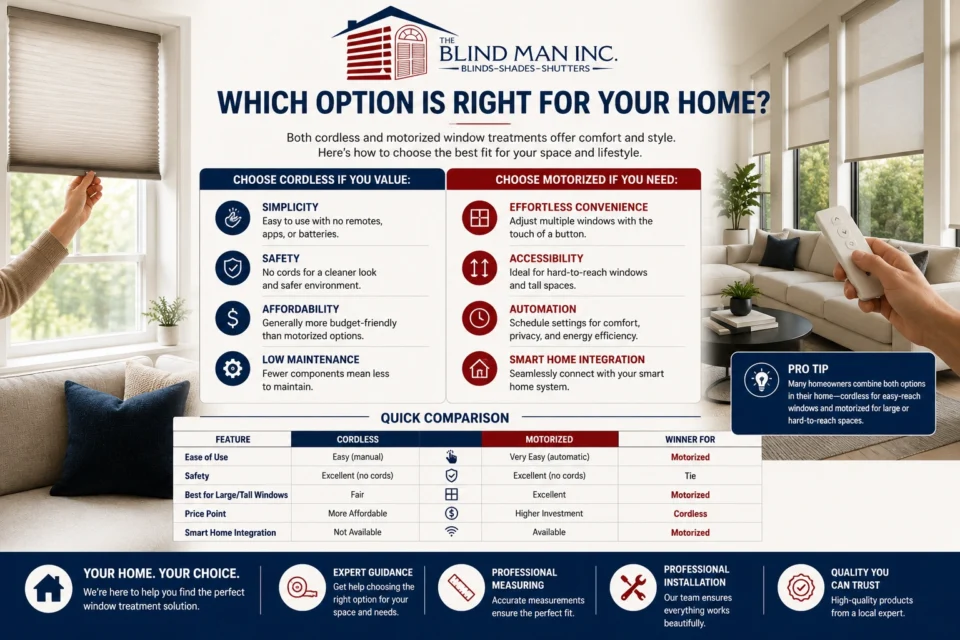
Choosing between cordless and motorized window treatments usually depends on balancing convenience, accessibility, simplicity, and lifestyle preferences.
Cordless systems may be a great fit for homeowners who:
- Prefer manual operation
- Want a clean, streamlined appearance
- Have standard-height windows
- Want fewer technology-related components
- Prioritize simplicity and ease of maintenance
Motorized systems may make more sense for homeowners who:
- Have hard-to-reach windows
- Want smart-home integration
- Frequently adjust shades throughout the day
- Need easier accessibility
- Prefer remote or automated control
The budget may also influence the decision. Motorized systems often involve additional components and features, while cordless systems may offer a more straightforward approach.
It is also possible to combine both options throughout the home. Some homeowners choose motorization for large living areas or difficult windows while using cordless systems in bedrooms or secondary spaces.
Ultimately, the best solution is the one that supports how the home is actually used each day.
Simplify Everyday Comfort With The Blind Man
Both cordless and motorized window treatments can improve convenience, safety, and comfort throughout the home. Whether you prefer the simplicity of manual cordless operation or the added accessibility and automation of motorized systems, understanding how each option functions can help you make a more confident decision for your space.
At The Blind Man, we help homeowners choose window treatments that fit their routines, comfort preferences, and everyday needs. Whether you prefer simple cordless designs or advanced motorized options, our team can help you find a solution that works beautifully in your home.
Share this article
Latest articles
September 23, 2026
September 23, 2026

September 23, 2026