
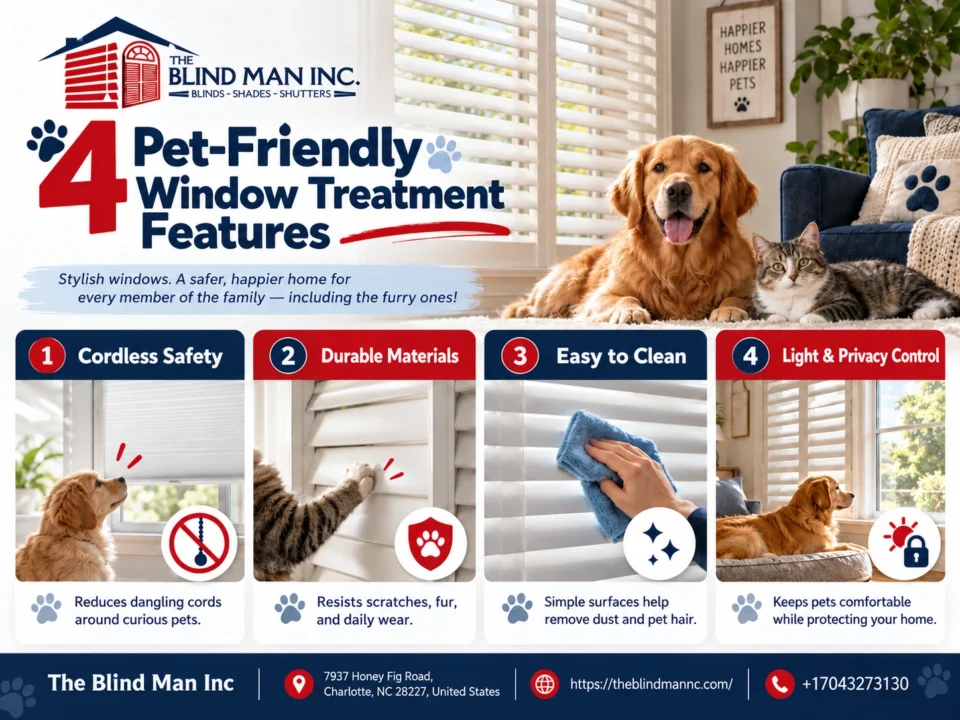
The best window treatments for pet owners are durable, cordless, easy to clean, and suited to the way cats or dogs interact with windows. Faux wood blinds, shutters, roller shades, and certain cellular shades can all work well when selected for the right room and pet behavior.
Choosing pet friendly window treatments is about more than finding something that looks good. Dogs may push through blinds to watch outside, cats may climb or scratch fabric, and pet hair can collect on textured materials. The right window covering should make everyday life easier while reducing opportunities for damage.
What Makes a Window Treatment Pet Friendly?
A pet-friendly window treatment should handle normal contact without requiring constant repair or cleaning.
Important features include:
-
Durable materials
-
Cordless operation
-
Easy-to-clean surfaces
-
Strong operating components
-
Simple opening and closing
-
Minimal loose fabric
-
A design suited to the pet’s behavior
-
Good visibility control where pets frequently look outside
Different pets create different challenges.
A small dog that spends most of the day looking through a front window may repeatedly push against horizontal blinds. A cat may be more interested in climbing behind a shade or reaching for dangling components. A large dog may bump a treatment simply because the window is beside a favorite resting spot.
That means there is no single perfect product for every household.
The best choice usually comes from matching the window treatment to the room, the window, and the way the pet actually uses the space.
What Window Treatment Problems Do Pet Owners Commonly Face?
Pets are not usually trying to damage window treatments. They are trying to see, reach, play, or move through an area that happens to have blinds or shades in the way.
Some of the most common problems include:
Bent or Broken Slats
Dogs often push their noses or heads between blind slats to see outside. Repeated pressure can bend lightweight materials or break individual slats.
Scratching
Cats may scratch fabric shades, curtains, or other textured materials, particularly when they are near furniture or favorite climbing areas.
Chewing
Puppies and younger dogs may chew accessible cords, slats, bottom rails, or fabric.
Pet Hair
Hair can collect on fabric window treatments, especially textured materials that attract dust and dander.
Mud and Nose Prints
Windows near doors, patios, and favorite lookout areas often collect nose marks and paw prints. The lower portion of a window covering may become dirty quickly.
Climbing
Some cats try to climb curtains or lightweight fabric treatments. Others squeeze behind blinds or shades to reach the windowsill.
Cord Interaction
Loose cords and loops can attract curious pets. Even apart from chewing damage, eliminating unnecessary dangling components creates a cleaner and more practical setup.
Understanding which of these problems happens in your home makes product selection much easier.
What Are the Best Blinds for Homes With Pets?
For many pet owners, faux wood blinds are one of the most practical types of blinds.
Faux Wood Blinds
Faux wood blinds are typically made from composite or synthetic materials rather than natural hardwood.
They are useful in pet-friendly homes because they tend to offer:
-
Durable slats
-
Easy cleaning
-
Resistance to everyday moisture
-
A substantial feel
-
Good light control
-
A traditional appearance
If a dog regularly looks through the window, a sturdier slat can generally tolerate everyday contact better than an extremely thin lightweight blind.
Faux wood is also convenient when nose prints or dirt need to be wiped away.
However, even durable blinds can be damaged if a dog repeatedly forces its head through closed slats. In homes with an enthusiastic window watcher, homeowners may want to raise the blind slightly during the day to provide a clear viewing area.
Wood Blinds
Real wood blinds can provide a warm, premium appearance and may work well in homes with calm pets.
They are not necessarily the first choice for a pet that scratches, chews, or regularly pushes through the slats. Natural wood can show scratches and tooth marks more easily than some synthetic alternatives.
Vertical Blinds
Vertical blinds have one useful characteristic for homes with pets: individual vanes can move aside when a pet walks through them.
That can be convenient for large windows and patio doors.
However, pets that play aggressively with the vanes may still bend, dislodge, or damage them. The suitability of vertical blinds therefore depends heavily on the animal.
What Are the Best Shades for Pet Owners?
Shades can be an excellent choice when homeowners prefer a cleaner look without individual horizontal slats.
Several styles are worth considering.
Roller Shades
Roller shades are one of the simplest options for pet-friendly homes.
They use a relatively flat piece of material that rolls onto a tube, which means there are fewer separate components for pets to push between.
Advantages can include:
-
Clean appearance
-
Simple operation
-
Cordless options
-
Motorized options
-
Easy access to the window when raised
-
A wide range of light-control fabrics
When a dog wants to watch outdoors, the shade can be raised enough to create a viewing area rather than leaving the pet to fight through blind slats.
Material choice still matters. A cat that scratches fabric or a puppy that chews the bottom edge could damage some roller shade materials.
Cellular Shades
Cellular shades provide a soft appearance and can help control light while creating an insulating air-pocket structure.
They can work well in homes where pets generally leave window coverings alone.
However, the pleated material may not be ideal for animals that scratch or chew. A determined cat or puppy could damage the cellular structure more easily than a rigid shutter or faux wood blind.
For calm pets, though, cordless cellular shades can offer an attractive and functional solution.
Roman Shades
Roman shades offer a softer decorative appearance but should be selected carefully in homes with active pets.
Fabric can attract hair and may show scratches, stains, or claw damage depending on the material.
They may work best in rooms where pets have limited access to the windows rather than at a dog’s favorite lookout spot.
Which Window Treatment Materials Are Most Durable?
Durability depends on both the material and the type of contact it receives.
Composite and Faux Wood
These materials are among the easiest choices for homeowners concerned about scratches, moisture, or frequent cleaning.
They are particularly useful for:
-
Family rooms
-
Kitchens
-
Entry areas
-
Windows beside pet beds
-
High-traffic spaces
Their smooth surfaces can usually be dusted or wiped clean without complicated maintenance.
Vinyl
Vinyl is another practical material when easy cleaning is important.
It can be a good option for households dealing with muddy paws, nose prints, or shedding because many vinyl surfaces are relatively simple to wipe down.
Quality varies, however. Thin materials may not tolerate repeated impact as well as heavier products.
Wood
Wood can be strong, but appearance damage is another consideration.
Scratches and chewing may be more visible on natural wood. Pet owners who value the look of real wood should consider whether their animals regularly interact with the treatment before choosing it for a low window.
Fabric
Fabric provides tremendous flexibility in color, texture, and style, but it usually requires more consideration in pet households.
Pet hair, claw marks, stains, and odors may be more noticeable or difficult to address depending on the fabric.
If fabric shades are preferred, tighter, smoother materials are often more practical than highly textured fabrics around shedding pets.
Shutters
Interior shutters deserve special consideration for pet owners.
Their rigid construction can make them a strong option in homes where pets frequently approach windows. Shutters do not have a large piece of loose hanging fabric, and individual louvers can be adjusted for light and visibility.
They can be especially useful when homeowners want a more permanent window treatment with substantial components.
Even shutters are not indestructible, but they can offer an appealing balance of durability, light control, and easy maintenance.
Why Cordless Window Treatments Are Better for Pets
Cordless operation removes dangling lift cords from the everyday window area.
For pet owners, this has several practical benefits.
There is less material for a cat to bat at, a puppy to chew, or an active animal to become caught around.
Cordless operation can also create a cleaner appearance and make raising or lowering treatments easier.
It is worth noting that U.S. window-covering safety standards have increasingly moved toward cordless, inaccessible-cord, or short-cord systems. CPSC guidance specifically identifies cordless coverings as the safest choice where young children are present, and current requirements for stock coverings substantially restrict accessible operating cords.
Those regulations primarily address child strangulation risk rather than pet safety. Still, eliminating dangling cords also removes something curious pets may chew, pull, or become entangled with.
Motorized Window Treatments
Motorization takes this idea further.
Motorized blinds or shades can be controlled without a hanging operating cord and may be useful for:
-
Hard-to-reach windows
-
Large windows
-
Frequently adjusted shades
-
Homes where pets interfere with manual controls
-
Homeowners who want automated schedules
A shade could, for example, be raised during the part of the day when a dog likes looking outside and lowered later for privacy.
Which Window Treatments Are Easiest to Clean?
For homes with shedding pets, cleaning should be part of the purchasing decision.
Smooth, hard surfaces are generally the easiest to maintain.
Faux Wood Blinds
Individual slats can typically be dusted or wiped. This is useful for windows where pets leave nose prints or hair.
Shutters
Shutter louvers provide accessible surfaces that can be dusted or wiped down as part of routine cleaning.
Roller Shades
Smooth roller materials can be relatively low maintenance, though cleaning instructions depend on the specific fabric.
Vinyl Treatments
Nonporous or smooth vinyl surfaces can be useful where stains and everyday dirt are likely.
Fabric treatments generally require a little more maintenance.
Pet owners should ask about the recommended cleaning method before ordering any fabric shade. Some materials can be lightly vacuumed, while others may require more specialized care.
The goal is to choose something that matches your realistic cleaning routine.
A beautiful fabric that requires delicate maintenance may not be the most practical choice for the window directly above a dog’s bed.
How to Reduce Scratching, Chewing, and Damage
The window treatment is only part of the solution.
Small changes to the setup of the room can also reduce damage.
Give Dogs a Clear View
Many dogs damage blinds because they are trying to see what is happening outside.
If privacy allows, consider raising the treatment several inches during the day so the dog can see through the lower part of the window without pushing through slats.
Provide Another Resting Spot
If possible, position a pet bed where the animal can look outside without climbing onto furniture or pushing through the window treatment.
Redirect Cat Scratching
Place appropriate scratching surfaces near areas where a cat naturally spends time.
A cat that has an acceptable scratching option may be less interested in textured window coverings.
Raise Shades When Pets Are Unsupervised
If a pet frequently scratches or chews the lower edge of a shade, raising it while the pet is alone may reduce opportunities for damage.
Keep Window Areas Uncluttered
Furniture placed directly against windows can create an easy launch point for cats or encourage dogs to climb closer to blinds.
Changing the furniture layout may reduce interaction with the treatment.
Address Boredom
Repeated chewing and destructive behavior can sometimes be related to boredom or excess energy. Window treatment selection cannot eliminate every behavioral issue.
The most durable setup combines an appropriate product with an environment that does not encourage constant interaction with it.
What Should You Avoid When Choosing Window Treatments for Pets?
Some options may be less practical depending on the pet.
Consider avoiding or carefully evaluating:
Long, Accessible Cords
Loose cords create unnecessary opportunities for chewing, pulling, and entanglement. Cordless or motorized products simplify the window area.
Very Lightweight Slats
A large dog repeatedly pushing through thin slats can bend or break them quickly.
Delicate Fabric at Pet Height
Loose or delicate fabrics may not hold up well to claws, chewing, wet noses, or muddy paws.
Long Drapery Around Active Cats
Floor-length curtains can become attractive climbing or hiding areas for some cats.
Treatments That Block a Dog’s Favorite View
If a dog spends hours watching outside, choosing a treatment that must remain fully closed all day may create a constant battle.
It may be better to select something that can provide both a pet viewing area and privacy where needed.
Products Chosen Only for Appearance
Style is important, but pet households should also think about the daily reality of the room.
Ask:
-
Can it be wiped clean?
-
What happens if the dog pushes against it?
-
Can the cat reach the fabric?
-
Are there accessible controls?
-
Will pet hair be obvious?
-
Can part of the window remain open for the pet?
Those questions often narrow the options quickly.
How to Choose the Best Window Treatment for Your Home and Pets
Start with your pet rather than the product catalog.
Consider what actually happens at each window.
For Dogs That Watch Through Windows
Look for sturdy products that can be raised or adjusted easily.
Faux wood blinds, shutters, or roller shades may be practical options.
For Cats That Like to Climb
Avoid excessive loose fabric around favorite climbing areas. A more structured treatment such as shutters or blinds may be easier to manage.
For Puppies That Chew
Keep the design simple and reduce accessible cords, fabric edges, and other tempting components.
For Heavy Shedders
Prioritize smooth surfaces that are easy to dust or wipe.
For Large Dogs
Choose sturdy construction and consider how high the dog’s head reaches when standing at the window.
For Older or Calm Pets
If pets generally ignore the windows, homeowners have much greater freedom to select cellular, Roman, roller, or other decorative shade styles.
The room matters too.
A treatment that works perfectly in a formal dining room may not be ideal for a patio door used by pets throughout the day.
At The Blind Man Inc., we can help homeowners compare blinds, shades, shutters, cordless systems, and motorized options based on the specific windows and the way the household actually uses them.
Instead of assuming one product is automatically the most pet friendly, consider durability, cleaning, privacy, light control, your pet’s size and behavior, and how often the treatment will be operated.
The best pet friendly window treatments are the ones that work for both the people and animals living in the home.
FAQs
What type of blinds are best if my dog looks out the window?
Faux wood blinds can be a practical choice because they are durable and easy to clean. Shutters are another option. If the dog repeatedly pushes through blinds, raising the treatment enough to provide a clear viewing area may help reduce damage.
Are roller shades good for homes with pets?
Yes, particularly for pets that do not scratch or chew fabric. Roller shades have a simple design and can be raised completely out of the way when a pet wants access to the window.
Are cordless blinds better when you have pets?
Cordless blinds eliminate dangling operating cords that pets might chew, pull, or become tangled around. They also create a cleaner window area. CPSC guidance strongly favors cordless coverings where young children are present because cords can create strangulation hazards.
Are shutters pet friendly?
Shutters can work very well in pet households because they have a rigid structure, adjustable louvers, and surfaces that are relatively easy to clean. They may be particularly useful for windows where pets frequently sit or watch outdoors.
What window treatments are easiest to clean when you have pets?
Faux wood blinds, shutters, and other smooth, wipeable materials are generally among the easiest to maintain. Fabric treatments can also work, but homeowners should consider how easily the specific material collects hair or can be cleaned.
What window treatments are best for cats?
The answer depends on the cat. For cats that climb or scratch fabric, shutters, faux wood blinds, or other structured treatments may be preferable. Calm cats that leave window coverings alone may do perfectly well with roller, cellular, or Roman shades.
How can I stop my dog from breaking blinds?
If the dog breaks blinds while trying to see outside, creating a clear viewing area may help. Raise the blind above the dog’s eye level when practical, or consider shutters or a roller shade that can be moved completely out of the dog’s way.
Should every room use the same pet-friendly window treatment?
No. Choose according to how pets use each space. A front window used constantly by a dog may need a highly durable treatment, while a bedroom the pet rarely enters can prioritize privacy, light control, or decorative style.
Share this article
Latest articles
October 22, 2026

October 22, 2026
October 22, 2026