
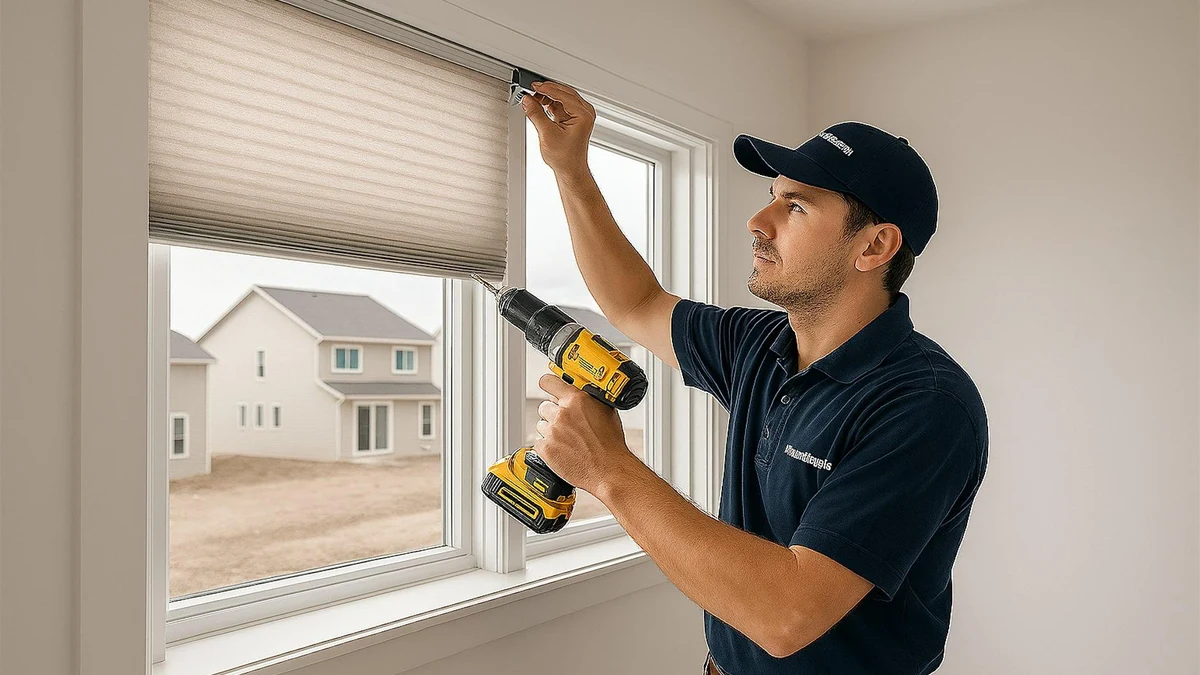
Installing new blinds might seem like a straightforward weekend project. Measure your windows, purchase the blinds, attach a few brackets, and you’re done. But what happens when the measurements are slightly off or the brackets don’t line up?
While DIY installation can work for simple projects, custom blinds and challenging windows often require more attention. Professional installation adds convenience and can help you avoid mistakes that lead to additional expenses.
At The Blind Man Inc., we help Charlotte homeowners choose and install window treatments that fit their homes and budgets. Here’s how to compare professional blinds installation costs with DIY expenses and decide which option makes more sense for your project.
Quick Answer: Is Professional Blind Installation Worth the Cost?
Professional blind installation can be worth the additional cost when accurate measurements, custom fittings, or complicated mounting conditions are involved. Installers can help reduce measurement errors, secure the hardware properly, and check that blinds operate smoothly. However, DIY installation may be more economical for basic, standard-sized blinds when you have the right tools and experience.
What Does Professional Blind Installation Include?
Professional blind installation involves more than attaching hardware to your window frame.
Depending on the company and service package, the process may include measurements, product recommendations, mounting preparation, installation, and final adjustments.
Measuring Your Windows
Before ordering blinds, an installer may measure the width, height, and mounting depth of each window.
They also check whether the window opening is square and identify features that could interfere with the blinds.
This is particularly important for custom products manufactured to specific dimensions.
Checking the Mounting Requirements
Different blinds require different mounting arrangements.
An installer determines whether an inside mount or outside mount will work best for the selected product.
They also consider the mounting surface, bracket placement, and available clearance.
Installing the Blinds
Installation involves positioning and securing the brackets, attaching the headrail, and fitting the remaining components according to the manufacturer’s instructions.
The installer checks that everything is properly aligned and supported.
Testing and Final Adjustments
Once installed, the blinds should open, close, and adjust as intended.
The installer may check:
- Headrail alignment
- Raising and lowering operation
- Slat tilting
- Clearances around window hardware
- Secure mounting brackets
- Cordless or motorized control functions
The exact services included vary by company, so confirm what’s covered before scheduling an appointment.
How Installation Cost Fits Into the Total Project Budget
When shopping for blinds, it’s easy to focus on the product price and overlook installation.
However, your total budget should include everything necessary to complete the project.
What Determines Installation Cost?
Several factors can influence professional blind installation costs.
Number of windows: Installing blinds throughout an entire home generally requires more labor than covering one or two windows.
Blind type: Basic horizontal blinds may be easier to install than heavy wood blinds, oversized window treatments, or certain specialty products.
Window dimensions: Large and tall windows may need additional brackets, reinforced mounting arrangements, or specialized access equipment.
Mounting conditions: Uneven openings, unusual trim, and difficult mounting surfaces can increase installation complexity.
Operating system: Motorized blinds may require programming, power connections, and additional testing.
Is Installation Always Charged Separately?
No. Some window treatment companies include professional installation with qualifying purchases, while others charge separately.
The Blind Man Inc. currently advertises free installation with eligible blind purchases, giving Charlotte homeowners an opportunity to receive professional fitting without a separate installation charge under the applicable offer.
Always confirm the offer’s terms and what your estimate includes.
When comparing companies, look at the complete installed price rather than the cost of the blinds alone.
What Costs Should You Consider With DIY Installation?
DIY installation may save money on labor, but it’s not necessarily free.
You still need the appropriate equipment, enough time, and confidence that you can complete the work correctly.
Tools and Supplies
Depending on the blind and mounting surface, you may need:
- A drill and suitable drill bits
- A tape measure
- A level
- A screwdriver
- Appropriate wall anchors or fasteners
- A ladder or step stool
- A stud finder for certain installations
If you already own these tools, the additional expense may be minimal.
If you’re buying equipment for a one-time project, the savings may be smaller.
Your Time
Measuring, unpacking, assembling, and installing several blinds can take longer than expected.
You’ll also need time to read the instructions and make adjustments.
For a single standard-sized window, that may not be a problem.
For an entire home with different window sizes, the time commitment can become significant.
Potential Correction Costs
An incorrectly measured or installed blind may require replacement parts, new mounting hardware, or even a completely new product.
Custom blinds can be especially expensive to replace if they were manufactured using incorrect customer-supplied measurements.
Some products may not qualify for standard returns once customized.
Before choosing DIY installation, consider whether the potential labor savings justify the risk of correcting an expensive mistake.
Common Blind Measurement and Fit Errors
Measurement mistakes are among the most common problems homeowners encounter when ordering blinds.
Even a small difference can affect how the finished window treatment looks and operates.
Measuring Only One Part of the Window
Window openings aren’t always perfectly square.
The width at the top may differ slightly from the width at the bottom.
For inside-mounted blinds, manufacturers generally require measurements at several points to determine the appropriate size.
Using only one measurement can result in a blind that’s too wide or too narrow.
Confusing Inside and Outside Mount Dimensions
Inside-mounted blinds fit within the window opening.
Outside-mounted blinds attach around or above the opening.
Each method has different measuring requirements.
Confusing the two can lead to poor coverage or mounting problems.
Overlooking Window Depth
Some blinds require a minimum mounting depth.
If the opening is too shallow, the headrail may protrude or the brackets may not fit as intended.
Forgetting Window Handles or Trim
Locks, handles, decorative molding, and other features can interfere with blind operation.
These details need to be considered before ordering.
Making Incorrect Deductions
Some manufacturers make their own factory deductions for inside-mounted products.
If you subtract extra space from your measurements without checking the instructions, the finished blinds may be too narrow.
Professional measuring can help reduce these errors, although accuracy still depends on the measuring process and product specifications.
How Improper Installation Can Affect Operation
Blinds need to be installed correctly to work smoothly.
Poor mounting or alignment can create problems that affect everyday use.
Uneven Blinds
If mounting brackets aren’t level, the blinds may appear crooked.
Some products may also raise unevenly or sit incorrectly against the window.
Difficult Raising and Lowering
Improper alignment or insufficient clearance may interfere with the operating mechanism.
A blind that rubs against the window frame could become difficult to move.
Loose Mounting Hardware
Blinds must be attached to suitable mounting surfaces using appropriate hardware.
Improperly secured brackets may loosen over time, particularly with heavier window treatments.
Interference With Windows
Incorrectly positioned blinds may block window handles, interfere with opening the window, or prevent the blinds from moving freely.
Problems With Motorized Operation
Motorized blinds require compatible hardware and correct setup.
Improper installation can affect movement, programmed limits, or alignment.
Some problems can be corrected through adjustments. Others may require replacing damaged parts or reinstalling the blinds.
Professional installation doesn’t guarantee that a product will never develop a problem, but correct mounting and setup can help reduce avoidable issues.
Does Professional Installation Help Protect Custom Blinds?
Custom blinds are manufactured for specific windows and selected to meet your design preferences.
Because they represent a larger investment than many basic ready-made products, accurate measuring and fitting become especially important.
Reducing the Risk of Incorrect Sizing
When custom blinds are ordered using incorrect dimensions, returning or modifying them may be difficult.
Professional measurements help reduce the likelihood of ordering the wrong size.
Supporting Proper Operation
Custom wood, faux wood, and other specialty blinds may have specific hardware requirements.
Correct installation helps ensure the product is adequately supported and operates within its intended design.
Understanding Warranty Requirements
Some manufacturers have warranty conditions related to proper installation, product use, and modifications.
However, hiring a professional doesn’t automatically extend a manufacturer’s warranty or guarantee that every future repair will be covered.
Warranty protection depends on the specific product and written terms.
Ask whether installation-related workmanship is covered separately and who handles any problems that arise after installation.
Avoiding Unnecessary Damage
Incorrect drilling or bracket placement can damage trim, drywall, or surrounding finishes.
Professional installers are familiar with different mounting conditions and can select appropriate installation methods.
While mistakes can still happen, experienced fitting can help reduce the risk of avoidable damage.
DIY vs. Professional Installation: Which Offers Better Value?
The better option depends on the complexity of your project, your experience, and the blinds you’re installing.
| Consideration | DIY installation | Professional installation |
| Labor cost | No hired labor expense | May be charged or included with purchase |
| Tools | You supply the equipment | Installer generally brings required tools |
| Measuring | Your responsibility | May be included in service |
| Time | Depends on your experience | Less hands-on work for homeowner |
| Custom blinds | Greater responsibility for correct fit | Professional measuring and fitting may reduce errors |
| Complex windows | May be challenging | Installer can assess suitable methods |
| Corrections | May require additional purchases or work | Depends on service and warranty terms |
When DIY Offers Better Value
DIY installation can make sense if you have one or two standard windows, basic blinds, and experience with household projects.
If the mounting conditions are straightforward and you already own the tools, paying for labor may not be necessary.
When Professional Installation Offers Better Value
Professional installation becomes more attractive when the project includes custom products, multiple windows, unusual openings, or heavier blinds.
The value comes from having someone handle the measuring, fitting, and setup while reducing the amount of work you need to do yourself.
The most economical option is the one that provides a properly functioning window treatment at a reasonable total cost, not necessarily the option with the lowest upfront expense.
When Professional Installation Makes the Most Sense
Some situations make professional installation particularly worthwhile.
You’re Installing Custom-Made Blinds
Custom blinds are manufactured to specific measurements.
Professional measuring and fitting can help reduce the risk of ordering an incorrectly sized product.
You Have Oversized Windows
Large blinds can be heavy and may require additional brackets or specialized hardware.
An installer can evaluate mounting requirements and product size limitations.
Your Windows Are Difficult to Reach
Tall windows, stairwell openings, and windows near high ceilings may require specialized equipment.
These installations can involve additional safety considerations.
You’re Installing Motorized Blinds
Motorized window treatments may require programming, motor limit settings, and power considerations.
Professional installation can help ensure the selected system is set up according to the manufacturer’s requirements.
You’re Replacing Blinds Throughout the House
Installing multiple window treatments requires more time and attention to detail.
Professional installation can simplify the process and help maintain consistency across different rooms.
Your Window Frames Are Unusual
Older homes, decorative trim, shallow recesses, and uneven openings can create fitting challenges.
An installer may recommend alternative mounting methods or products that work better with the existing conditions.
Questions to Ask Before Hiring an Installer
Before choosing a blind installation company, make sure you understand what’s included in the service.
These questions can help you compare estimates and avoid unexpected costs.
- Is installation included in the blind purchase? Ask whether labor is included or charged separately.
- Do you provide professional measurements? Find out who is responsible for final ordering dimensions.
- What does the installation service include? Confirm hardware, fitting, adjustments, and cleanup.
- Will you remove my existing blinds? Ask whether removal and disposal involve additional charges.
- Do you install custom and motorized blinds? Make sure the installer has experience with your selected product.
- What happens if the blinds don’t fit? Clarify how measurement or installation errors are handled.
- Is the installation work covered by a warranty? Ask about workmanship coverage and applicable limitations.
- Are there additional costs for high or difficult windows? Confirm whether special equipment or mounting work affects the estimate.
A clear written estimate should make it easier to understand the complete project.
Professional Blind Installation in Charlotte
If you’re considering new blinds for your home in Charlotte, NC, choosing the right products is only one part of the process.
At The Blind Man Inc., we help homeowners throughout Charlotte and surrounding communities select custom window treatments and have them professionally measured and installed.
Our team works with wood blinds, faux wood blinds, vertical blinds, motorized window treatments, and other options designed for different rooms and window configurations.
We also offer a mobile showroom, allowing you to compare materials, colors, and designs from the comfort of your home.
Professional Installation Without Unnecessary Costs
The Blind Man Inc. advertises free installation with eligible blind purchases, making professional fitting more accessible for homeowners who prefer not to install their window treatments themselves.
Our installation team can help with:
- Measuring windows for suitable products
- Evaluating mounting requirements
- Installing compatible hardware
- Fitting and aligning window treatments
- Testing operation and making final adjustments
We use our own installation team rather than relying on subcontractors, allowing us to manage the process from product selection through installation.
Whether you’re updating one room or replacing blinds throughout your home, we’ll help you explore options that suit your budget and everyday needs.
Learn more about our custom blinds in Charlotte and available installation services.
Ready to update your windows?
Contact The Blind Man Inc. or call 704-888-2770 to schedule a free in-home consultation. We’ll help you choose window treatments that fit your home and explain what’s included in your installation estimate.
FAQs About Blind Installation Costs
Is it cheaper to install blinds yourself?
DIY installation can be cheaper if you already have the necessary tools and experience. However, measurement mistakes, damaged hardware, or installation problems may create additional expenses. Compare the potential savings with the complexity of your project.
How much does professional blind installation cost?
Professional blind installation costs vary by window count, product type, dimensions, accessibility, and mounting requirements. Some companies include installation with qualifying purchases, while others charge separately. Request a complete estimate to understand your total project cost.
Is professional installation necessary for standard blinds?
Not always. Many standard blinds are designed for straightforward installation and can be fitted by homeowners with basic tools and experience. Professional installation may still be convenient if you prefer assistance or have unusual mounting conditions.
Can incorrect installation damage blinds?
Yes. Improper bracket placement, inadequate support, or forced operation can damage certain blind components. Following the manufacturer’s installation instructions helps reduce these risks.
Does professional installation include measuring windows?
Many window treatment companies offer professional measuring as part of their service, but this isn’t universal. Confirm whether measuring is included and who is responsible for the final product dimensions.
Can professionals install blinds I purchased elsewhere?
Some installers offer installation-only services for blinds purchased from other retailers, while others primarily install products they sell. Ask the company whether it accepts customer-supplied blinds and what conditions apply.
Does professional installation make blinds last longer?
Correct installation can help reduce unnecessary stress, rubbing, and alignment problems. However, blind lifespan also depends on material quality, frequency of use, maintenance, and environmental conditions. Professional installation doesn’t guarantee a specific lifespan.
Is professional installation worth it for motorized blinds?
It can be particularly valuable because motorized blinds may require compatible mounting hardware, programming, and power connections. Professional setup can help ensure the system operates according to the manufacturer’s instructions.
Does professional installation include a warranty?
Warranty coverage varies. Product warranties and installation workmanship coverage may be separate. Always review the written terms and ask what repairs, adjustments, or service visits are included.
How can I schedule professional blind installation in Charlotte?
Contact The Blind Man Inc. to arrange an in-home consultation. Our team can review your windows, discuss available blind options, and explain the measuring and installation process, including applicable offers for qualifying purchases.
Share this article
Latest articles
November 17, 2026
November 17, 2026
November 17, 2026