
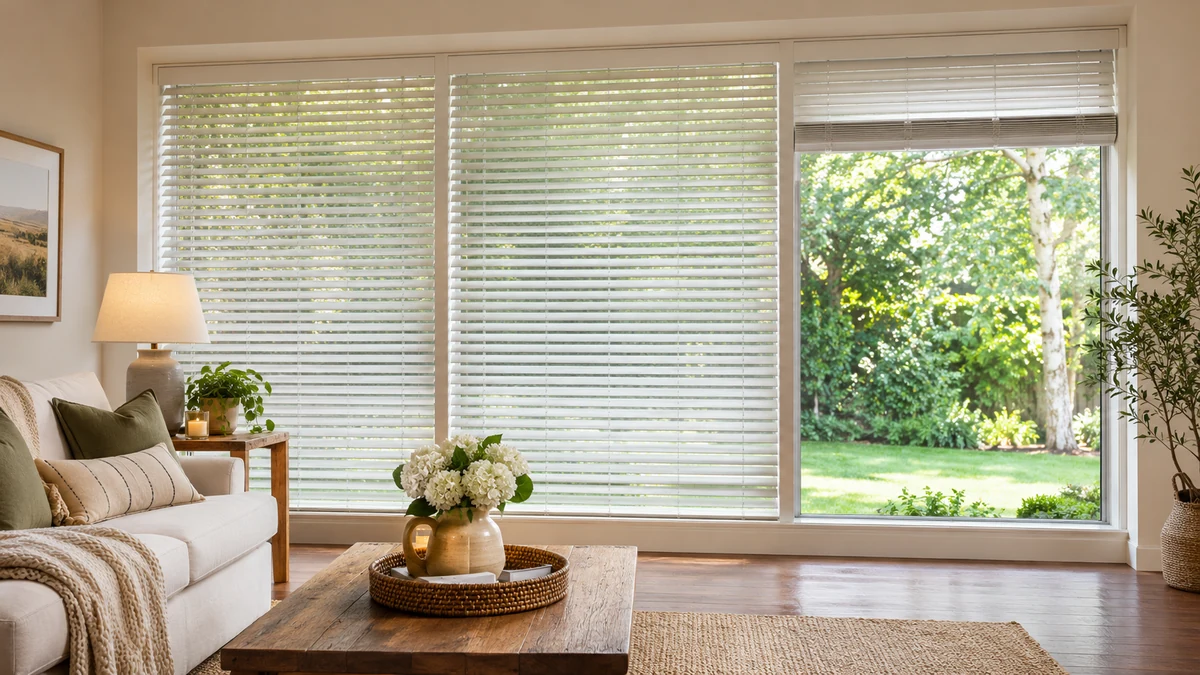
Large windows bring natural light into your home and create beautiful views, but finding the right blinds for them can be more expensive than covering standard-sized windows. You may need custom materials, stronger hardware, or multiple blinds to get the coverage and functionality you want.
So, how much do blinds for large windows cost? The answer depends on the window’s dimensions, the materials you choose, and how the blinds will operate.
At The Blind Man Inc., we help homeowners in Concord, NC, explore window treatments that balance appearance, functionality, and budget. Here’s what affects the price of oversized window blinds and how to plan your project without paying for features you don’t need.
Quick Answer: How Much Do Blinds for Oversized Windows Cost?
Blinds for oversized windows generally cost more than standard-sized blinds because they require additional materials, stronger components, and sometimes custom manufacturing or installation. The total price depends on window dimensions, material selection, operating mechanisms, and whether one large blind or several smaller units are needed. Professional measurements help determine the most practical and cost-effective configuration.
What Counts as an Oversized Window?
An oversized window is generally one that exceeds the dimensions commonly available for standard window blinds.
There isn’t one universal measurement that defines an oversized window. Manufacturers have different size limits depending on the blind material, design, and operating system.
For example, a window may be considered oversized because it has:
- An unusually wide opening that standard blinds cannot cover with a single unit.
- A floor-to-ceiling design requiring a longer blind.
- A large picture window with a broad, uninterrupted glass area.
- Multiple window sections that need coordinated coverings.
- A tall opening that is difficult to reach or operate manually.
Oversized windows are common in living rooms, great rooms, sunrooms, and homes with open floor plans.
The challenge isn’t simply finding a blind wide enough to cover the glass. You also need a product that can operate reliably under its own weight.
That’s why measurements and manufacturer specifications matter when choosing blinds for larger openings.
Why Large Windows Usually Cost More to Cover
The most obvious reason large blinds cost more is that they require more material.
However, several other factors contribute to the final price.
More Material and Manufacturing Work
A wider blind requires longer slats, rails, or supporting components.
A taller blind generally needs more slats or additional covering material.
These requirements increase manufacturing costs, especially when the product must be custom-made.
Heavier Components
As blinds become larger, they often become heavier.
The operating system must support the additional weight while allowing the blinds to raise, lower, or tilt smoothly.
This may require stronger headrails, lifting components, and mounting hardware.
Custom Production
Standard blinds are manufactured within common size ranges.
When your window exceeds those dimensions, the manufacturer may need to produce a custom-sized product or recommend a different configuration.
Special manufacturing requirements can increase the overall cost.
The important thing to remember is that a larger blind isn’t always just a bigger version of a standard blind. Its components may need to be designed differently to support the added size and weight.
How Material Choice Affects Pricing
Material selection plays a major role in the cost of blinds for oversized windows.
Some materials are more expensive to manufacture, while others require additional reinforcement when used across larger openings.
Faux Wood Blinds
Faux wood blinds are popular because they offer the appearance of wood with relatively straightforward maintenance.
They can be practical for many rooms, but their weight becomes important on large windows.
Very wide faux wood blinds may be heavy to lift, and some manufacturers limit their maximum dimensions.
If the window exceeds those limits, multiple blinds may be necessary.
Real Wood Blinds
Natural wood blinds offer a warm, traditional appearance and are available in different colors and finishes.
They can cost more than basic faux wood options because of the material and finishing process.
Wood blinds may also be lighter than some comparable faux wood products, although the actual weight depends on the construction.
That difference can be useful when considering larger windows.
Aluminum Blinds
Aluminum blinds can be a more economical option for certain applications.
They are generally lightweight and available in several finishes.
However, very wide aluminum slats may be more prone to bending, and the product still needs to remain within the manufacturer’s size specifications.
Vertical Blinds
Vertical blinds are often worth considering for wide windows and sliding glass doors.
Because their vanes hang vertically and move along a track, they operate differently from traditional horizontal blinds.
Depending on the product, vertical blinds may accommodate wider openings without requiring the same lifting mechanism as horizontal blinds.
The best material depends on the window’s size, the room’s conditions, and how frequently you’ll use the blinds.
How Width and Height Affect Blind Cost
Width and height influence pricing in different ways.
Wider Windows Require Greater Support
A wide window may need longer headrails, reinforced components, or additional mounting brackets.
Horizontal slats also need sufficient stability across the opening.
As the width increases, manufacturers may restrict the available materials or operating systems.
For some windows, one oversized blind simply won’t be practical.
Taller Windows Add Weight
Taller windows generally require more slats or covering material.
That additional material increases the load on the lifting mechanism.
A tall blind may also need an operating system that makes raising and lowering it easier.
Window Area Doesn’t Tell the Whole Story
Two windows with the same overall area may have different treatment costs.
For example, a very wide, shallow window and a narrow, floor-to-ceiling window may require different materials, hardware, and installation approaches.
This is why estimating blind costs using square footage alone can be misleading.
The actual width, height, product design, and operating limitations all need to be considered.
Single Blind vs. Multiple Blinds for Large Windows
One of the biggest decisions for oversized windows is whether to install one large blind or divide the opening into multiple sections.
Both options have advantages.
Using One Large Blind
A single blind creates a continuous appearance across the window.
It may also reduce visible gaps between separate units.
However, a single large blind can be heavier, more difficult to operate, or unavailable in certain materials.
It may also require upgraded hardware or a specialized lifting system.
Using Multiple Smaller Blinds
Dividing a large window into two or three blinds can make operation more manageable.
Each blind carries less weight, and individual sections can be adjusted independently.
This is particularly useful when you want sunlight from one part of the window while maintaining privacy elsewhere.
Multiple blinds may also fit within standard manufacturing limits.
Which Configuration Costs Less?
There isn’t one answer.
A single oversized blind may require premium hardware or special manufacturing.
Multiple blinds involve additional headrails, mechanisms, and potentially more installation work.
For example, covering a large living room window with three separate blinds could be more economical than ordering one specialized oversized unit. In other cases, a single treatment may be the simpler choice.
Also consider the appearance of the finished installation. Separate blinds can create small light gaps between sections.
A professional consultation can help you compare configurations before making a decision.
When Special Hardware or Reinforcement Is Needed
Oversized blinds place greater demands on their supporting components.
Depending on the product, additional hardware may be necessary.
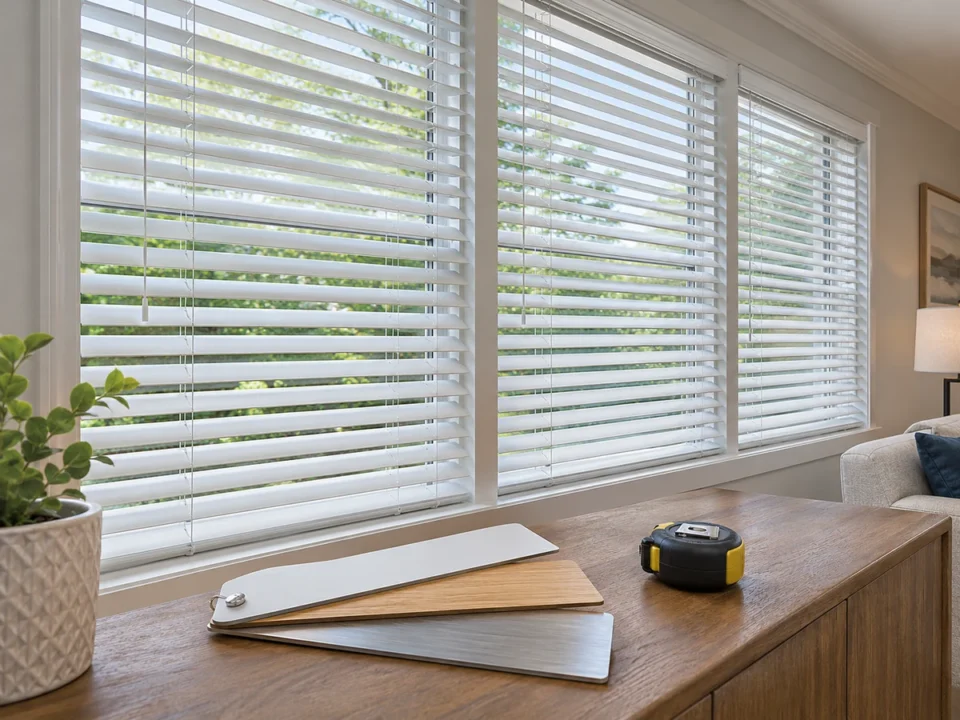
Reinforced Headrails
The headrail supports the blind’s operating mechanism and other components.
Larger blinds may need stronger headrails to maintain stability and prevent excessive bending.
Additional Mounting Brackets
Some wide treatments require additional brackets to distribute their weight.
The number and placement of brackets depend on the manufacturer’s requirements and the mounting surface.
Stronger Operating Systems
A larger blind may require a lifting system designed for additional weight.
Some standard mechanisms aren’t suitable for very wide or tall blinds.
Suitable Mounting Surfaces
Large blinds need secure attachment points.
If a window opening has unusual trim, limited mounting depth, or insufficient support, alternative mounting arrangements may be required.
These adjustments can affect pricing, but they are also important for reliable operation.
A properly supported blind is more valuable than a cheaper option that struggles to function correctly.
Motorized vs. Manual Options for Oversized Windows
The operating system is another important factor in large-window blind costs.
Manual Blinds
Manual blinds generally have a lower starting cost than comparable motorized products.
They may use cordless lifting systems, wands, or other manufacturer-approved controls.
For moderately sized windows that are easy to access, manual operation can be a practical choice.
However, large blinds may be difficult to raise because of their weight.
This is especially important when you plan to adjust them frequently.
Motorized Blinds
Motorized blinds offer convenient operation through compatible remote controls, switches, or smart-home systems.
Depending on the product, motorization can make it easier to control blinds on tall or hard-to-reach windows.
Additional costs may include:
- Motorized operating components
- Rechargeable batteries or other power supplies
- Remote controls or wall controls
- Compatible smart-home equipment
- Programming and installation requirements
Not every oversized blind can be motorized. The selected motor must support the product’s size and weight.
Is Motorization Worth the Extra Cost?
Motorization can be worthwhile when your blinds are difficult to reach, heavy to operate, or adjusted several times throughout the day.
For example, motorized window treatments may make everyday light control easier in a living room with tall windows.
If the blinds will rarely be adjusted, a suitable manual system may be enough.
The best choice depends on how you use the room, not simply the size of the window.
How Installation Complexity Affects Total Cost
Installation is another factor to consider when budgeting for oversized window blinds.
A straightforward installation on a standard-height window generally requires less work than fitting treatments on large or difficult-to-access openings.
High Windows
Windows positioned above staircases or in rooms with vaulted ceilings can be more challenging to access.
Specialized ladders, scaffolding, or other access equipment may be necessary.
These requirements can increase installation time and labor costs.
Multiple Window Sections
Large window walls often include several separate openings.
Each section must be measured and installed carefully to maintain consistent alignment.
Unusual Window Construction
Deep recesses, shallow mounting surfaces, decorative trim, and uneven openings can affect installation.
The treatment must fit without interfering with window handles or surrounding features.
Professional Measuring
Accurate measurements are especially important for custom oversized blinds.
Even a small measurement error can affect fit or prevent the product from operating properly.
Before approving an estimate, ask whether the quoted price includes measurement, hardware, delivery, installation, and final adjustments.
This will help you compare the complete project cost rather than just the price of the blinds.
Blinds vs. Shades for Very Large Windows
Traditional horizontal blinds aren’t always the most practical solution for oversized windows.
In some situations, shades may offer a better balance of appearance, operation, and cost.
| Window treatment | Benefits for large windows | Cost considerations |
| Horizontal blinds | Adjustable slats for light and privacy | Weight and maximum width restrictions |
| Vertical blinds | Practical for wide openings and sliding doors | Track length, material, and vane selection |
| Roller shades | Clean appearance and relatively simple operation | Fabric width, tube size, and motor requirements |
| Cellular shades | Light control and insulating design | Size limits, fabric construction, and lifting system |
| Roman shades | Decorative fabric appearance | Fabric quantity, lining, and lifting components |
When Blinds May Be Better
Blinds are useful when you want to adjust the angle of incoming light without fully raising the window covering.
Horizontal blinds work well in many conventional openings, while vertical blinds can be practical for wider windows and doors.
When Shades May Be Better
Roller shades can be attractive for large picture windows because they have a simple appearance and can provide broad coverage.
However, very wide roller shades may require stronger tubes, special fabrics, or multiple units.
Cellular and Roman shades offer different design and light-control benefits, but their available dimensions also depend on the product.
A good way to control costs is to compare both blinds and shades before deciding. The most suitable product may not be the one you originally considered.
Planning Window Treatments for Oversized Windows in Concord
If your home in Concord, NC, has oversized windows, choosing the right window treatments starts with understanding the size of the openings and how you use each room.
At The Blind Man Inc., we help homeowners throughout Concord and surrounding communities explore custom blinds, shades, shutters, and motorized window treatment options.
Whether you’re covering a large living room window, a tall bedroom window, or a wide sliding glass door, we can help you compare available materials, operating systems, and configurations.
Our team provides professional measuring and installation services to help ensure your window treatments fit and operate properly.
We also offer in-home consultations, allowing you to review window treatment options in the space where they’ll be installed.
Get an Estimate for Your Large Windows
Because oversized windows may require custom dimensions or hardware, an individual estimate is the best way to understand your total project cost.
During a consultation, we can help you consider:
- Suitable products for your window dimensions
- Single-unit and multiple-unit configurations
- Manual and motorized operation
- Material choices that fit your budget
- Installation requirements and available options
Explore our window blinds in Concord, NC or learn more about our motorized window treatments.
Ready to find blinds for your oversized windows?
Contact The Blind Man Inc. or call 704-888-2770 to schedule a free consultation and discuss your large-window treatment project.
FAQs About Large-Window Blind Costs
Are blinds for large windows more expensive than standard blinds?
Generally, yes. Large-window blinds require additional materials and may need reinforced components, custom manufacturing, or specialized operating systems. Installation requirements can also increase the total cost.
Is one large blind cheaper than two smaller blinds?
Not always. One oversized blind may require specialized hardware, while two smaller blinds require separate operating mechanisms and components. The more affordable option depends on the dimensions, material, and manufacturer specifications.
What are the most affordable blinds for oversized windows?
Basic aluminum blinds, certain faux wood products, and some vertical blind systems may be economical choices, depending on the opening. However, maximum size limits and hardware requirements can affect pricing. Comparing several suitable options is the best approach.
Can faux wood blinds cover very large windows?
Some faux wood blinds can cover large windows, but the material’s weight and the manufacturer’s maximum size restrictions are important. Very wide openings may require multiple blinds or a different treatment style.
Are motorized blinds more expensive for large windows?
Motorized blinds generally cost more than comparable manual models because they include motors, power components, and controls. Large windows may also require more powerful systems, increasing the overall price.
Do oversized windows always need custom blinds?
Not always. Some large windows fall within the available dimensions of standard product lines. However, unusually wide, tall, or irregular openings often require custom sizing or multiple treatment sections.
Do blinds or shades cost less for large windows?
Neither is always cheaper. Pricing depends on the material, dimensions, operating system, and installation requirements. A simple roller shade may be less expensive than a specialized oversized blind, but premium shade systems can cost more.
How can I get an accurate quote for oversized window blinds in Concord?
Professional measurements are the best starting point. At The Blind Man Inc., we can review your window dimensions, discuss materials and operating options, and help you find a configuration suited to your home and budget. Contact us to schedule a consultation.
Share this article
Latest articles
November 9, 2026
November 9, 2026
November 9, 2026