
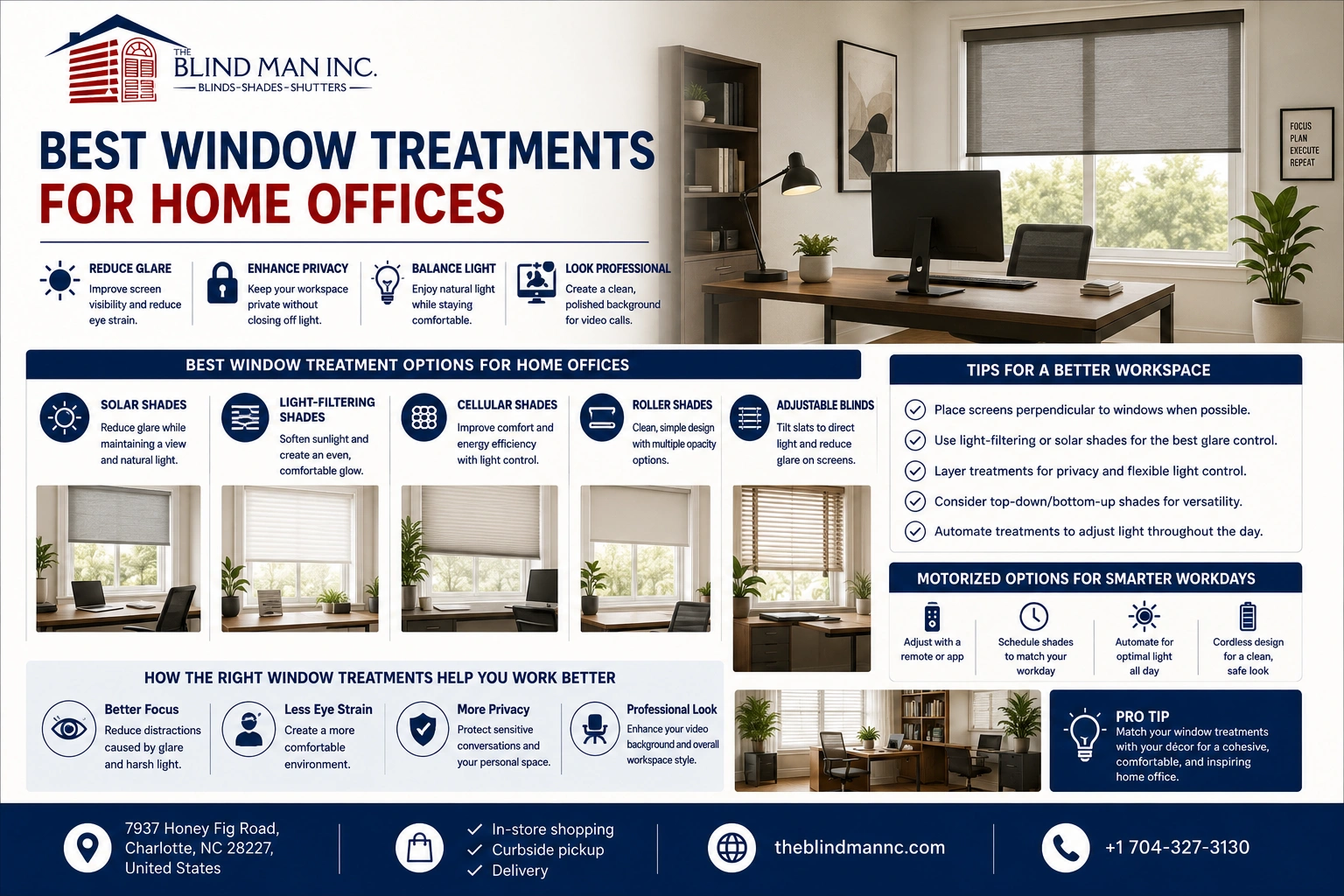
A home office should feel comfortable, focused, and professional. Whether you work from home full time, take occasional video calls, manage household paperwork, or use the space for creative projects, the way sunlight enters the room can make a big difference in how productive and comfortable the office feels.
Too much sunlight can create glare on computer screens. Too little light can make the room feel dim or closed off. Windows that face a street, sidewalk, or neighboring home may also create privacy concerns during the workday. The right window treatments can help solve these issues by managing brightness, improving screen visibility, and creating a polished background for virtual meetings.
Choosing the best window treatments for a home office is not about picking one perfect product for every room. It is about finding the right balance of light control, privacy, style, and everyday usability.
Why Home Offices Need Glare Control
Glare is one of the most common problems in home offices. It often happens when direct sunlight hits a computer monitor, laptop screen, tablet, or glossy desk surface. Even if the room feels bright and pleasant, glare can make it harder to read, type, focus, or participate comfortably in video meetings.
Home office glare is often caused by:
- Windows positioned behind or beside a screen
- Strong morning or afternoon sunlight
- Light reflecting off desks, floors, or walls
- Large uncovered windows
- Bright outdoor surfaces, such as sidewalks or driveways
- Seasonal changes in sun angle
Glare can also lead to eye strain and discomfort over time. Homeowners may find themselves squinting, adjusting screen brightness, moving around the room, or closing curtains completely just to work comfortably.
The goal is not always to block sunlight entirely. In many offices, natural light helps the space feel more open and inviting. The better solution is usually to filter or redirect light so the room stays bright without creating harsh reflections.
Depending on the fabric and opacity, shades can soften sunlight, reduce brightness, and help create a more comfortable workspace.
Best Window Treatment Options for Screen Visibility
Different home offices need different levels of light control. A room with soft indirect light may only need a light-filtering treatment, while a west-facing office with strong afternoon sun may need something more glare-focused.
Here are several practical options to consider.
Solar Shades
Solar shades are popular for home offices because they are designed to filter sunlight while preserving some natural light. They can reduce glare on screens without making the office feel completely dark.
The openness of the fabric affects how much light passes through. A tighter weave typically provides stronger glare reduction, while a more open weave allows more outdoor visibility and brightness. Solar shades can work well in offices with large windows, bright exposures, or screen glare during certain times of day.
Light-Filtering Shades
Light-filtering shades soften sunlight and create a more even glow throughout the room. They are a good option for homeowners who want privacy and brightness control without a dark, enclosed feeling.
These shades can help reduce harsh contrast between bright windows and computer screens, which may make the room feel easier on the eyes.
Cellular Shades
Cellular shades can provide light control while also adding an insulating layer near the window. In a home office, this can help make the room feel more comfortable during both warm and cool seasons.
Light-filtering cellular shades may work well for general office use, while room-darkening options may be better for offices that double as media rooms or guest spaces.
Roller Shades
Roller shades offer a clean, simple appearance that works well in modern home offices. They are available in different opacity levels, from light-filtering to room-darkening.
For homeowners who want a minimal look with practical glare control, roller shades can be a strong option.
Adjustable Blinds
Blinds are helpful when homeowners want more directional control over sunlight. By tilting the slats, you can redirect light away from a screen while still allowing some brightness into the room.
Wood, faux wood, or vertical blinds may work well depending on the window style. Learn more about <a href=”/window-treatments/blinds/”>blind options</a> when comparing adjustable light-control choices for a workspace.
How to Balance Privacy and Natural Light
Home offices often need privacy, especially if the room faces a street, sidewalk, neighboring property, or shared outdoor area. At the same time, closing the room off completely can make it feel less comfortable during the workday.
The best solution is usually one that allows privacy without eliminating natural light.
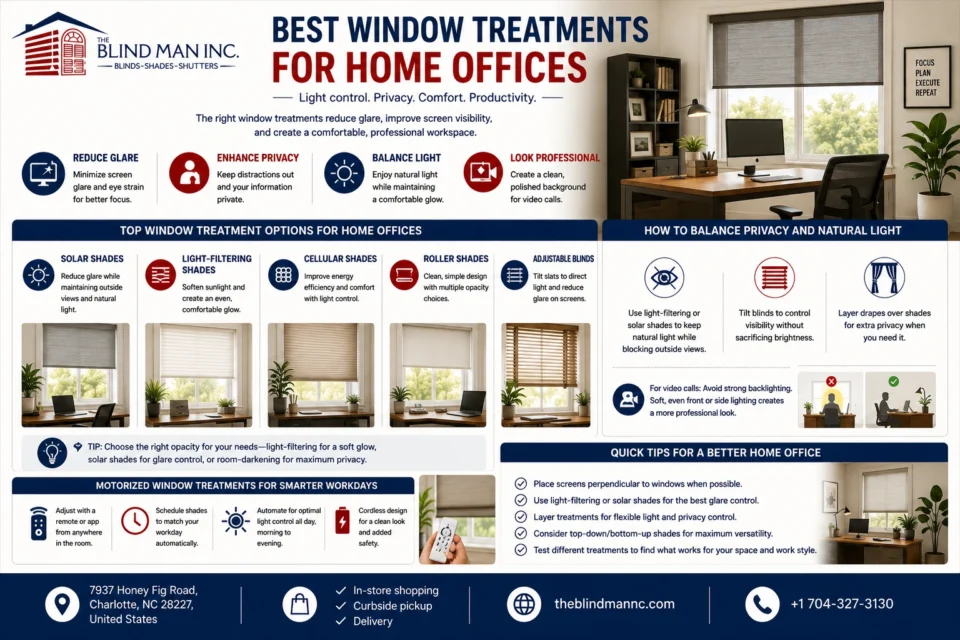
Light-filtering shades can help soften visibility from outside while keeping the room bright. Blinds can be tilted to limit direct views into the office while still allowing daylight through the slats. Drapery panels can be layered over shades or blinds for added privacy when needed.
The right choice depends on how the office is used. A room used for client calls, financial work, or private meetings may need stronger privacy. A casual workspace may only need enough coverage to reduce distractions and prevent outside visibility.
Window direction also matters. A front-facing office may need privacy during the day, while a side or backyard-facing office may need more focus on glare control and comfort.
For video calls, privacy and lighting work together. Too much backlighting from a window behind your desk can make you appear dark on camera. A window treatment that softens brightness can help create a more professional and balanced video-call background.
Motorized Window Treatments for Workspaces
Motorized window treatments can be especially useful in home offices where light changes throughout the day. Instead of getting up to adjust shades during meetings or focused work sessions, homeowners can control them with a remote, wall switch, app, or smart-home system.
Motorized treatments may be helpful for:
- Hard-to-reach office windows
- Tall windows
- Rooms with multiple windows
- Video calls that require quick light adjustments
- Offices with strong sun at certain times of day
- Homeowners who prefer convenience and automation
For example, shades can be adjusted before a video call to reduce backlighting or lowered during the afternoon when the sun becomes too intense. In some setups, treatments can be scheduled to move automatically based on time of day.
Motorized options are not necessary for every home office, but they can make daily use easier in spaces where light control needs change often.
They can also support a cleaner look because there are no visible lift cords. For homeowners who want a streamlined, modern office, this can be an added benefit.
Choosing a Professional Look for Your Office
Home office window treatments should be functional, but they should also support the overall appearance of the room. A professional-looking office can help the space feel more organized, calm, and ready for focused work.
For a clean and modern look, homeowners may prefer roller shades, solar shades, or neutral cellular shades. These options keep the window area simple and uncluttered.
For a warmer or more traditional look, wood or faux wood blinds can coordinate with desks, bookshelves, flooring, or trim. They also offer adjustable light control, which can be useful throughout the workday.
For a softer and more finished design, shades can be paired with drapes. This layered approach may work well in offices that also function as guest rooms, reading rooms, or creative spaces.
Color is another important detail. Neutral tones such as white, cream, beige, gray, or soft natural textures often work well because they blend with different office styles. Darker colors can add contrast, while woven textures may bring warmth to the space.
It also helps to think about what appears behind you during video calls. Window treatments that look neat, balanced, and intentional can improve the overall feel of your background without becoming distracting.
The best home office window treatments should help the space feel focused, comfortable, and visually organized.
Create a More Productive Home Office With The Blind Man
The right window treatments can make a home office more comfortable, private, and productive. By reducing glare, improving screen visibility, softening natural light, and supporting a professional appearance, homeowners can create a workspace that feels better throughout the day.
At The Blind Man, we help homeowners explore window treatment options that fit their work routines, design preferences, and comfort goals. Whether your office needs glare control, privacy, natural light, or a cleaner professional look, our team can help you find a practical solution that works beautifully in your space.
Share this article
Latest articles
September 14, 2026

September 14, 2026

September 14, 2026